Why countries are restricting the messaging app worldwide
Telegram's double life as dissident tool and criminal hub is driving bans from China to India. The fight is really over weak governance, state censorship, or both.
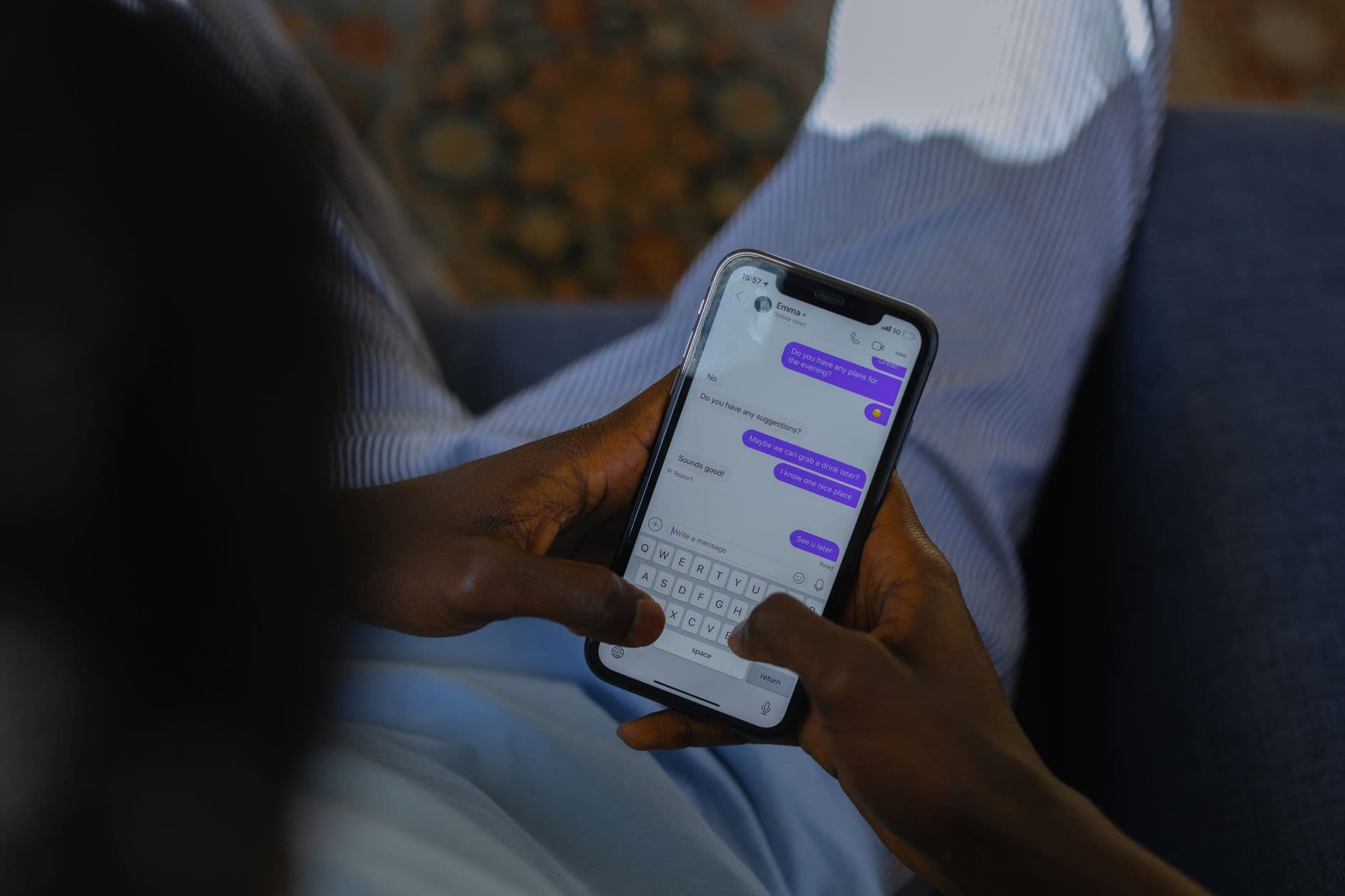
Telegram has become the paradox of modern messaging: a channel for dissidents trying to evade surveillance, and a platform that extremists, scammers and fraud rings can exploit at speed. Telegram says it passed 1 billion monthly active users in 2025 and has played a prominent role in pro-democracy movements in Iran, Russia, Belarus, Myanmar and Hong Kong, but investigators have also tied its loosely moderated spaces to bomb plots, stabbings and shootings. That split is why governments are tightening access from Beijing to New Delhi, even when they cite very different public-interest reasons.
Why Telegram draws such aggressive responses
The app’s appeal is built into its design. Telegram says it collects no user data beyond a phone number, and its founder, Pavel Durov, left Russia in 2014 after refusing to hand over data on Ukrainian protesters to security agencies. That history gives the service an unusually strong free-speech brand, but it also helps explain why security services and authoritarian governments view it as a threat to control. In practice, a platform that can move information quickly across borders without heavy friction is useful to journalists, activists and opposition movements, and just as useful to illicit operators who want scale and deniability.
The abuse problem is not hypothetical. A European Commission report says Telegram has become a central hub for extremism and conspiracy movements because extremist actors can bypass geographic boundaries, spread ideology, recruit members and coordinate activity. A PBS and ProPublica investigation into the white supremacist network Terrorgram identified 35 crimes linked to the platform, including bomb plots, stabbings and shootings. In other words, the same architecture that protects dissidents can also shield networks that organize violence.
Where governments have moved hardest
China is the clearest example of blanket censorship. Freedom House says most international social media and messaging platforms, including Telegram, are blocked there, and Chinese authorities combine regulatory pressure, removal orders and restrictions on anti-censorship tools to enforce official narratives. That is not a targeted response to one criminal network or one exam leak. It is a broad system of information control in which Telegram is simply one more outlet the state will not tolerate.
Iran shows how quickly a messaging app becomes a political flashpoint. Freedom House says Telegram and Instagram were blocked during antigovernment protests in early 2018, and Telegram was then permanently blocked in April 2018 for being treated as a national-security threat. At the time, Telegram was the most widely used social and messaging app in Iran, with an estimated 40 million users, and people used it to follow news channels that were otherwise blocked inside the country. That makes the Iranian case less about moderation failure than about the state trying to cut off a politically useful communications artery.
Russia has taken a more technical but equally revealing path. Human Rights Watch says Russian users began reporting difficulties accessing Telegram on February 10, 2026, after the state communications regulator said it was applying “gradual restrictions” because the platform was not complying with Russian law. Moscow had already blocked calls on Telegram and WhatsApp in August 2025 as a crime-prevention measure, saying it needed to counter scam calls and prevent sabotage and terrorist activity, and it had tried and failed to block Telegram in 2018 before later lifting the ban. This is where censorship and enforcement blur together: security language is real, but so is the Kremlin’s push to move users toward a state-controlled messenger.
India’s action in June 2026 is narrower, but it shows how platform features can trigger fast regulatory responses. The Ministry of Electronics and Information Technology restricted access to Telegram until June 22 and ordered the app’s message-editing feature disabled until June 30, ahead of the June 21 NEET-UG re-examination. In a press statement, the National Testing Agency said cheating rackets had used the platform to defraud candidates and fabricate paper-leak evidence, framing the move as necessary for public order and exam integrity. That is not a permanent ban, but it does show how one high-stakes abuse case can bring down a temporary nationwide block.
Venezuela sits closer to the censorship end of the spectrum. Freedom House says that as of May 2025, Telegram remained blocked alongside X, Signal, YouTube and TikTok, after a post-election crackdown in which the regime blocked independent news sites and communications platforms, carried out mass detentions and manipulated online discussion. The organization also says more than 200 domains were blocked between July 2024 and January 2025, roughly matching the election campaign and the disputed inauguration period. Here, Telegram is not being singled out for fraud or terrorism. It is part of a wider effort to suppress opposition and independent information.
Ukraine illustrates a narrower security-based approach. Reuters reported in September 2024 that government officials, military personnel and critical workers were barred from installing Telegram on state-issued devices because officials feared Russian spying. That is not a nationwide ban, but it reflects how a wartime government can still limit the app in official settings when intelligence risks outweigh its utility.
Governance failure, censorship, or both?
The answer is both, but not in equal measure everywhere. Telegram’s own safety page says it blocks tens of thousands of groups and channels daily, had blocked 17,882,990 groups and channels in 2026, and had blocked 109,954 terrorist-related communities. It also says it has published daily transparency reports on terrorist content since 2016 and has removed over 200 million pieces of terrorist content through collaboration with the Global Center for Combating Extremist Ideology. Those numbers undercut any claim that Telegram is still a purely hands-off service. They also show how hard the cleanup is, because the platform’s scale and speed keep producing new abuse faster than enforcement can fully catch up.
That is why governments reach for restrictions even when the move is blunt. In the strongest censorship cases, such as China, Iran and Venezuela, the real objective looks less like user safety and more like control over speech, organizing and journalism. In the more limited cases, such as India’s exam-related block or Ukraine’s device ban, the concern is narrower and easier to defend. But the broader lesson is that Telegram’s design creates spillovers that do not stay online: Russia’s attempt to block VPNs in April 2026 reportedly disrupted domestic payments, forcing the Moscow metro to allow entry without payment and a regional zoo to ask visitors to use cash. What starts as a content policy can quickly become an economic and infrastructure problem.
Telegram is now trying to occupy both sides of the argument at once, defending privacy and free expression while promising tougher moderation and transparency. Governments, meanwhile, are learning that a platform with a billion users cannot be managed with one uniform logic. For some states, Telegram is a security risk. For others, it is a censorship target. Often, it is both.
This article was produced by Prism’s automated news system from verified source data, official records, and press releases, then run through automated quality and moderation checks before publishing. The system is built and supervised by the people who set the standards it runs under. Read our full AI policy.
Know something we missed? Have a correction or additional information?
Submit a Tip