Why sports fandom can boost well-being and reduce loneliness
Sports fandom can do more than entertain: it can build belonging, lift well-being, and, new research suggests, ease loneliness and polarization.
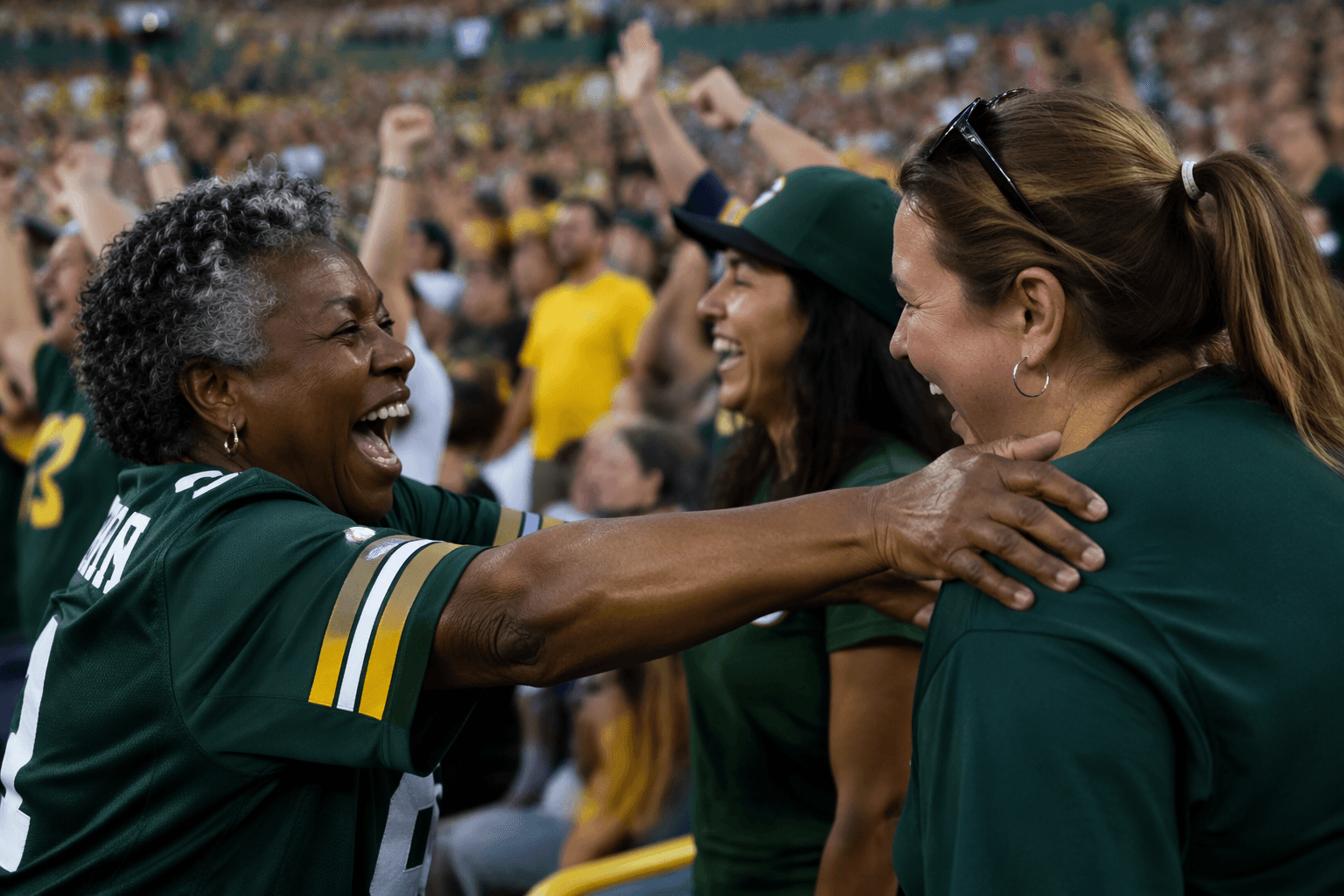
A big sports win can do more than light up a scoreboard. It can also give people a shared emotional language, a reason to gather, and a place to feel known. That is why researchers are increasingly treating fandom as a serious social force, not just a pastime.
Why belonging matters
Arthur Brooks, the social scientist and CBS News contributor, argues that the collective joy around a major sports victory can improve overall well-being. His central point is simple: sports fandom "gives you a sense of belonging, and that's really important." That line gets to the heart of why the subject matters far beyond stadium walls, because belonging is one of the most basic ingredients of mental health and social stability.
Harvard Kennedy School is now putting that idea to the test with a three-year Fandom and Social Connection Initiative, announced on May 11, 2026 and led by Todd Rogers, the Weatherhead Professor of Public Policy. Funded by FOX Sports, the project will study how sports fandom may strengthen social bonds, improve well-being, reduce loneliness and polarization, and create shared experiences. Harvard’s announcement also puts the scale of the phenomenon in stark terms: more than three quarters of Americans identify as fans of a major sports team, 83% describe themselves as passionate about their team, and 65% say fandom is important to their identity.
That combination of scale and intensity helps explain why fandom has moved from cultural trivia to a legitimate subject for policy-minded researchers. When so many people organize part of their identity around a team, the fan experience becomes a mass social institution. It can shape how people spend time, who they meet, and whether they feel part of something larger than themselves.
What the newer studies found
The clearest evidence comes from a University of Illinois study published in November 2025. Researchers found that social identification with a team can boost fans’ social well-being by building in-group trust, a sense of purpose, and the belief that fellow fans have the group’s best interests at heart. The study drew on surveys of 478 U.S. fans and 490 English Premier League fans in the United Kingdom, which gives it a broader base than a single-market snapshot.
The Illinois researchers also framed the issue against a wider social backdrop: loneliness and social isolation have become pressing concerns, especially since the COVID-19 pandemic. That matters because fandom can function like a ready-made social scaffold. It gives people recurring rituals, common references, and a built-in community, all of which can make it easier to talk to strangers, reconnect with neighbors, or simply feel less alone in everyday life.
An earlier article in the Journal of Sport Behavior reached a similar conclusion, finding that sport fandom and team identification were associated with both personal life satisfaction and social life satisfaction. Put differently, the benefits are not limited to one feeling of excitement after a win. They can show up in how people evaluate their lives more broadly, including whether they feel connected, satisfied, and socially anchored.
When fandom helps, and when it hardens
The strongest case for fandom is that it can create easy points of entry into social life. Shared allegiance lowers the cost of conversation, whether that happens at a bar, in a workplace, online, or in a family group chat. It can also bridge differences, because the common language of a team often cuts across age, income, geography, and background more easily than many other affiliations do.
But the same force that builds trust can also become tribal. When identity hardens into us-versus-them thinking, fandom can stop being a bridge and start acting like a boundary. That is why Harvard’s focus on polarization is so important: the social value of fandom depends on whether the community is open enough to welcome others, or narrow enough to sort people into insiders and outsiders.
Commercialization adds another pressure point. Modern sports fandom is often packaged through expensive tickets, premium subscriptions, targeted merchandise, and constant branding, which can turn a shared civic-like experience into a segmented consumer market. If the most visible version of fandom is the most expensive version, then the people most in need of belonging can be the least able to access it.
What the evidence says about the long run
The long-running academic view is increasingly consistent: fan communities can help people form relationships, reduce social isolation, and connect across backgrounds. That does not mean every fan culture is healthy, or that every team community automatically produces goodwill. It does mean that sports are one of the few large-scale institutions capable of generating repeated, emotionally meaningful contact among people who might otherwise have little reason to interact.
The policy implication is straightforward. If sports organizations, media companies, and researchers can protect the open, communal parts of fandom while limiting the exclusionary and hyper-commodified parts, they may preserve one of the most scalable forms of belonging in modern life. In a country where fandom already reaches most households, the question is not whether sports matter socially. It is whether they are being shaped to widen connection or to narrow it.
The best fan cultures do both things at once: they give people a place to stand, and they leave room for more people to join the circle.
This article was produced by Prism’s automated news system from verified source data, official records, and press releases, then run through automated quality and moderation checks before publishing. The system is built and supervised by the people who set the standards it runs under. Read our full AI policy.
Did this article answer your question?