Why Waiting Feels Worse Than Running Late, Psychologists Explain
Waiting can feel heavier than rushing because uncertainty hijacks attention, while lateness often comes with motion, control, and a clearer endpoint.
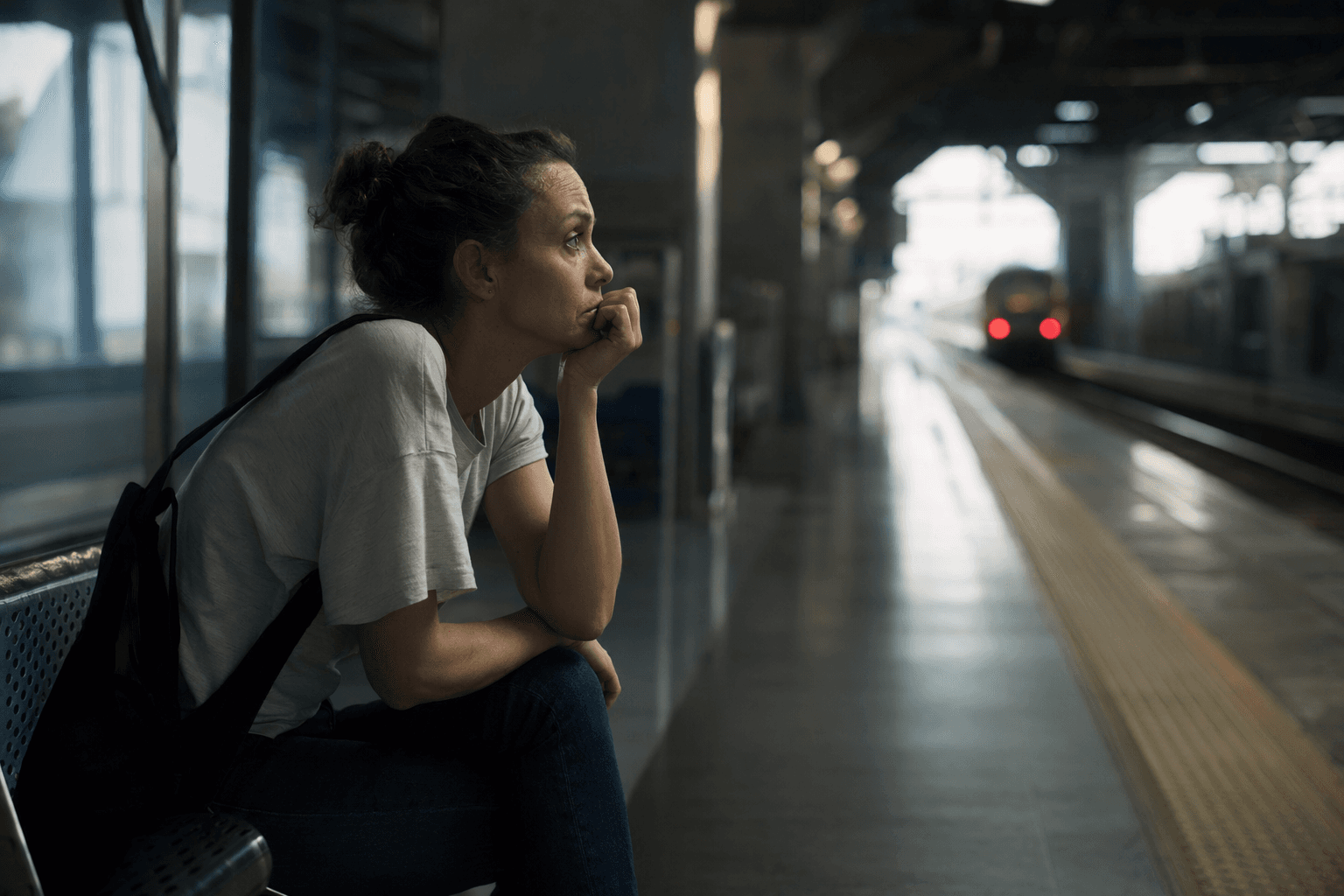
Why the wait feels so hard
Arriving early sounds disciplined, but it can feel worse than being a little late because waiting creates a different kind of stress. The American Psychological Association says waiting for uncertain news can become a source of anxiety and distraction, especially when the outcome matters and the future is hard to process. In that state, the clock does not just tick. It nags.
Kate Sweeny, a psychologist at the University of California, Riverside, has built much of her work around how people cope with uncertainty while waiting. That research helps explain why the minutes before an interview, diagnosis, flight, verdict, or call-back can feel larger than the event itself. The stress is not only about what might happen. It is about not knowing when, how, or whether it will happen at all.
Uncertainty is its own stressor
Psychologists have long found that anticipation can carry a cost similar to the stressor itself. Research summarized in the emotional-well-being literature shows that stressor anticipation can prospectively and negatively influence cognitive performance and emotional health. In other words, the body and mind can begin paying the price before anything actually happens.
More recent work on uncertain threat adds another layer: anxiety can build during the anticipation period itself. Studies from 2024 and 2025 found that when a negative event is possible but not fully predictable, the brain does not simply wait passively. It can escalate vigilance over time, raising the sense of threat and encouraging avoidance. That helps explain why sitting still and waiting often feels more punishing than being in motion, even if the moving, hurrying version of the day is objectively more hectic.
The American Psychological Association notes that this kind of uncertainty-related stress becomes especially sharp when the future feels difficult to interpret. If your mind cannot settle on a single outcome, it keeps cycling through possibilities, and that loop can be more draining than the inconvenience of being 10 minutes late.
Why some people handle it better than others
Not everyone reacts to uncertainty the same way. According to the APA, people with a higher intolerance for uncertainty are more likely to experience low mood and anxiety. That trait matters because waiting is rarely just about the wait. It is about what the wait represents: a grade, a job, a medical result, a relationship, an approval, a delay that may or may not be your fault.
Sweeny’s research on uncertainty helps show why two people can face the same ambiguous delay and experience it differently. One person may treat the gap as a temporary pause. Another may experience the same gap as an open-ended threat. That difference is not trivial. It changes attention, sleep, decision-making, and emotional control.
The discomfort of waiting can also reveal a deeper need for control. When you are early, you may have done everything “right,” but you still cannot speed up time. That loss of influence can feel especially sharp in high-stakes settings, where your effort has already been spent and all that remains is uncertainty.
Why lateness can feel easier than waiting
Running late is stressful, but it is active stress. You are choosing routes, checking traffic, and making decisions. Waiting is passive stress. You are forced into inaction while the mind fills the silence with what-ifs. For many people, movement feels more manageable than stillness because movement restores a sense of agency, even when the schedule is slipping.
There is also a psychological tradeoff between stressors. If you are late, the pressure is immediate and concrete. If you are early, the pressure is diffuse and unresolved. One is a deadline. The other is a question mark. That question mark can be harder to bear, especially when the stakes are high and the timing is uncertain.
The broader public-health and school literature reinforces that sleep loss, stress, and time pressure can alter mood and performance. That matters here because people who are sleep-deprived or already overloaded tend to experience waiting as more intrusive and less tolerable. Under strain, passive time often feels longer, while a hectic rush can create the illusion of progress.
What chronic lateness and punctuality can reveal
Being late is not always a moral failing, and being early is not always a virtue. Psychology Today has summarized research suggesting that chronic lateness may stem from time-based prospective memory and time-estimation bias. Time-based prospective memory is the ability to remember to do something at a particular time. Time-estimation bias is the tendency to misjudge how long tasks and transitions really take.
Those tendencies help explain why some people repeatedly underestimate the buffer needed to get out the door, while others arrive far too early out of caution. Personality differences matter too. So do habits, stress levels, and whether a person tends to focus on the immediate task or the next one.
Chronotype adds another layer. Harvard Health says morningness and eveningness are partly genetically determined, and Harvard researchers have linked chronotype to health and well-being in a genetic study involving nearly 700,000 people. A naturally early-rising person may find it easier to arrive before everyone else, while an evening type may experience early arrival as a bigger disruption to the body’s internal clock. The point is not that one pattern is better. It is that timing is personal, and biology helps shape that experience.
The social meaning of being on time
Punctuality is not only a scheduling habit. It is a social signal. CBS News has described it as a marker of self-discipline and a sign of respect for other people’s time. That is part of why lateness can feel embarrassing in formal or status-sensitive settings, while waiting too long before an appointment can feel almost humiliating. Time is never just time when other people are involved.
Culture also shapes that meaning. In some settings, time is organized more flexibly around relationships, context, and experience. In others, clock time dominates, and early arrival can become a way of showing competence, deference, or seriousness. The emotional weight of waiting, then, is not just about minutes lost. It is about what those minutes seem to say about your place in a system.
That is why arriving early can sometimes feel more stressful than being slightly late. Early arrival exposes you to uncertainty, status signals, and time anxiety all at once. Late arrival, by contrast, often comes with action, even if that action is messy. The brain may prefer a difficult task it can solve to an anxious pause it cannot control.
What the discomfort is really telling you
If waiting feels unbearable, that reaction is not irrational. It is often a clue that the stakes are high, the future is unclear, and your need for control has run into the limits of time itself. Anticipation can hit the nervous system as hard as the event, and for people who are especially sensitive to uncertainty, the wait can become the whole story.
That is the deeper lesson in the experience of being early. The discomfort is not just about idle minutes. It is about uncertainty, control, and the mind’s refusal to leave an important outcome alone.
This article was produced by Prism’s automated news system from verified source data, official records, and press releases, then run through automated quality and moderation checks before publishing. The system is built and supervised by the people who set the standards it runs under. Read our full AI policy.
Did this article answer your question?