Why your latte now costs £5 in some city centres
A £5 latte in central London is the retail face of climate shocks, trade friction and hotter competition in a coffee market still expanding.
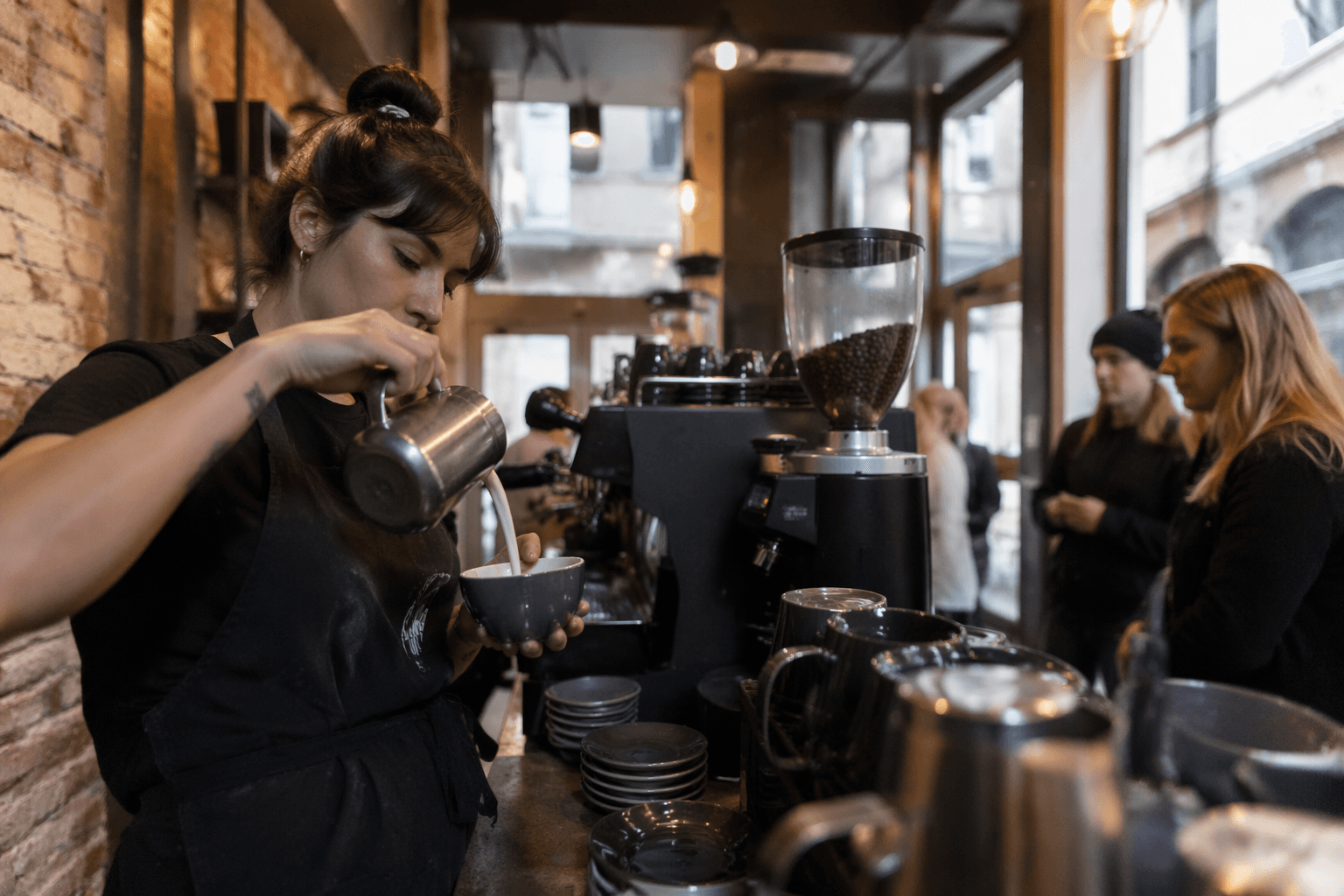
The £5 cup is doing a lot of economic work
A large coffee with alternative milk in central London is now edging close to £5, and that price tag is more than a gripe about café menu boards. It is the point where global weather shocks, shipping disruption, tariffs, labor costs and commodity trading all meet the person standing at the till. Reuters’ reporting on the BBC piece also put Dear Coco in west London at £4.50 for an iced latte, £4.10 for a 10 oz latte and £3.90 for a 6 oz flat white, which shows how quickly city-centre coffee is being repriced into a new bracket.

What the UK coffee market is telling you
The strongest clue that this is not just a temporary sting comes from the market itself. The UK branded coffee shop sector added 420 net new outlets in the 12 months to February 2026, taking the total to 12,313 sites, while market value rose to £6.8bn, up 5.5% over the year. That is not a sign of collapsing demand. It is a sign of a market that is still expanding even as individual drinks become more expensive.
The outlet battle has also shifted. Greggs now has 2,737 sites, just ahead of Costa Coffee on 2,707, making Greggs the overall market leader by outlets for the first time since 2007. That matters because it shows how the retail coffee map is changing: convenience-led chains, bakery formats and branded coffee operators are all competing for the same morning spend.
Average coffee-to-go prices have moved up sharply too. Lumina Intelligence has been cited as showing that the average price is up 80p since 2022 to £4.02. In other words, the £5 latte is not an isolated anomaly. It sits at the top end of a broad repricing trend already visible across the market.
From a bean in the ground to a price on the board
Coffee is one of the clearest examples of how a commodity travels through a layered global system before it reaches a cup. The modern coffee journey began in Turin, northern Italy, at a train station in 1895, but the modern price journey starts much earlier, in farms vulnerable to rain patterns, heat stress and disease. The International Coffee Organization says its Coffee Market Report is the sector’s monthly reference benchmark for price movements and supply-demand balances, which is a reminder that café pricing begins with volatile farmgate economics.
The Food and Agriculture Organization of the United Nations said that in December 2024 arabica coffee was 58% higher than a year earlier in real terms, while robusta was up 70%. It also noted that the price gap between arabica and robusta narrowed for the first time since the mid-1990s. That narrowing matters because it shows broad-based strain, not just a single variety in trouble. When both major grades surge at once, roasters, importers and cafés all face less room to absorb shocks.
Industry commentary in 2026 described the market as moving from record highs into a fragile correction, with supply tightness in Brazil and Vietnam still shaping prices alongside weather and policy disruption. Brazil is central to arabica supply, Vietnam to robusta, and when either side wobbles the effects are felt all the way down the chain. Climate shocks can hit flowering or harvest quality, shipping costs can add another layer of pressure, and tariffs or trade restrictions can squeeze margins further before the coffee even leaves port.
Why demand is keeping prices sticky
The price story is not only about supply. Demand has become more complex and, in some places, more powerful. The latte now sits inside a consumer culture shaped by Gen Z tastes, a growing appetite for iced drinks, matcha and premium hospitality, and the long rise of coffee as an everyday status good rather than a simple caffeine fix. In city centres, that means customers are not just buying liquid and milk. They are paying for speed, ambience, digital convenience and a branded experience.
That shift helps explain why operators are leaning into a split market. Industry analysis in 2026 described the sector as increasingly polarized between affordable and high-end offerings, with iced drinks, matcha and premium hospitality experiences reshaping competition. The same city can now support both a budget-led grab-and-go format and a higher-priced, more curated coffee stop. The £5 latte is the latter model pricing in all of its overheads at once.
Global demand also keeps tightening the screw. The latte’s economics reflect rapid consumption growth from the Chinese middle class, which has added a major new source of buying power to a market already sensitive to weather and inventory cycles. The long shadow of the Vietnam War also still hangs over the coffee map, because today’s production geography and trade flows were shaped by historic disruption that continues to influence where robusta is grown and how supply chains are organized.
The business response: sell an experience, not just a drink
Some operators are responding by trying to define what coffee should cost, and what kind of café experience justifies the price. In Soho, London, entrepreneur Scott Martin launched Unity Coffee in December 2025 as a challenge to “Big Coffee.” Martin, who built Coffee Nation and the self-service Costa Express coffee stations, said the high street coffee market had “lost its way,” and argued that consumers were becoming more price-sensitive as costs rose.
His list of pressures is the reality behind many modern café menus: coffee beans as a commodity, business rates, national insurance contributions and dairy inflation. He also pointed to a warning from Caffè Nero’s Gerry Ford that prices could rise even if bean prices fall, which captures a critical point in the current market. A lower commodity price does not automatically mean a cheaper latte, because retail coffee pricing is loaded with labor, rent, energy, logistics and brand-positioning costs.
That is why the £5 coffee should be read as a macroeconomic signal. It shows how disruption in Brazil or Vietnam, a surge in shipping charges, a tariff change, a rise in dairy costs or a shift in urban consumer tastes can be bundled into a single purchase made before the morning commute. The cup looks small, but it carries the full weight of global inflation, and in many city centres, that weight now shows up on the receipt.
This article was produced by Prism’s automated news system from verified source data, official records, and press releases, then run through automated quality and moderation checks before publishing. The system is built and supervised by the people who set the standards it runs under. Read our full AI policy.
Did this article answer your question?

