Wide-open California governor race intensifies as seven candidates debate in Los Angeles
Seven candidates faced off in Los Angeles as California’s top-two primary and a leaderless field turned the governor’s race into a scramble.
The California governor’s race has become something rare in state politics: a wide-open contest with no incumbent, no clear front-runner and a primary system that can send two candidates from the same party into November. That structure made the seven-candidate debate in Los Angeles on May 6 less a routine campaign checkpoint than an early test of who can survive a fractured field.
The debate brought together five Democrats and two Republicans, reflecting a race that has lost its usual hierarchy. Eric Swalwell’s exit in April, after sexual assault allegations that he denied, blew a hole in the Democratic race; before leaving, he had led some primary polls. His departure left the party’s contenders splitting attention and support among Xavier Becerra, Katie Porter, Tom Steyer and San Jose Mayor Matt Mahan, while Steve Hilton and Riverside County Sheriff Chad Bianco carried the Republican banner.
California’s June 2 primary gives the contest its unusual shape. All candidates run on the same ballot, and the top two vote-getters advance to November regardless of party. That means the race is not simply a partisan head-to-head. It is a contest over which candidates can assemble the broadest coalition in a state where ballot lines matter less than turnout, persuasion and name recognition. Ballots were scheduled to go out in early May, underscoring how quickly voters had to sort through a crowded field.
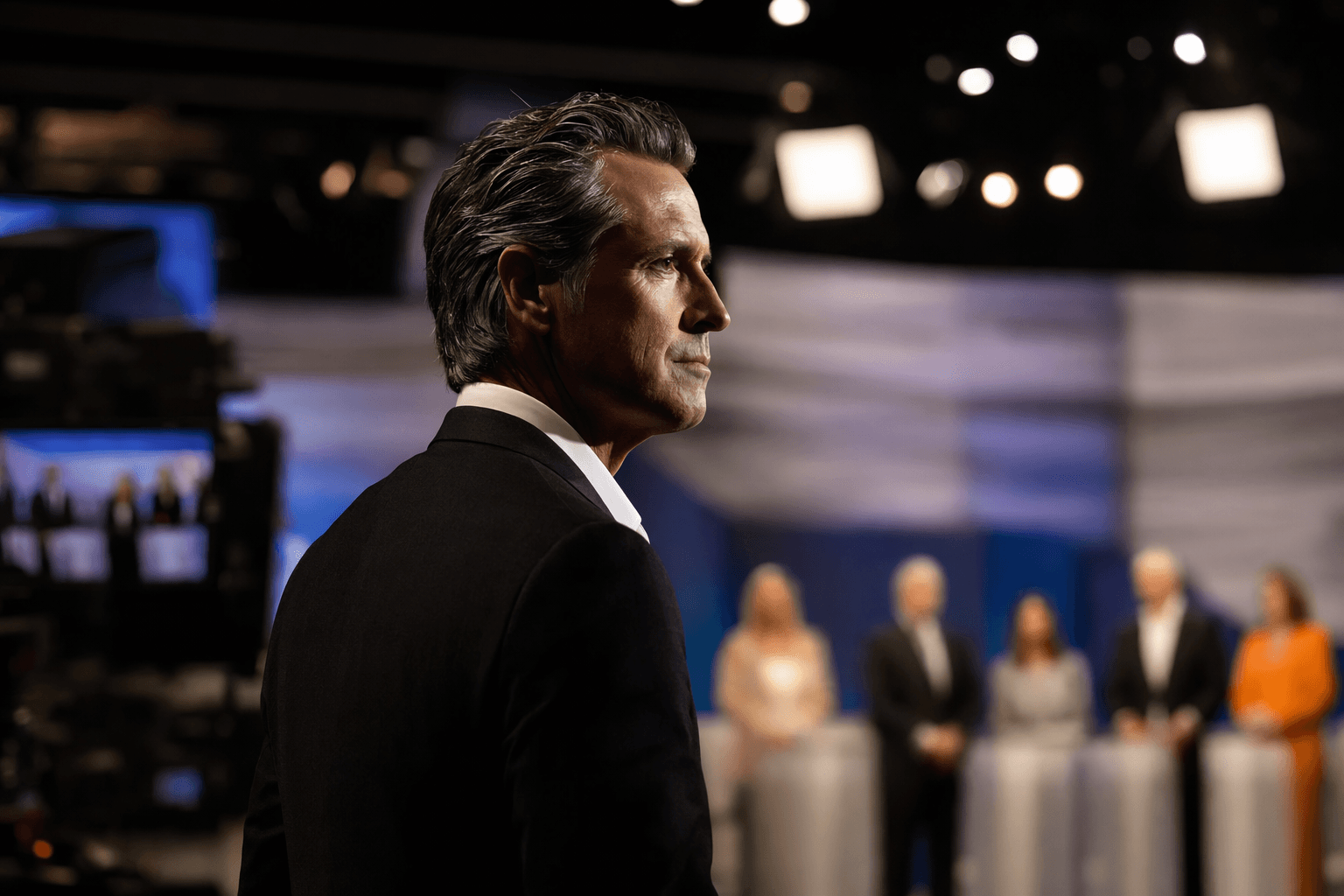
The debate also highlighted the issues driving the campaign. Affordability, housing costs, gas prices and homelessness dominated the conversation, reflecting dissatisfaction with state politics that has made the race especially volatile. In a field without an incumbent and without a dominant standard-bearer, those bread-and-butter concerns have become the main currency of the campaign.
That is what makes this race hard to read using conventional polling and familiar campaign logic. A candidate can lead one primary survey and still face a collapsing field, a fractured coalition and a top-two system that rewards broader appeal over party loyalty. With ballots already going out and the primary only weeks away, the contest in California is less about clearing a traditional primary lane than about finding a path through one of the most unsettled governor’s races the state has seen in years.
This article was produced by Prism’s automated news system from verified source data, official records, and press releases, then run through automated quality and moderation checks before publishing. The system is built and supervised by the people who set the standards it runs under. Read our full AI policy.
Did this article answer your question?

