Wind grounds Colorado's new Firehawk as federal helicopter fights Douglas brush fire
Colorado’s $24–$25M S-70 Firehawk was grounded by wind at Rocky Mountain Regional Airport, while a 50–51-year-old U.S. Forest Service Type 2 helicopter made 27 bucket drops south of Castle Rock.
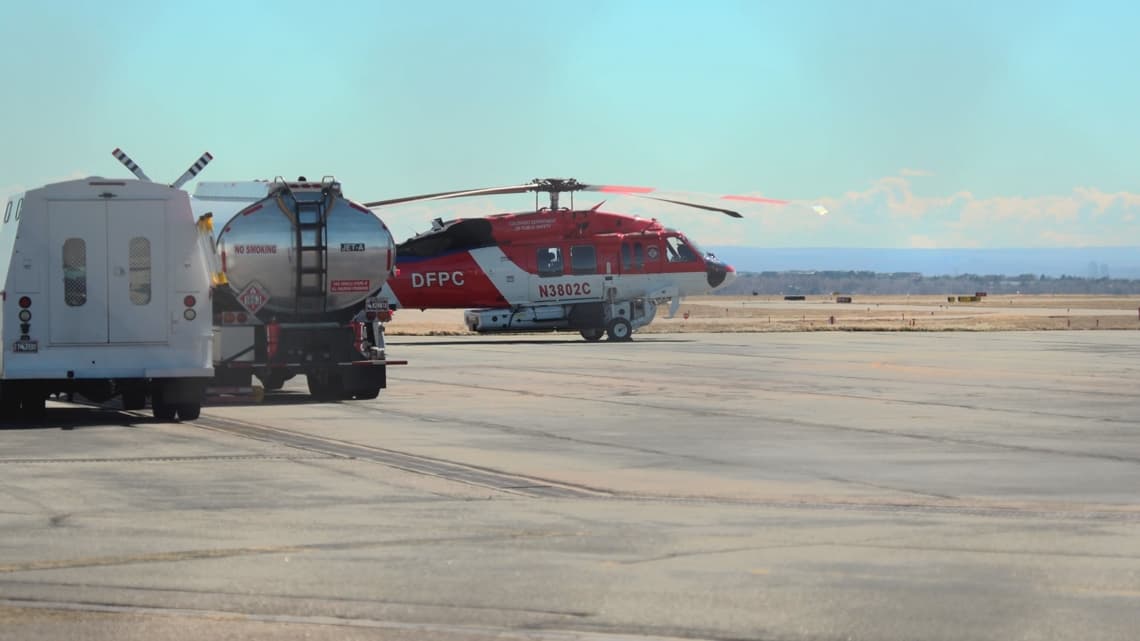
Colorado’s newly purchased S-70 Firehawk did not launch for a fast-moving brush fire south of Castle Rock and near Parker after the pilot declined the mission because of wind and turbulence at the departure point, the Colorado Department of Fire Prevention and Control said. A U.S. Forest Service Type 2 helicopter based less than 100 yards away at Rocky Mountain Regional Airport in Broomfield launched instead and completed 27 water-bucket drops over approximately one hour to help contain the blaze before it damaged any structures.
Douglas County officials had requested state aviation support during the Feb. 26–27, 2026 brush fire; DFPC confirmed the agency’s Firehawk was grounded “due to wind speeds and turbulence at the point of departure.” DFPC emphasized that “aviation safety decisions are made by the pilot-in-command based on the specific aircraft's limitations, current load, and localized weather” and that “The S-70 Firehawk has specific, strict safety thresholds for wind and turbulence to ensure the airframe and crew remain safe in high-risk environments.”
State and local timelines in the day’s response place the launch decision first and a separate personnel issue later: after the Firehawk mission was declined because of wind, the same Firehawk based in Broomfield was taken out of service later that day for a pilot’s family emergency. DFPC also said, “We do not second-guess any pilot's safety-based decision to decline a mission,” and added, “We cannot speak to the information or decision-making of the USFS Type 2 helicopter, as that is unknown to us.”
The responding federal helicopter is described in contemporary reports as roughly 50 to 51 years old and classified as a Type 2 helicopter; sources vary on the exact age wording. That older federal aircraft’s sustained work over about an hour was credited with protecting structures near the blaze. DFPC also noted that a federally contracted Air Attack platform was unable to fly that same day, further constraining fixed-wing and command-and-control aviation options.
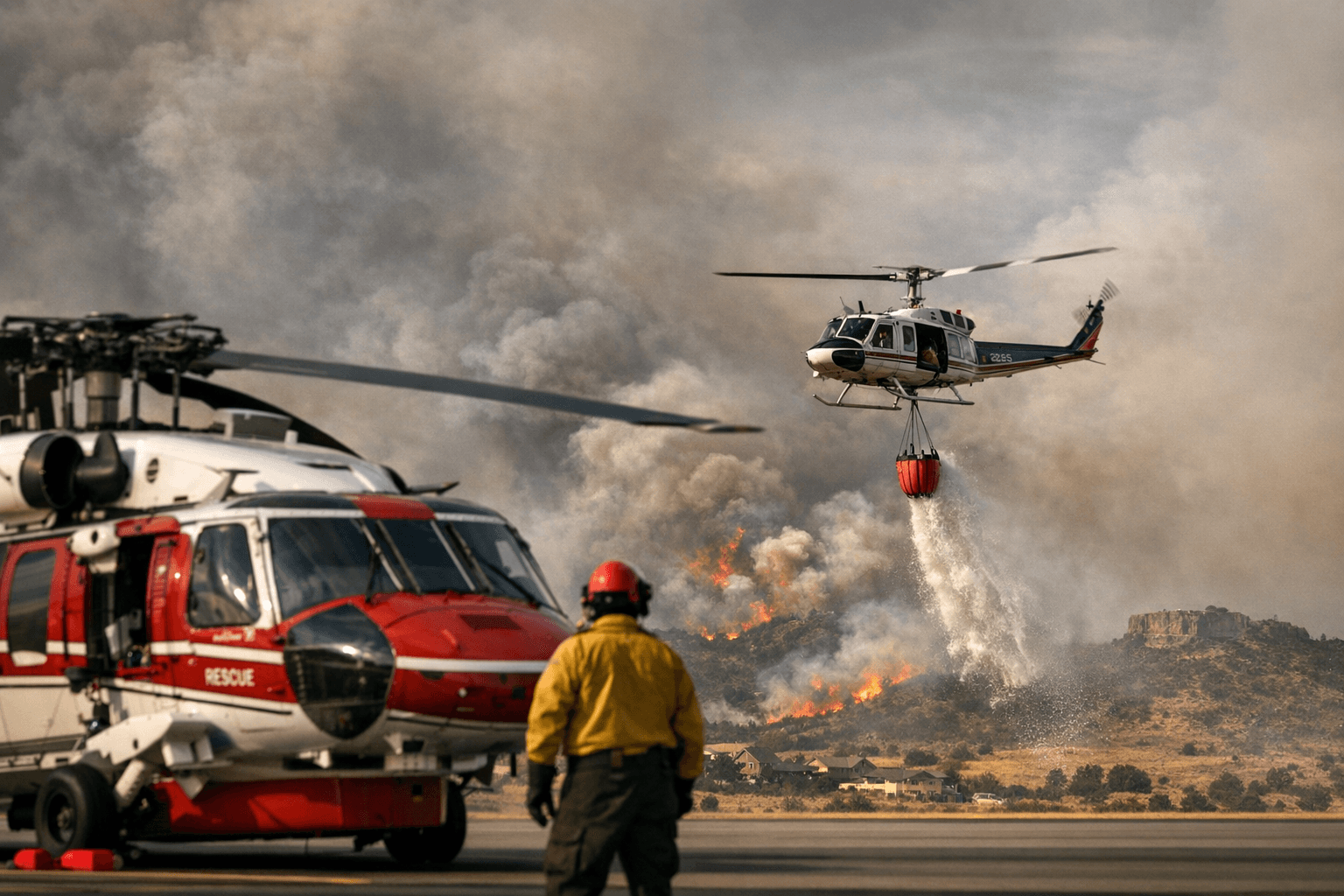
Public and social commentary picked up on the contrast between the state’s new, expensive asset and the decades-old federal platform. One online video summary paraphrased a state comment as: “The state said a much older and much cheaper Forest Service helicopter can fly in higher winds than the state's new $25 million Firehawk.” On an aviation forum a user asked, “under what conditions can a Huey operate that a Firehawk/Blackhawk can't?” reflecting local curiosity and technical speculation rather than an authoritative timeline or technical explanation.
Key operational questions remain unanswered in official statements: DFPC did not provide numeric wind-speed or turbulence thresholds for the S-70 Firehawk, the exact make and model of the USFS Type 2 helicopter was not specified, and particulars about the federally contracted Air Attack platform’s inability to fly were not released. Those technical gaps will shape any after-action review of interagency aviation choices during the Feb. 26–27 Douglas County brush fire.
Know something we missed? Have a correction or additional information?
Submit a Tip