WMO Sees 55 Percent Chance of Weak La Niña This Winter
The World Meteorological Organization said there is roughly a 55 percent probability that a weak La Niña will develop from December 2025 through February 2026, a shift that could alter rainfall and temperature patterns worldwide. The outlook matters for farmers, utilities and insurers because it raises the risk of droughts in some areas and floods in others, even as global warming keeps many regions warmer than normal.

The World Meteorological Organization on Thursday assessed a roughly 55 percent probability that a weak La Niña event will develop between December 2025 and February 2026, a development that could reshape weather risks for parts of the globe this northern winter and southern summer. The agency said oceanic and atmospheric indicators observed in mid November pointed to borderline La Niña conditions, while neutral conditions were judged more likely to return by early to mid 2026.
La Niña, the cool phase of the El Niño Southern Oscillation, typically shifts tropical rainfall and atmospheric circulation in ways that favor heavier rains across parts of Southeast Asia, Australia and northern South America, and drier conditions across other areas including parts of the southern United States and parts of South America. The WMO cautioned that impacts will not be uniform, and stressed that even with La Niña some regions could remain warmer than normal because of the long term warming trend in the climate system.
For economic actors the WMO outlook amplifies known seasonal exposures. Agriculture is sensitive to both the distribution and timing of rainfall. A weak La Niña can increase the risk of drought in crop producing regions that rely on late season rains, and conversely increase flood risks where heavier monsoon or cyclone activity is more likely. Those shifts can alter yields, strain irrigation systems and influence commodity price volatility. Energy systems could face higher demand in some markets for cooling or heating depending on regional temperature anomalies, and hydropower output is vulnerable to swings in river flows. Transport networks are at risk from extreme precipitation and flooding that can delay shipments and disrupt supply chains.
Insurers and sovereign risk managers factor such seasonal climate probabilities into premiums and preparedness budgets. A 55 percent chance is not a certainty, but it is materially higher than a coin toss and warrants contingency planning. The WMO explicitly urged preparedness across agriculture, energy, health and transport sectors, calling attention to measures such as water resource management, surge capacity for emergency services and strengthened flood defenses.
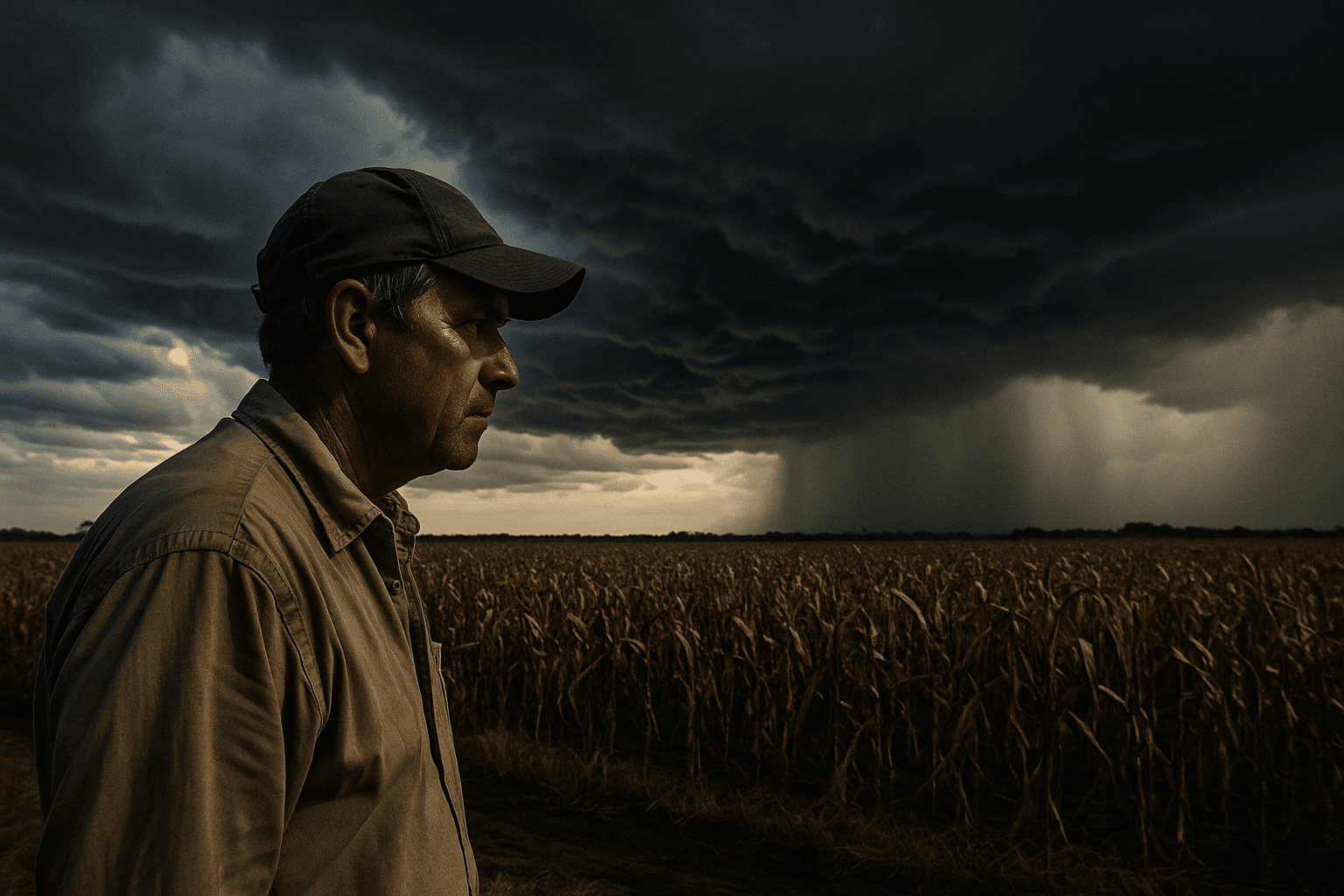
The agency also noted that neutral conditions are more likely by early to mid 2026, indicating the La Niña risk is transitory. That timeline matters for crop planting cycles and infrastructure decisions that look across seasons. Policymakers and market participants must balance short term responses with longer horizon climate adaptation, because the baseline for weather extremes is shifting.
Economically, the immediate question will be how markets and governments price this probability into risk assessments and budgets. Commodity markets are sensitive to weather risk, and insurers may adjust coverage terms in exposed regions. For countries dependent on rain fed agriculture or hydropower, even a weak La Niña can translate into measurable fiscal stress.
The WMO outlook frames a near term window of elevated weather risk, but it also underscores the interaction between natural climate variability and the persistent warming trend that can amplify harm. Preparations now can reduce the economic and human costs should wetter or drier conditions materialize in the months ahead.
This article was produced by Prism’s automated news system from verified source data, official records, and press releases, then run through automated quality and moderation checks before publishing. The system is built and supervised by the people who set the standards it runs under. Read our full AI policy.
Did this article answer your question?


