Wolf Supermoon Peaking Jan. 3 Offers Winter Sky Spectacle
The full "Wolf" Supermoon peaks early on 3 January 2026, producing the largest and brightest full moon of the winter season thanks to a rare alignment of lunar and Earth-Sun geometry. The display will be visible at dusk and into the night across much of the globe, offering fertile ground for public outreach, cultural reflection and striking photography.
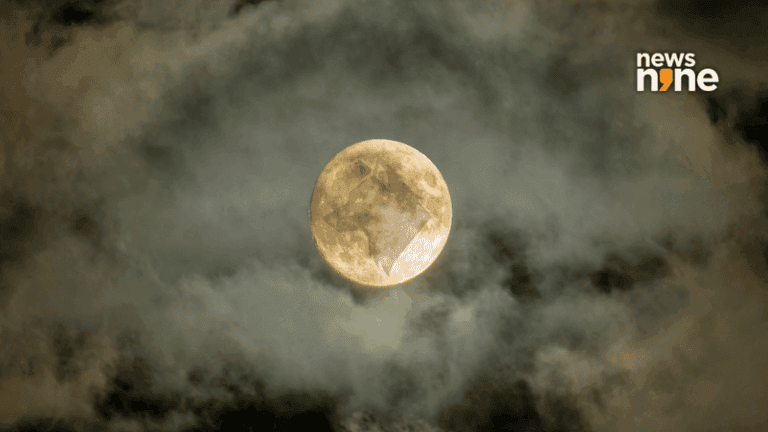
The full Moon known as the Wolf Moon reaches peak fullness on 3 January 2026 at about 10:03 GMT, producing what astronomers describe as one of the most striking full-moon displays possible. The event combines a lunar perigee - the Moon's closest approach to Earth at roughly 362,312 km (225,130 miles) - with Earth near its perihelion, yielding a cumulative brightness and apparent-size boost that sets this January full Moon apart.
Measured against the Moon at its most distant point, or apogee, the perigee produces an apparent size increase of roughly 14 percent and a brightness increase of about 30 percent. The slightly closer Sun-Earth distance at perihelion adds a further, smaller increase in the amount of sunlight reaching the Earth-Moon system. Together these factors make the January Wolf Supermoon one of the brightest lunar appearances the sky will offer this year.
Observers can catch the Moon as it rises in the east at dusk on the evening of 2 January local time in many regions, and will find it climbing high through the winter sky thereafter. In parts of the United Kingdom, example moonrise times are 15:06 in Aberdeen, 15:48 in Belfast and 15:51 in Oxford, illustrating how early winter full moons can be for northern latitudes. The Moon will be at its most photogenic when low on the horizon at moonrise, an effect amplified by the well-known visual Moon illusion that makes near-horizon objects appear larger.
Amateur astronomers and families are being encouraged to take advantage of the convenience of an early-rising winter full Moon. The Wolf Moon will share the sky with bright planets and familiar winter constellations, creating opportunities for side-by-side comparison and public engagement. Jupiter will remain close to the Moon on the night of 3 January and continues toward opposition on 10 January, while the winter figure of Orion and the planet Saturn will be visible in the same sector of sky at moonrise for many observers.
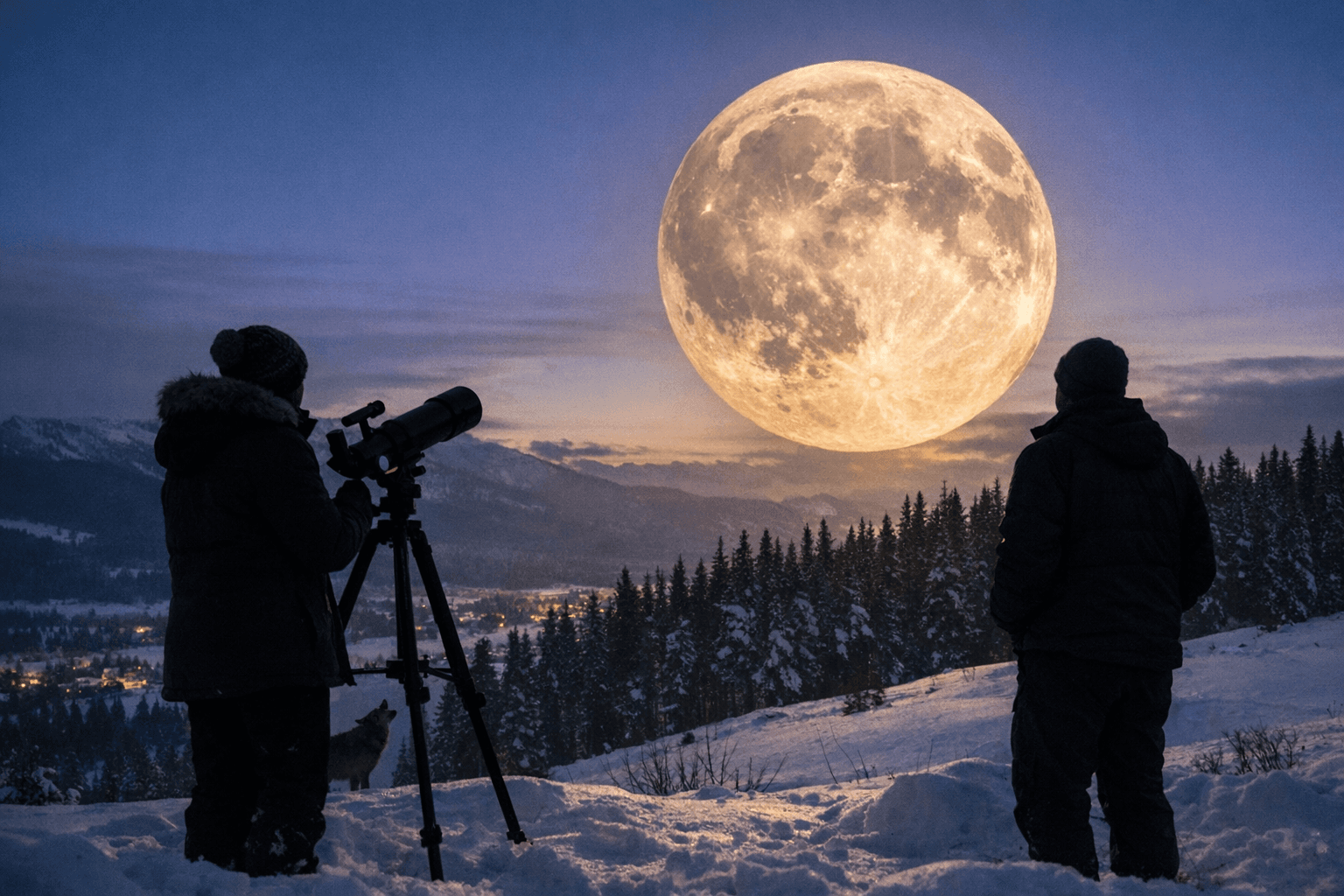
This January event is the fourth consecutive supermoon following similar events in October, November and December 2025, and it is expected to be the last supermoon until 24 November 2026. Although the measurable increases in size and brightness are clear in scientific terms, casual viewers should not expect a dramatic, eye-popping change; the most memorable impressions will come from composition, contrast with nearby planets and constellations, and clear atmospheric conditions.
Beyond its physical spectacle, the Wolf Moon carries layers of cultural meaning. Traditional names reflect seasonal realities around the world, from Anglo-Saxon references to the "Moon After Yule" to Indigenous terms such as the Dakota "Severe Moon," underscoring how communities have long read the lunar cycle as a marker of climate, ritual and the passing year.
Skywatchers in urban and rural areas alike should check local moonrise times and the weather forecast for the best viewing. Photographers and public programming organizers may find the evening of 2 January and the early hours of 3 January an ideal moment to engage audiences with the natural rhythms that connect people across latitudes and cultures.
This article was produced by Prism’s automated news system from verified source data, official records, and press releases, then run through automated quality and moderation checks before publishing. The system is built and supervised by the people who set the standards it runs under. Read our full AI policy.
Did this article answer your question?