Woman's repeated pleas for protection failed before her husband killed her
Angela Prichard called 911 as her husband closed in, said “Chris,” and the line went silent with a gunshot. A warrant for him had been issued nine days earlier.
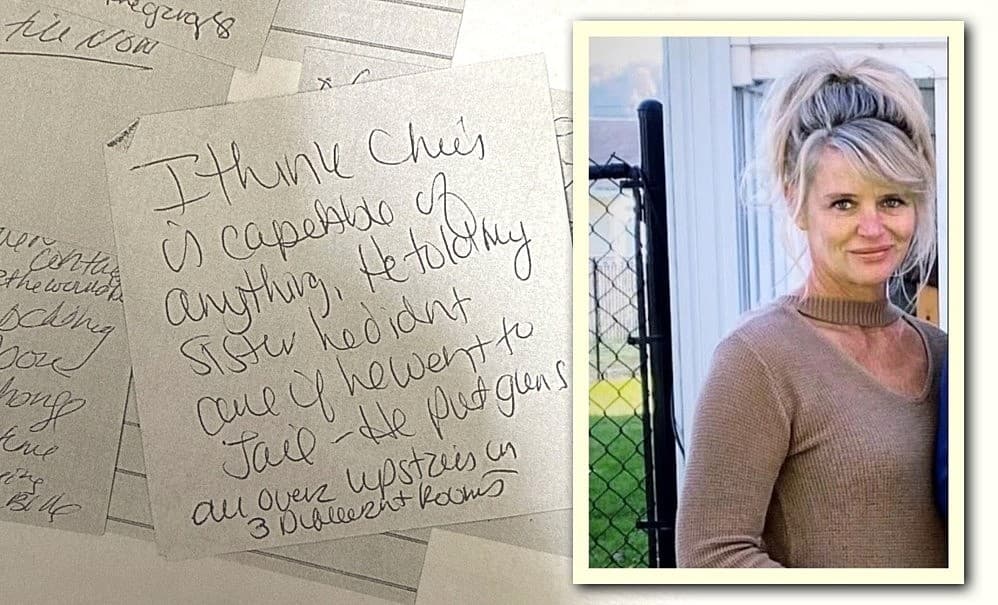
Angela Prichard had already done what the system asks of people in danger: she moved out, sought a no-contact order, and called police when the threat returned. None of it stopped Christopher Eugene Prichard from walking into her Jackson County workplace and killing her with a 20-gauge shotgun.
The attack came at Mississippi Ridge Boarding Kennels, the dog-boarding business Angela Prichard ran in Jackson County, Iowa. She arrived at work at 7:34 a.m. on Oct. 8, 2022, and called 911 about five minutes later. Investigators say her last words on the call included her husband’s name, “Chris,” followed by a gunshot. She was 55.

The warning signs had been building for weeks. Angela Prichard had moved out of the marital home and was living with her sister because she feared Christopher Prichard. Court filings said she wrote that he was “capable of anything,” that he had guns “all over upstairs in 3 different rooms,” and that she did not feel safe anywhere anymore. A temporary no-contact order was granted on Sept. 2, 2022, but a warrant for Christopher Prichard was not issued until nine days before the killing, after he violated that order.
That gap has become the core of the case. Angela Prichard’s family said police should have enforced the order and arrested him sooner, arguing that repeated pleas for protection were met with delay instead of decisive action. In court, the case was described as a failure of enforcement that left a woman exposed to a man the system already knew had broken boundaries designed to keep her safe.
Christopher Prichard was arrested about 16 hours after the shooting and admitted to police that he shot Angela. He was convicted of first-degree murder and robbery in February 2024 and sentenced in March 2024 to life in prison without parole. The Iowa Court of Appeals affirmed the conviction on May 7, 2025.
Bellevue, a Mississippi River town of about 2,500 people, had not seen a homicide in nearly a decade. The killing of Angela Prichard turned a private campaign of stalking and intimidation into a public reckoning over whether no-contact orders, arrest warrants, and police response mean enough when domestic violence escalates. Her family sued the City of Bellevue and three officers in 2024, alleging failures to enforce the order and favoritism toward Christopher Prichard; a federal judge dismissed the case in January 2025, and the family appealed.
This article was produced by Prism’s automated news system from verified source data, official records, and press releases, then run through automated quality and moderation checks before publishing. The system is built and supervised by the people who set the standards it runs under. Read our full AI policy.
Did this article answer your question?