Wonder Woman origin story reveals how an American icon was created
Wonder Woman began as a test of audience appetite, then became a lasting argument over who gets to embody America. Her path from comic pages to feminist and pop-culture icon still shapes the meaning of heroism.
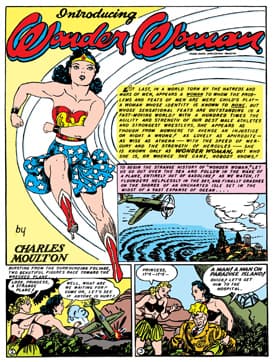
Adriana Diaz’s look at Wonder Woman lands on a larger American question: who gets to stand in for the nation, and what values should that figure carry? Wonder Woman was not born as a foregone conclusion. She was introduced in 1941 as an experiment, created when female superheroes were still rare, and she grew into a symbol whose meaning has shifted with each generation of readers, activists, and viewers.
A hero built to test the market
Wonder Woman first appeared in All Star Comics #8 on October 21, 1941, in a back-up story designed to test whether readers would respond to a female superhero. That detail matters because it shows how cautious publishers were about women in capes at the time. William Moulton Marston created the character in 1941 under the pen name Charles Moulton, with artist Harry G. Peter shaping her early visual identity.
Marston’s wife, Elizabeth Holloway Marston, also figures into the origin story. DC says she supported the character’s creation, a reminder that the birth of an icon was not just the work of one man with a typewriter and pen name. It was shaped by a household, a collaboration, and a deliberate attempt to create something new for American readers.
Why she looked and sounded different from the start
Wonder Woman was designed to do more than entertain. Smithsonian materials describe Marston as creating her to provide a strong female role model for American readers, and that aim is central to why the character endured. She was not simply a female version of an existing hero. She represented a challenge to the idea that courage, authority, and public virtue belonged mainly to men.
The character’s first standalone comic, Wonder Woman #1, followed in 1942. DC says her solo series has not been out of print for decades, which is a striking measure of staying power in a medium where many characters fade quickly. Her longevity suggests that the original question Marston posed still resonates: what kind of figure can speak to American ideals while expanding who is allowed to represent them?
From comic-book success to national symbol
Wonder Woman’s cultural reach widened as her image moved beyond the page. DC marks her as a symbol of truth, justice, and equality, and that language has helped make her feel both specific and civic. She is not just a fantasy character; she has become a shorthand for a particular version of American aspiration, one tied to fairness and public responsibility.
That symbolic power is part of why her origin story remains important. A character created to see whether readers would accept a female superhero eventually became one of the most recognizable faces in American popular culture. In a country that is still debating whose stories define the national image, Wonder Woman’s rise shows how a comic character can enter the civic imagination and stay there.
Feminism claimed her before Hollywood did
Wonder Woman’s public meaning shifted again in 1972, when Ms. magazine put her on its first cover. That was a turning point because it recast the character from comic-book figure to feminist emblem. Gloria Steinem called her “a heroine for little girls” and also an alternative to comic-book violence for boys, a line that captures how she was being used to argue for different models of heroism for both girls and boys.
That feminist embrace did not erase the older patriotic meaning. Instead, it broadened it. Wonder Woman could stand for American ideals while also challenging American habits, especially the tendency to default to male heroes when looking for national symbols. Her image became part of a wider argument about whether patriotism had to look masculine to be legitimate.
Television made her familiar to millions
The 1975 to 1979 television series starring Lynda Carter pushed Wonder Woman into even wider pop-culture fame. Television changed her from a comic-book icon into a household name, giving her a new visual life and a different kind of authority. Carter’s portrayal helped define the character for audiences who might never have opened a comic.
That screen version mattered because it translated the character’s ideals into mainstream entertainment at a moment when American culture was renegotiating feminism, family roles, and public symbolism. Wonder Woman became easy to recognize, but her meaning stayed layered: she was still a superhero, still a woman, and still carrying the burden of being asked to represent something larger than herself.
The archives show how seriously her origins are taken
The Smithsonian Libraries and Archives hold Marston-related Wonder Woman materials, including scripts and correspondence, and the Smithsonian Institution has also highlighted the character through its Wonder Woman spotlight. Those holdings underscore that the character’s history is not treated as trivia. It is studied as part of American cultural history.
The archival record also includes Joye Murchison Kelly, who was a student of Marston in 1944 and was hired to collaborate on script-writing for the Wonder Woman comic book series from 1945 to 1948. Her role adds another layer to the story of authorship and influence around the character. Wonder Woman’s creation and development were shaped not just by one creator’s theory, but by a network of collaborators whose work helped define the series in its earliest years.
An icon that still marks American debates
DC celebrated Wonder Woman’s 80th anniversary in 2021 with Wonder Woman Day on October 21, a fitting nod to the date of her first appearance. The celebration reflected how a character introduced as a test case became a lasting part of American identity. Eight decades after her debut, she still stands at the intersection of patriotism, feminism, and heroism.
That is why Wonder Woman’s origin story keeps resonating 250 years into the country’s history. She shows that American icons are not fixed by birth alone; they are revised by the values a nation decides to honor. In Wonder Woman’s case, the answer has changed over time, but the core challenge remains: America keeps asking who can embody its ideals, and her story proves that the answer can be both powerful and contested.
This article was produced by Prism’s automated news system from verified source data, official records, and press releases, then run through automated quality and moderation checks before publishing. The system is built and supervised by the people who set the standards it runs under. Read our full AI policy.
Did this article answer your question?