World Cup faces climate backlash as carbon footprint tops Qatar 2022
The expanded tournament’s footprint is estimated at 7.8 million tonnes of CO2e, more than double Qatar 2022, with travel driving most of the damage.
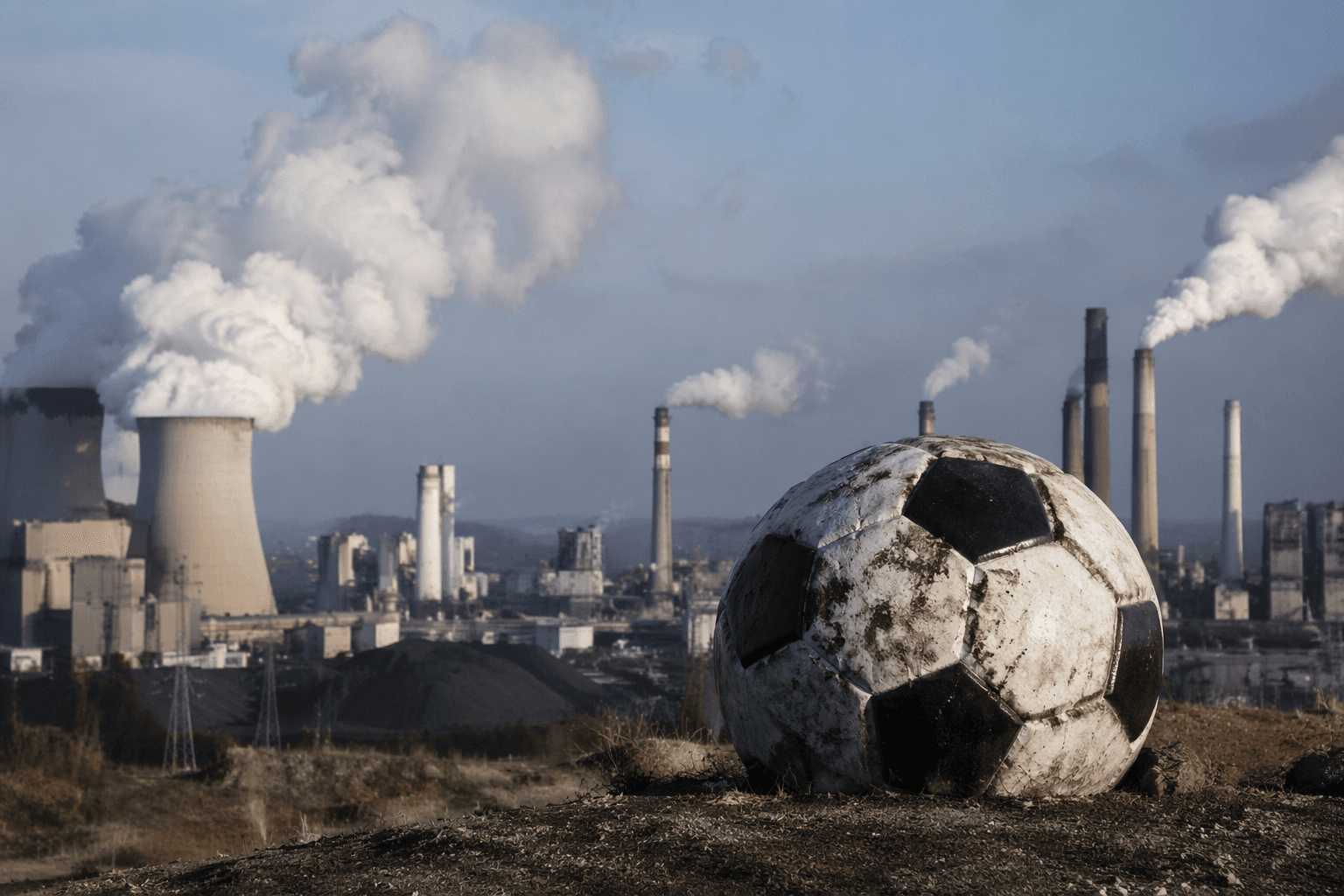
The World Cup’s biggest selling point, its global scale, is now also its biggest climate liability. A new assessment estimates the expanded 48-team tournament will generate 7.8 million tonnes of CO2e, more than double the official Qatar 2022 total, as teams, fans and media crisscross North America’s 16-city, three-country layout.
The numbers point to a tournament whose emissions are being driven less by stadium construction than by sheer geography. Greenly says existing NFL venues will keep infrastructure emissions to just 3% of the total footprint, but travel will dominate the ledger. Time estimates that 87% of the World Cup’s greenhouse gases will come from spectator travel, with international fans making up about 35% of attendances but producing 74% of travel-related emissions.
That shift matters because the 2026 event stretches across roughly 2,800 miles from Vancouver to Miami, turning the world’s richest sports property into a long-haul logistics problem. England supporters alone face group-stage trips spanning Dallas, Boston and New Jersey, a combined 1,721 miles, or about 2,769 kilometers. The distance is not a side effect of the tournament. It is the tournament.
Madeleine Orr, a sports ecologist, said the event is “bad from a climate standpoint,” even though it is obviously good for visibility and the sport itself. Her critique captures the central tension now facing FIFA: the organization is expanding the tournament to widen its audience, but the larger format also pushes more people onto planes and into transit networks that carry a measurable carbon cost.
Greenly estimates the total footprint is about 2.1 times Qatar 2022’s official reported emissions, a striking comparison given that the previous tournament’s climate burden was heavily tied to building new infrastructure in the desert. In North America, the pollution profile changes, but it does not shrink. The emissions are shifted toward movement, not construction, which makes the accounting harder to dismiss and the responsibility harder to assign to any single host city.

That leaves FIFA under sharper scrutiny over whether its climate promises can survive the realities of expansion. At COP26 in 2021, FIFA pledged to halve its carbon emissions by 2030 and reach net zero by 2040. A World Cup that relies so heavily on air travel raises the question of whether those targets are backed by a credible operational plan or whether the sport is simply exporting its carbon costs to teams, fans and host countries.
This article was produced by Prism’s automated news system from verified source data, official records, and press releases, then run through automated quality and moderation checks before publishing. The system is built and supervised by the people who set the standards it runs under. Read our full AI policy.
Know something we missed? Have a correction or additional information?
Submit a Tip