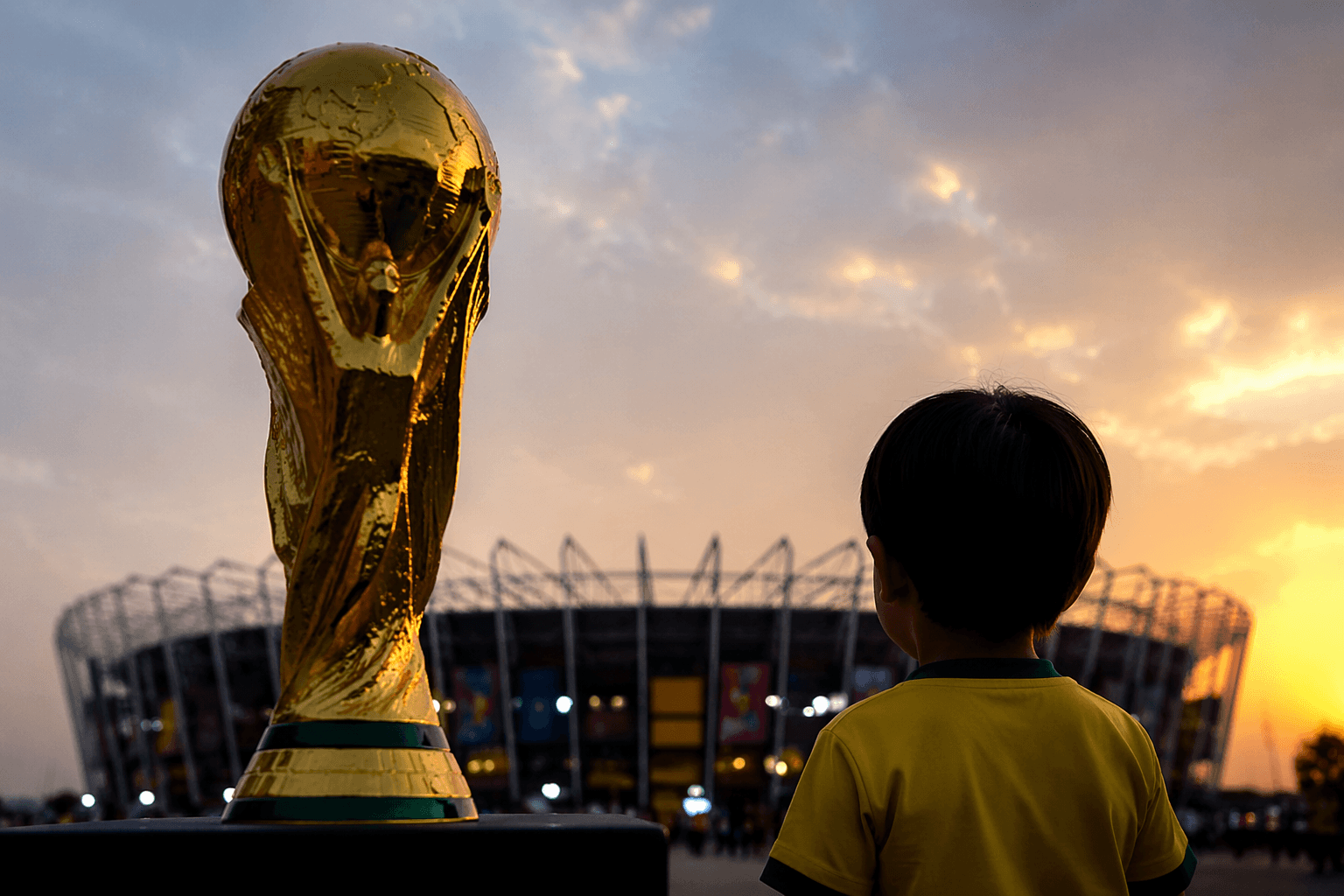
World Cup Golden Boot history, records and 2026 scoring race
The World Cup’s scoring crown has launched global icons, and 2026’s 104-match format could produce the most wide-open Golden Boot race yet.
The World Cup’s top scorer is never just a footnote. The Golden Boot often becomes the clearest shorthand for who defined a tournament, and in a U.S.-hosted 2026 event built around more games, more broadcast hours and more commercial reach, the race carries unusual weight.
Why the Golden Boot matters
The award is more than a scoring trophy. It captures the player who best converts pressure into goals on soccer’s biggest stage, which is why winners often become global reference points long after the final whistle. FIFA says 28 players have been crowned the tournament’s top scorer, a reminder that the prize has been shared across eras, styles and nations rather than dominated by a single name.
That breadth matters culturally as the World Cup returns to North America. The tournament’s leading scorers tend to become the faces casual American viewers remember most, because goals are the most legible currency in a sport that can still feel unfamiliar to a broad U.S. audience. A striker who keeps scoring in the United States, Canada and Mexico can become both a sporting hero and a marketable international brand almost overnight.
The records that shape the race
No Golden Boot conversation begins anywhere other than the record books. Miroslav Klose is FIFA’s all-time leading World Cup scorer, a benchmark that speaks to consistency across multiple tournaments. For a single edition, though, Just Fontaine still owns the most famous mark in the game: 13 goals at the 1958 World Cup, a total that remains untouched.
The next layers of the record chart show just how rare double-digit tournament hauls are. Sandor Kocsis scored 11 goals in 1954, Gerd Müller reached 10 in 1970, and Ademir de Menezes and Eusebio each finished on 9 in their respective World Cups. Those totals matter because they set the practical ceiling for modern scorers, especially in a tournament where knockout soccer quickly punishes even the best attacks.
How FIFA decides the winner
The Golden Boot system is straightforward, but the tiebreakers matter. FIFA awards the honor first to the player with the most goals, then uses assists to separate players who finish level. If they are still tied, fewer minutes played decides the outcome.
That structure is important because it rewards both finishing and efficiency. A player who scores the same number of goals as a rival can still win by creating more for teammates or doing it in fewer minutes, which gives the award a broader view of attacking impact than raw goal totals alone. In a tournament as compressed and volatile as the World Cup, those details can change the outcome.
The modern version of the prize also has a clear lineage. FIFA says adidas first awarded it in 1982 under the name Golden Shoe, and it was renamed Golden Boot in 2010. The rebrand reflected how central the award had become to World Cup storytelling, turning a scoring table into one of the most watched individual honors in global sport.
What 2022 said about star power
Qatar 2022 offered a clear example of how a Golden Boot race can help shape a tournament’s narrative. Kylian Mbappé won the award with 8 goals, Lionel Messi finished second with 7, and Olivier Giroud took Bronze. That finish underlined how a single scoring race can sit at the center of a broader cultural moment, with two of the sport’s biggest names driving not only results but global attention.
The 2022 race also showed how close the margin can be at the top. One goal separated Mbappé and Messi, which is exactly the kind of tight finish that makes the award resonate beyond pure statistics. For a worldwide audience, especially one that follows stars as much as teams, the Golden Boot is often the clearest weekly scoreboard of who is shaping the event.
Why 2026 could change the market for goals
The 2026 World Cup expands to 104 matches, 40 more than any previous edition, and that alone changes the scoring landscape. More matches mean more minutes, more group-stage opportunities and more chances for elite attackers to stack goals before the knockout rounds compress the field. FIFA has highlighted that there are “more goals than ever before” possible, and that is not just a slogan, it is a structural shift in the odds.
For American viewers, this matters because the World Cup is increasingly a star-driven media product. More games create more chances for one player to break through repeatedly on U.S. television, in stadiums across the host countries and across social media. That can accelerate a player’s transformation from elite athlete to household name, especially if the scorer comes from a major football nation such as France, Brazil, Germany or Portugal.
The commercial stakes are just as real. Top scorers often become the most visible figures in sponsor campaigns, jersey sales and post-tournament endorsements because goals create instant, replayable highlights. In a U.S.-hosted tournament, where soccer will compete for attention with the country’s other major sports, the Golden Boot race can be the cleanest story line for drawing in casual fans and sustaining interest across the full month.
The bigger meaning of the scoring race
The Golden Boot has always been a statistical honor, but it also functions as a cultural proxy for the World Cup itself. When Fontaine scored 13 in 1958, when Müller and Kocsis piled up double-digit totals, or when Mbappé edged Messi in 2022, the numbers did more than settle an award. They helped define what those tournaments felt like.
That is why 2026 carries unusual promise. A larger format gives history a better chance of being challenged, while the North American stage gives the winner a much bigger audience than ever before. If the World Cup produces a new scoring leader this summer, the player will not just join a list of 28 names. He will enter the narrow class of stars who turned goals into global recognition.
This article was produced by Prism’s automated news system from verified source data, official records, and press releases, then run through automated quality and moderation checks before publishing. The system is built and supervised by the people who set the standards it runs under. Read our full AI policy.
Know something we missed? Have a correction or additional information?
Submit a Tip