WTO Ministers Convene in Yaoundé Amid Deep Divisions and Trade War Risks
UK minister Chris Bryant warned of "a disorderly collapse of the WTO" as trade chiefs from 166 economies opened four days of fractious reform talks in Cameroon.
The WTO's 14th Ministerial Conference opened in Yaoundé, Cameroon, on March 26 with concerns about geopolitical strife and the future of the organization weighing on member governments. More than 2,000 trade officials, including more than 80 trade ministers, are expected to attend the four-day event, the second time a Ministerial Conference has taken place in Africa.
The stakes could hardly be higher. In her opening remarks, Director-General Ngozi Okonjo-Iweala acknowledged the gathering was taking place at a difficult moment for world commerce, saying: "We cannot deny the scale of the problems confronting the world today" and that "the world trading system is experiencing the worst disruptions in the past 80 years." She had earlier urged members to use Yaoundé to "launch the next chapter of the multilateral trading system," while making clear she expected the talks to be difficult.
The backdrop is unforgiving. The preparatory process produced a dense fog of competing reform proposals, draft ministerial statements, and work plans. Ministers arrived without a clear reform roadmap amid deep divisions, burdened by years of stalled multilateral deals and a six-year paralysis of the WTO's dispute settlement system. Compounding those structural problems, the talks are unfolding against the impact of the U.S.-Israeli war on Iran, which has disrupted global energy supplies and threatens serious damage to the world economy, while a year of tariff turmoil tied to U.S. President Donald Trump's weaponization of trade measures has further strained the system.
John Denton, secretary-general of the International Chamber of Commerce, put the business community's alarm bluntly: "From a business perspective this could yet become the worst industrial crisis in living memory," warning of energy price spikes caused by the war and subsequent food security risks in Africa due to fertilizer supply disruptions.
The facilitator-led consultations at WTO headquarters in Geneva focused for the past few weeks on decision-making, development and Special and Differential Treatment (S&DT), as well as level-playing-field issues, while the United States, European Union and others tabled their own reform submissions. Yet the core fault line remains unresolved: the U.S. supports reforms but is resisting a detailed work plan, while the EU, Britain, and China back one, according to internal reform documents seen by Reuters.
A specific flashpoint is the moratorium on customs duties for digital downloads, where the U.S. and India are set for a showdown over its extension. The EU Parliament, for its part, has called for a comprehensive overhaul of WTO functions, integration of plurilateral agreements, and a permanent solution on e-commerce tariffs.
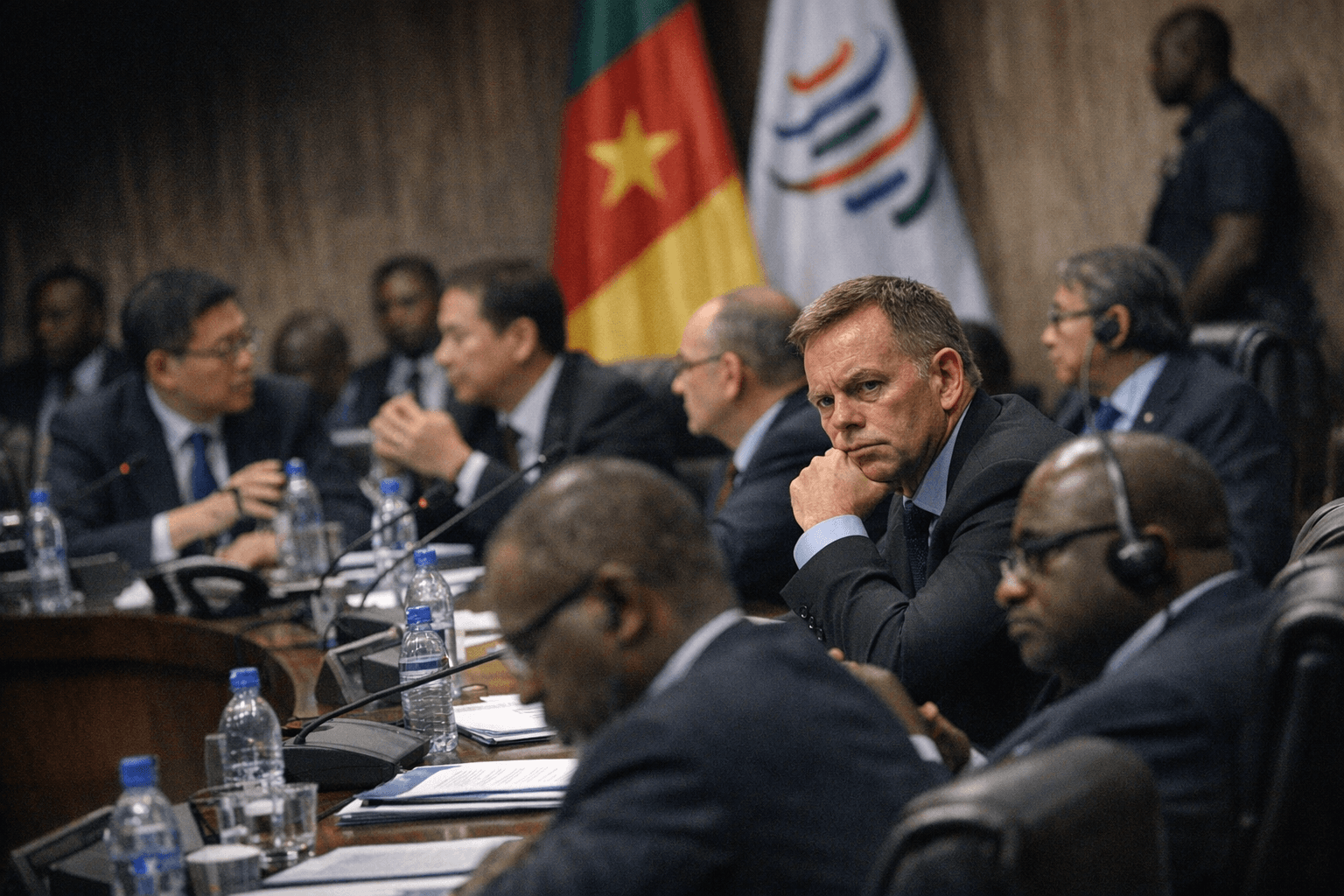
The warnings from senior officials of what failure would mean grew increasingly pointed in the days before the conference opened. Swiss Ambassador Erwin Bollinger offered one of the starkest: "If we don't achieve anything concrete, the WTO will lose its attractiveness and relevancy." UK trade minister Chris Bryant went further, warning: "My anxiety is if we ministers don't get this week right, you might see a disorderly collapse of the WTO and some people writing a new rule book."
The chair of the European Parliament's International Trade committee framed the EU's mission in blunt terms: "Trade without the WTO is unimaginable, but changes to the system are long overdue. We can no longer postpone the start of WTO modernisation."
Trade ministers from Norway, New Zealand, the Republic of Korea, the United Kingdom, Singapore and Costa Rica will serve as minister-facilitators for the discussions. The final day, March 29, will begin with a heads of delegation meeting at ministerial level in preparation for the closing session, scheduled to begin at 12:00.
Diplomats and officials have warned that if ministers leave empty-handed, it could push members to pursue other options for trade rulemaking outside the WTO entirely, accelerating the fragmentation of a system that has governed global commerce since 1995.
This article was produced by Prism’s automated news system from verified source data, official records, and press releases, then run through automated quality and moderation checks before publishing. The system is built and supervised by the people who set the standards it runs under. Read our full AI policy.
Did this article answer your question?