Xi and Putin unite against U.S. policy at Beijing summit
Xi Jinping and Vladimir Putin blasted U.S. policy in Beijing, but the biggest deal they did not announce was a long-awaited gas pipeline breakthrough.

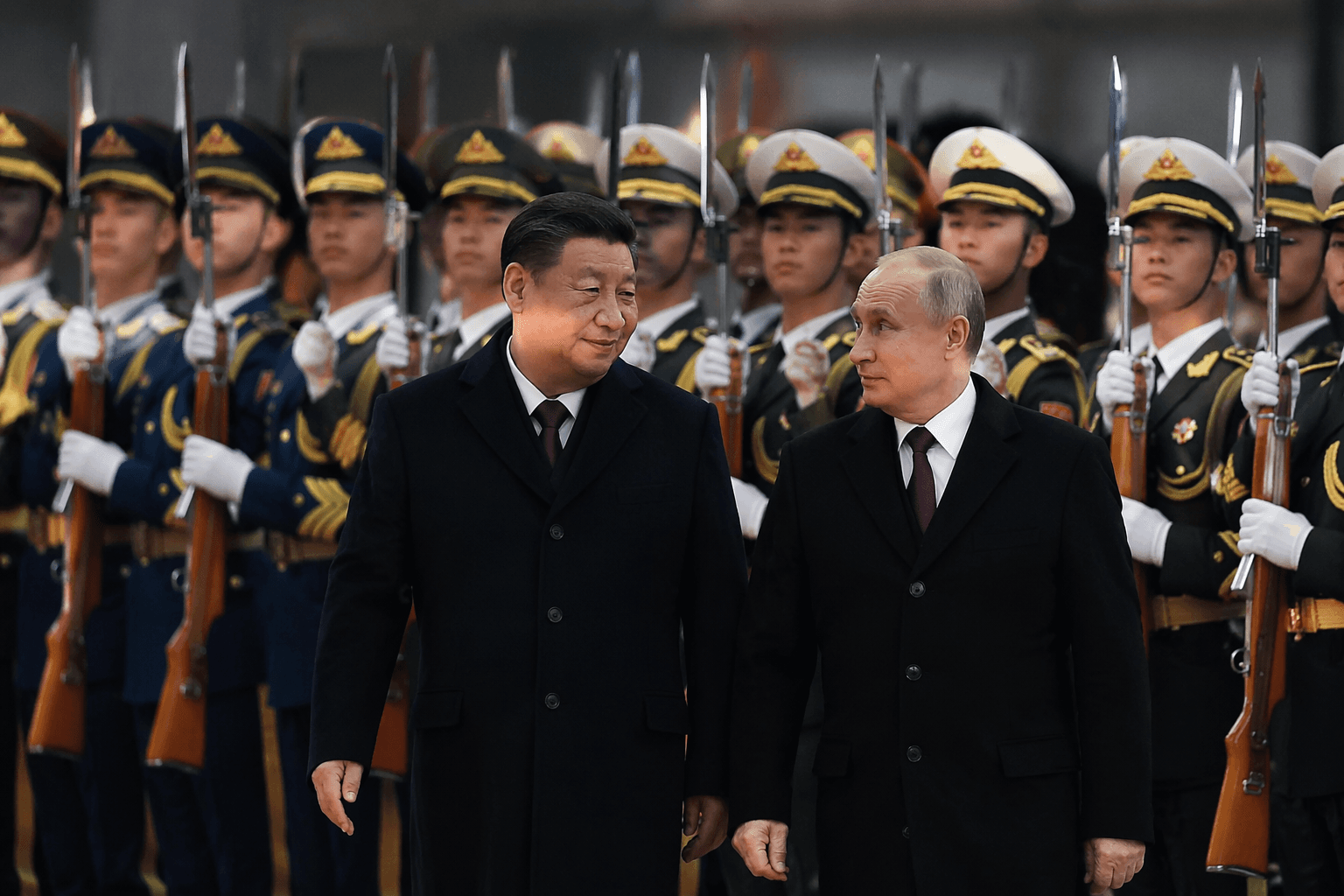
Xi Jinping gave Vladimir Putin full ceremonial treatment in Beijing, but the clearest result of the summit was the deal that never came. The Chinese and Russian leaders used their meeting at the Great Hall of the People on May 20 to criticize President Donald Trump’s Golden Dome missile-defense project and Washington’s “irresponsible” nuclear posture, yet they stopped short of announcing an agreement on the long-discussed Power of Siberia 2 gas pipeline.
Chinese coverage said Xi and Putin chatted over tea, toured a photo exhibition and witnessed the signing of cooperation documents, while Reuters-linked reporting put the total at around 40 or more agreements across trade, technology, media, education and energy. The choreography was deliberate: an honor guard, a gun salute and the optics of another carefully staged summit all reinforced the message that Beijing and Moscow want their partnership seen as both symbolic and strategic. Official Chinese reporting said Putin’s two-day state visit was his 25th trip to China.
The unresolved gas project was the more revealing story. Power of Siberia 2 would send Russian gas into China through Mongolia, but the sides still have not publicly settled pricing, financing, delivery timing, construction costs, supply volumes or transit concerns. That matters because the energy relationship already has real scale. Power of Siberia 1 began operating in 2019 under a 30-year, $400 billion agreement, and Russia is already China’s largest supplier of pipeline gas. Even so, the next stage has proved harder to close, a sign that commercial interests still set hard limits on the political theater.
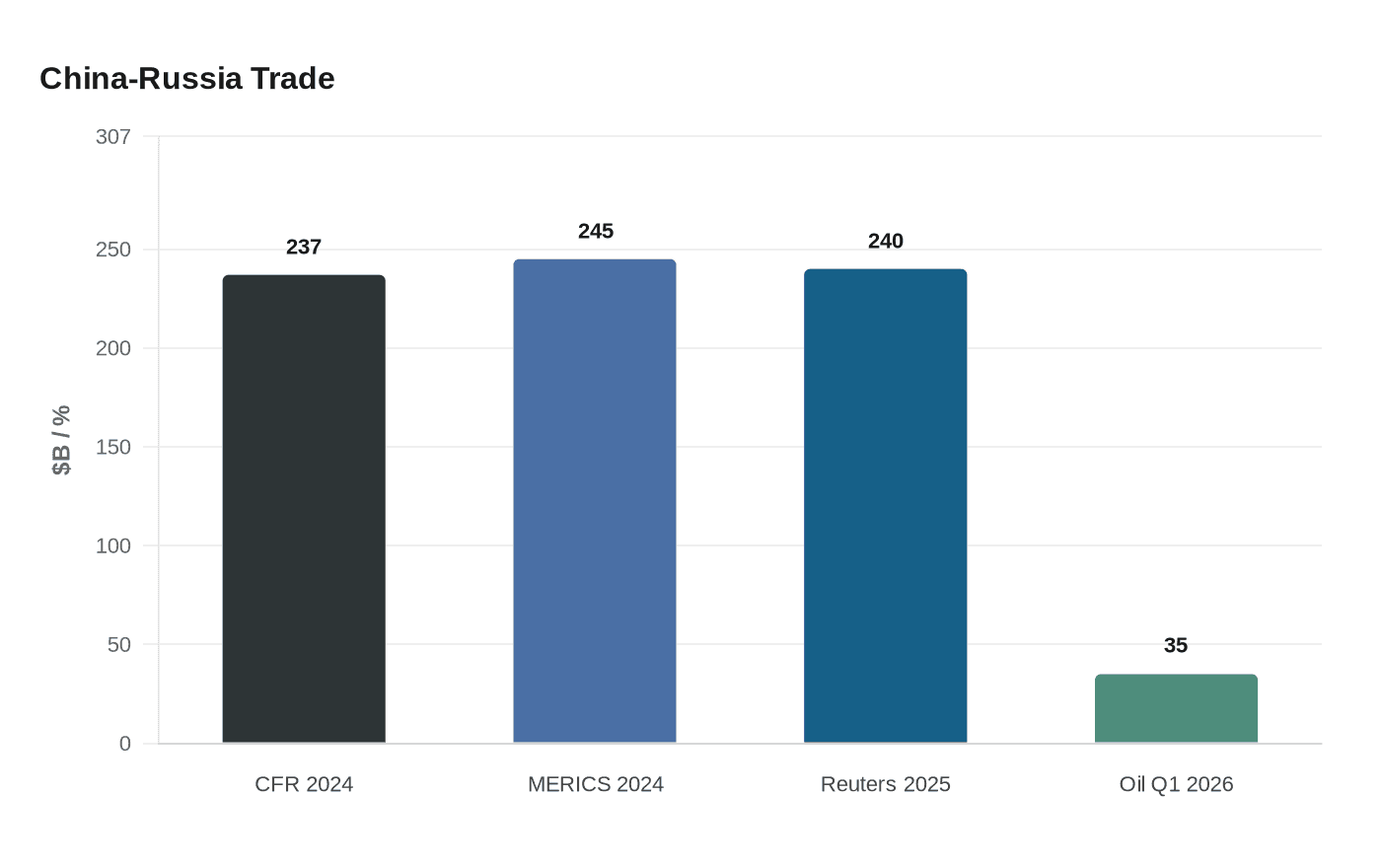
The broader economic backdrop helps explain the stakes. Since Russia’s invasion of Ukraine in 2022, Moscow has become more dependent on China, which is now its biggest trading partner and leading buyer of Russian crude. Chinese customs data cited by the Council on Foreign Relations put bilateral trade at a record $237 billion in 2024, while MERICS said trade stabilized around $245 billion that year before falling 6.9% year on year in 2025. Reuters-linked reporting ahead of the summit placed 2025 trade near $240 billion and said Russian oil exports to China rose 35% in the first quarter of 2026.
Xi and Putin also agreed to extend the China-Russia friendship treaty and said they would work together for a more just and equitable world order. That language underscored the political alignment on display, but the lack of a pipeline breakthrough suggested something more important: when hard commercial terms collide with grand geopolitical messaging, the limits of the China-Russia partnership still show through.
Know something we missed? Have a correction or additional information?
Submit a Tip