Xi and Trump meet in Beijing amid Taiwan, Iran tensions
Xi put Taiwan and Iran at the center of talks with Trump, even as both sides tried to protect a fragile trade truce from collapsing.

Taiwan and Iran overshadowed the optics in Beijing as Xi Jinping and Donald Trump met at the Great Hall of the People for their first face-to-face summit since October 2025. The talks, which lasted more than two hours, were framed by both sides as an attempt to preserve stability in one of the world’s most consequential relationships, even though trade, technology, security and China’s ties to Iran remained deeply unsettled.
For Washington, the immediate ask was straightforward: keep the Strait of Hormuz open, prevent Iran from obtaining nuclear weapons and avoid a wider regional shock that could hit energy markets and shipping. The White House said Trump and Xi agreed on both points, an acknowledgment that Beijing’s leverage matters because China is one of the largest buyers of Iranian oil. Trump also arrived with a delegation that included U.S. business leaders, a reminder that the administration still wants economic de-escalation alongside geopolitical pressure.
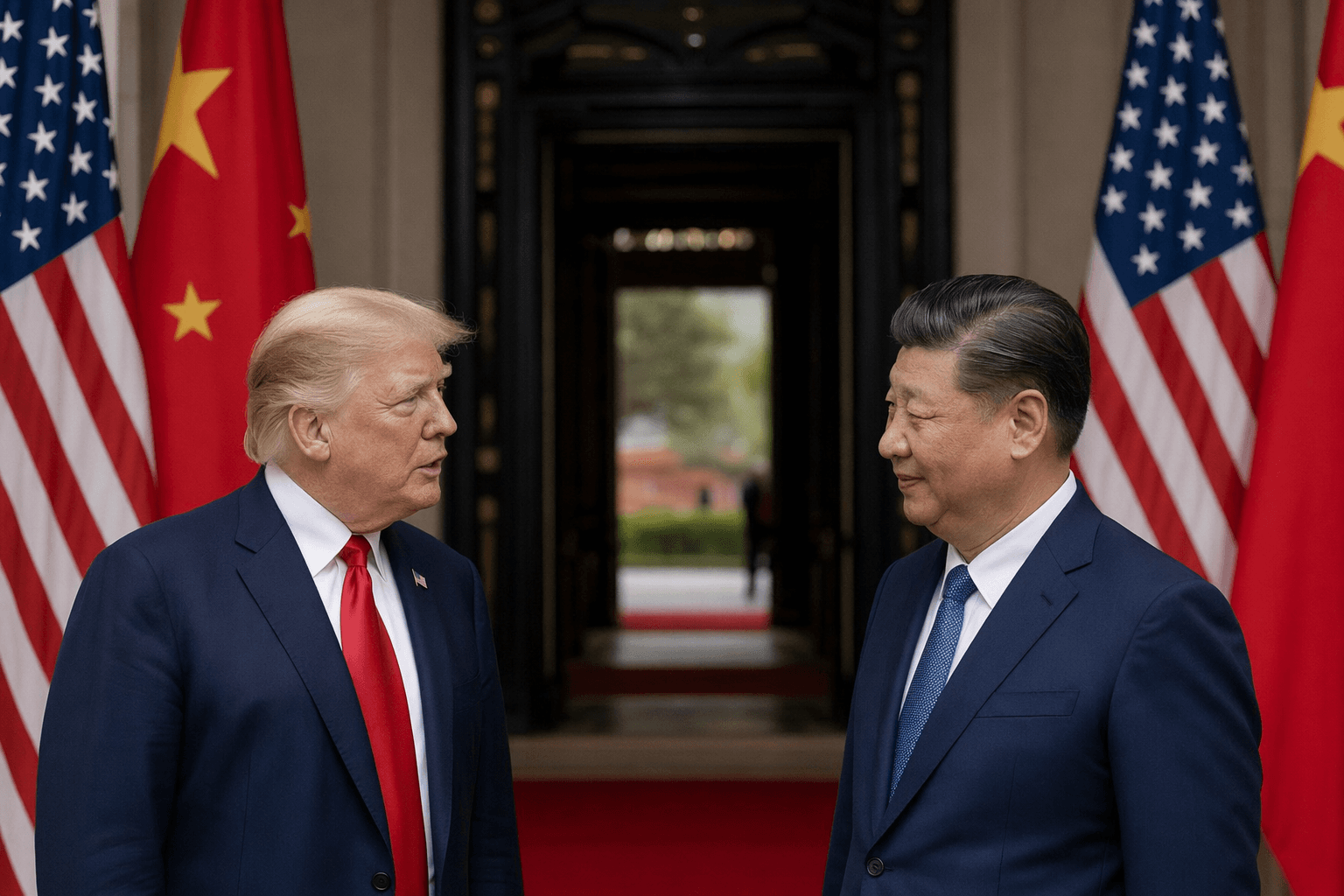
Xi used the meeting to put Taiwan squarely at the center of the agenda. He warned that mishandling the issue could lead to "clashes and even conflicts" and place the relationship in "great jeopardy." He said Taiwan was the most important issue in China-U.S. relations and reiterated Beijing’s view that Taiwan independence and peace in the Taiwan Strait are "as irreconcilable as fire and water." Xi also said he and Trump had agreed on a new vision of a constructive China-U.S. relationship of strategic stability, signaling that Beijing wants guardrails, not confrontation, even as it resists U.S. pressure on sovereignty and security.
The economic backdrop remained just as fragile. Trump’s April 2025 announcement of 34% tariffs on Chinese goods set off a round of retaliation that drove tariffs as high as 145% before the two sides entered a truce. When Trump and Xi met in South Korea in October 2025, they extended that truce for another year, China promised to buy soybeans from American farmers and the United States cut tariffs by more than half. That agreement bought time, but not resolution.
Henrietta Levin of the Center for Strategic and International Studies said the two sides share a consensus that U.S.-China stability matters, but that once stability is secured, the harder question is what comes next. That is the core tradeoff in Beijing now: Washington wants pressure on tariffs, Taiwan and Iran to produce concrete restraint, while Xi wants recognition of China’s red lines and a broader accommodation that keeps competition from tipping into open crisis. For now, the summit looked more like an effort to manage danger than to solve it.
Know something we missed? Have a correction or additional information?
Submit a Tip