Xi courts Trump and Putin with same pageantry, different goals
Tiananmen Square’s identical ceremony masked a sharper divide: Trump’s visit sought a fragile trade truce, while Putin’s deepened Beijing’s Russia bet.

Under the same flower-waving children and military honors in Tiananmen Square, Xi Jinping sent two different messages to two very different power centers. The pageantry looked almost interchangeable. The strategy was not. Donald Trump’s May 13-15 visit to Beijing was built around managing tension with Washington, while Vladimir Putin’s arrival on May 19-20 was designed to reaffirm China’s strategic alignment with Moscow.
Trump’s program was formal and carefully staged: an arrival ceremony, a welcome ceremony, a bilateral meeting at the Great Hall of the People, a visit to the Temple of Heaven, a state banquet and a stop at Zhongnanhai before departure. The optics signaled engagement, but the substance was narrower. Reuters reported that the summit strengthened a fragile trade truce and left few concrete wins on major issues, with unresolved disputes still hanging over trade, rare earths, Taiwan, artificial intelligence and Iran-related tensions.
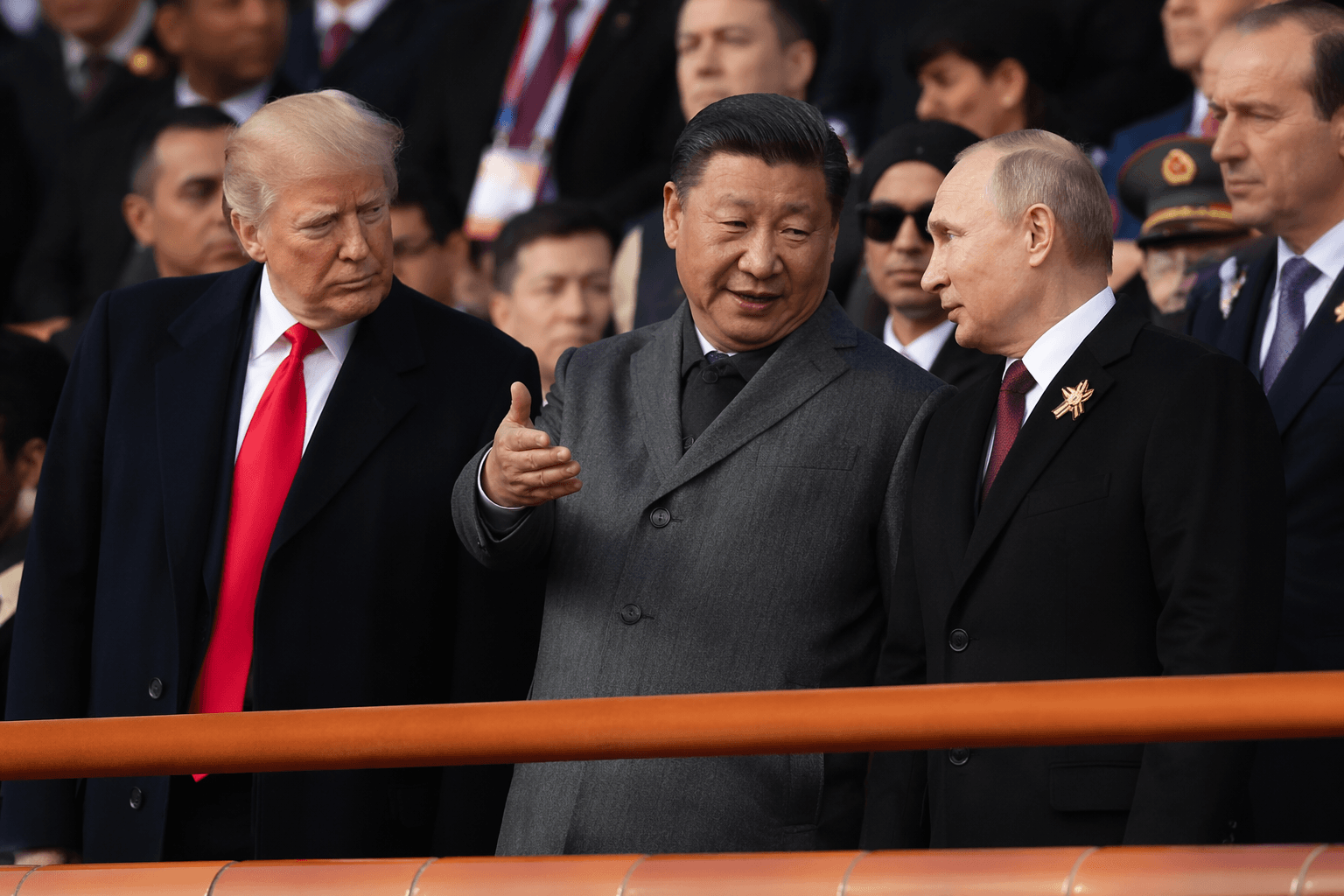
Putin’s visit carried a different tone and different symbolism. Channel NewsAsia reported a 21-gun salute, rows of flag-waving children, a formal signing ceremony and a joint statement, elements that underscored a deeper diplomatic embrace than the one Trump received. Analysts quoted by the outlet said Trump’s trip was about managing friction in the U.S.-China rivalry, while Putin’s was about reaffirming a strategic partnership already hardened by the war in Ukraine and by the widening gap between Moscow and Western capitals.
The timing was not accidental. Chinese and Russian officials said 2026 marks both the 25th anniversary of the China-Russia Treaty of Good-Neighborliness and Friendly Cooperation and the 30th anniversary of the China-Russia strategic partnership of coordination. That anniversary framing gave the Putin meeting a historical purpose that went beyond immediate bargaining. Philipp Ivanov said the trip was tied to the treaty anniversary, sharpening the sense that Beijing was using ceremony to fold present-day geopolitics into a longer narrative of alignment.
Xi and Putin publicly emphasized friendship and growing energy trade, a reminder that the Beijing-Moscow relationship is now anchored in concrete economic and strategic interests. By contrast, the Trump summit was about preserving room for trade and diplomacy without solving the deeper disputes that keep the U.S.-China relationship unstable.
That is the real meaning of the identical choreography. Xi used the same ceremonial language to project balance, but Beijing’s priorities were different in each case. With Washington, the goal was to keep channels open and tensions manageable. With Moscow, it was to broadcast durability, even as sanctions and battlefield pressures continue to isolate Russia. The optics suggested symmetry. The diplomacy revealed leverage.
Know something we missed? Have a correction or additional information?
Submit a Tip