Ukraine’s largest drone assault hits Moscow region, kills at least four
Drones struck the Moscow region in the biggest attack there in more than a year, killing at least four and bringing the war to the Kremlin’s doorstep.
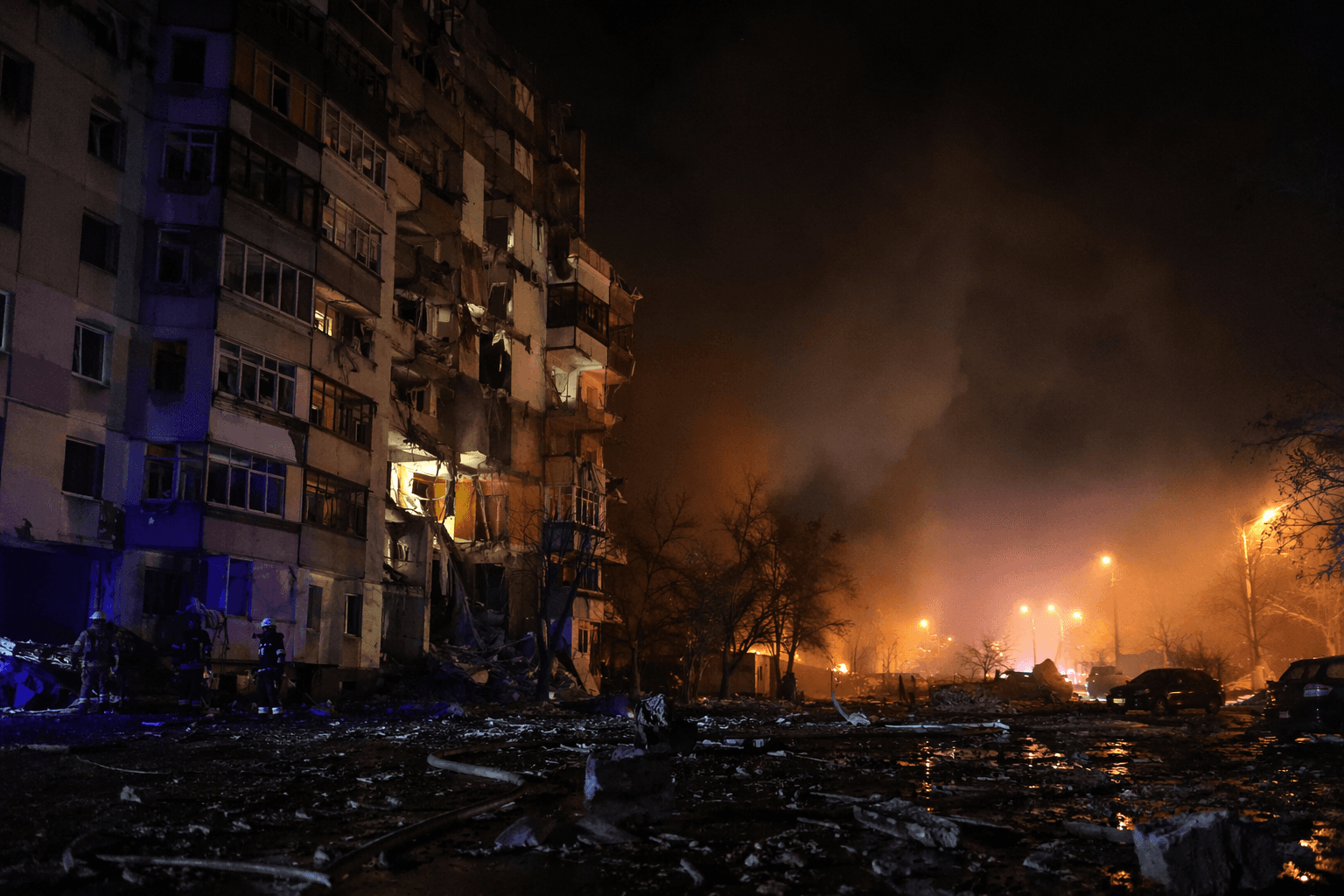
Apartment windows blown out, blackened facades and debris near a major airport turned one of Ukraine’s largest drone assaults of the war into a direct blow to the Moscow region’s sense of safety. Russian authorities said Ukraine launched more than 550 drones at more than a dozen regions over roughly nine hours on May 16-17, 2026, in an attack that killed at least four people, including three in the Moscow region and one in Belgorod.
The strike landed with particular force because it reached the capital area, the seat of Vladimir Putin’s power and long marketed as insulated from the violence that has devastated Ukrainian cities and border regions. Residents in damaged apartment buildings were left clearing shattered glass and coping with fires and broken walls, a sign that the war had begun to penetrate the suburbs of Moscow itself. The attack was described as the biggest on the Moscow area in more than a year, underscoring how Ukraine’s drones have forced Russia to confront vulnerabilities far from the front line.
Moscow regional authorities said at least a dozen people were wounded, while Russia’s defense ministry later said it had shot down more than 1,000 Ukrainian drones across the country in the previous 24 hours. Russian officials also said four drones headed toward Moscow were downed. Even where the attacks did not cause direct destruction, the disruption was immediate: debris fell near a major airport without causing damage, adding to the sense that the capital region was under sustained pressure.

Andrei Vorobyev, Moscow regional authorities and Sergei Sobyanin, the mayor of Moscow, have both been forced to respond to a pattern that has become harder to dismiss. Earlier drone incidents in 2025 and again in May 2026 had already shown that the Moscow region was becoming a more frequent target, but this assault widened the question of whether Russia can continue to shield its political center from the costs of war.
Volodymyr Zelensky said the strike was a fair response to Russian attacks on Ukrainian civilians, linking the Moscow-area assault directly to the war’s wider cycle of retaliation. For the Kremlin, the problem is not only physical damage. Each drone that reaches the capital region chips away at the image of control and distance that Russian authorities have tried to preserve, and each fresh strike raises the pressure to harden domestic security even further.
Know something we missed? Have a correction or additional information?
Submit a Tip