Xi Jinping’s military purge echoes Maoist rectification and consolidation
Xi intensifies a Mao-era rectification of the PLA, purging officers to enforce absolute loyalty and tighten the party’s grip on the gun.
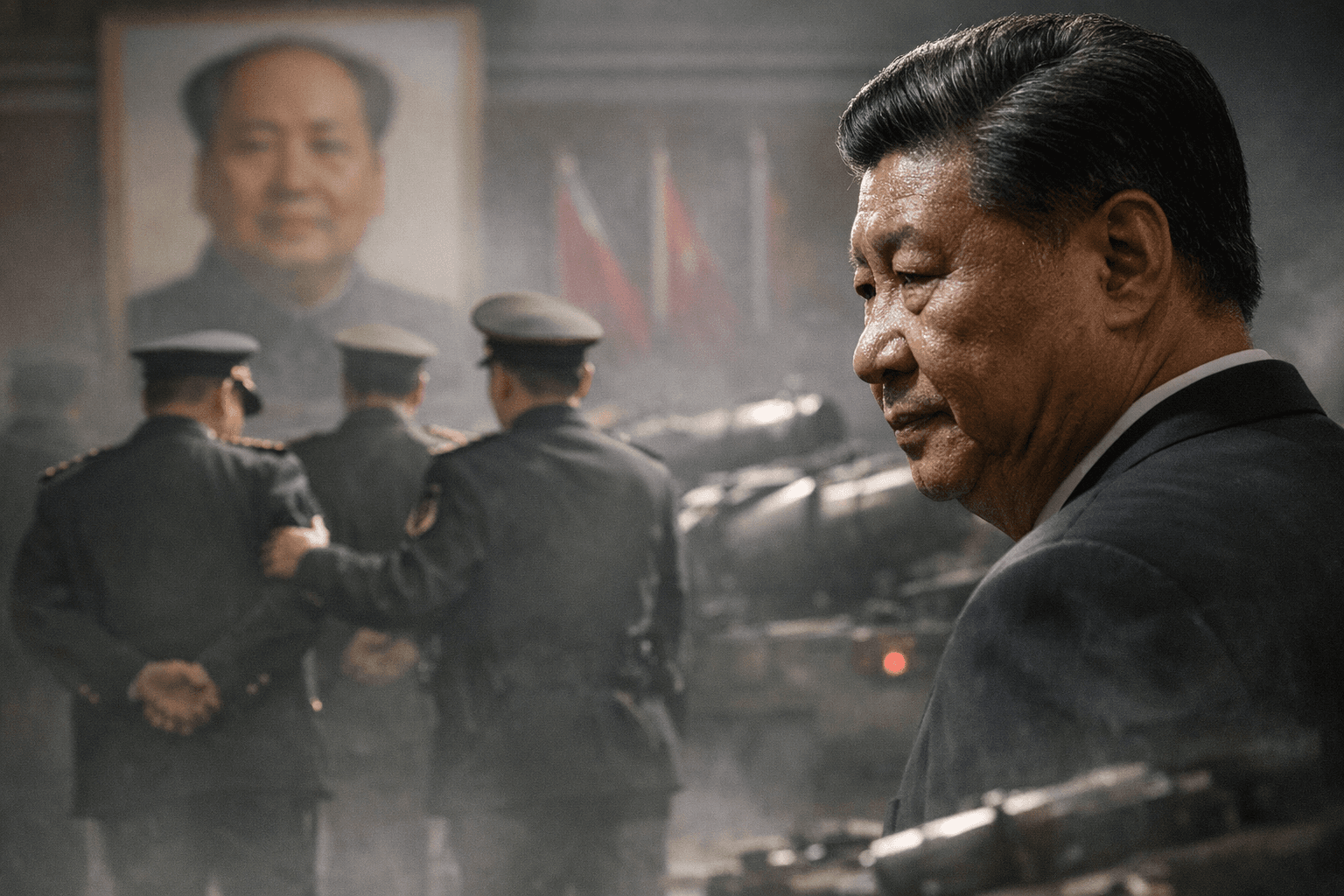
Xi Jinping is pressing a Maoist model of political cleansing on the People’s Liberation Army, reviving the language and methods of "rectification" to remove suspected opponents and enforce single-minded loyalty to the Chinese Communist Party. The campaign is broad, reaching across ranks and institutions, and signals a long-term shift in civil-military relations that will affect China's defense modernization, markets and policymaking.
Officials at multiple levels of the military have been reassigned, disciplined or placed under investigation as part of the campaign, which party organ rhetoric describes as necessary to prevent factionalism and corruption. The purge follows years of anti-corruption drives within the armed forces and appears aimed less at specific infractions than at securing unambiguous political fealty. That emphasis on political reliability over professional autonomy recalls Mao-era rectification campaigns designed to align institutions with party ideology.
The economic backdrop magnifies the implications. China retains one of the world’s largest standing forces, numbering roughly 2 million personnel, and maintains the world’s second-largest defense budget in absolute terms, commonly estimated in the low hundreds of billions of dollars. Those resources are increasingly directed to advanced weapons, shipbuilding and semiconductors for military use, even as Xi’s loyalty drive redirects attention and personnel toward political work and internal security. For firms tied to defense procurement, nearer-term demand may remain robust, but the purge raises risks for long-term project continuity and managerial stability.
Markets are watching for two channels of impact. First, heightened political risk tends to weigh on foreign investor appetite for Chinese equities and credit, particularly for industries perceived as closely linked to strategic policy choices. Second, a tighter party hold over the military-economic nexus could reinforce selective industrial policy that favors state champions and defense-linked suppliers, altering competitive dynamics in sectors such as aerospace and advanced manufacturing. Investors should expect episodic volatility in defense-related stocks and broader market sensitivity to announcements about senior personnel changes.
Policy consequences are equally consequential. Consolidation of party control reduces the scope for independent professional judgment within the military, potentially undermining initiative in operational planning and technical programs. That tradeoff could slow certain aspects of modernization even as procurement budgets remain sizable. Internationally, neighboring capitals and Western militaries will interpret the purge as both a signal of internal cohesion and a potential precursor to a more politicized use of force, complicating deterrence calculations and crisis management.
Over the longer term, the return to perpetual cleansing as an instrument of control risks institutionalizing cycles of purge and loyalty verification that hinder professionalization and knowledge retention. That pattern imposes economic costs through higher risk premia, disrupted procurement timelines and an orientation of resources toward political reliability rather than innovation. Beijing appears to have judged those costs acceptable to secure what the leadership defines as regime survival; markets, militaries and diplomats will now price in a China where the party’s grip over the gun is absolute and ongoing.
This article was produced by Prism’s automated news system from verified source data, official records, and press releases, then run through automated quality and moderation checks before publishing. The system is built and supervised by the people who set the standards it runs under. Read our full AI policy.
Did this article answer your question?

