Xi visits Pyongyang as North Korea leans more on Russia
Xi heads to Pyongyang as Kim Jong Un’s Russia ties weaken China’s grip, even while Beijing remains North Korea’s biggest economic backstop.
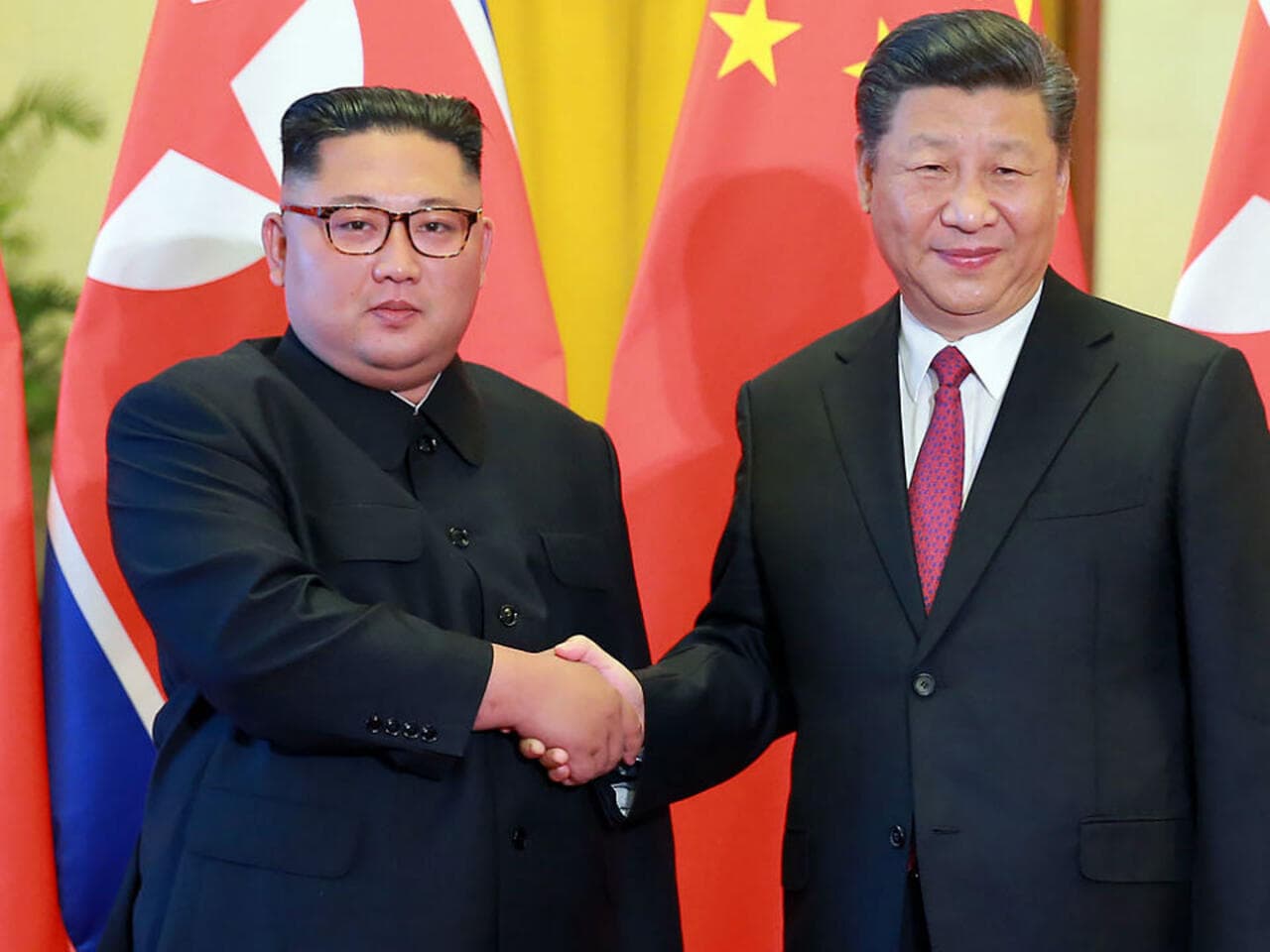
Xi Jinping is heading to Pyongyang with less leverage than he had six years ago. North Korea has deepened military and economic ties with Russia since the two sides signed a comprehensive strategic partnership in June 2024, giving Kim Jong Un more room to maneuver just as Beijing tries to reassert itself.
Xi is scheduled to visit North Korea from June 8 to 9, 2026, in what will be his first trip there since June 20 to 21, 2019 and his first overseas trip of the year. That 2019 visit was the first by a Chinese leader to North Korea in 14 years. It was meant to steady ties and preserve Beijing’s influence over denuclearization and regional security. This time, the setting is different: Kim has built a closer wartime relationship with Vladimir Putin’s Russia while China is left to ask how much influence it still has over Pyongyang’s military choices.

The Russia link is now the key variable in the China-North Korea balance. South Korean intelligence has said about 11,000 North Korean troops were deployed to Russia, while North Korean weapons have also supported Moscow’s war effort in Ukraine. A new road bridge across the Tumen River, connecting Russia and North Korea, is expected to open in June 2026, adding a physical symbol to a partnership that now reaches beyond arms and manpower into infrastructure.
China still matters, and Kim knows it. China’s trade with North Korea rose 25% in 2025 to $2.73 billion, rebounding to pre-pandemic levels, and China exported $1.83 billion in goods to North Korea in 2024. That makes Beijing North Korea’s most important economic backstop even as Moscow has become the source of fresh strategic cover. Xi’s challenge is that economic dependence no longer translates as neatly into political control.

The timing of the visit is especially sensitive after North Korea unveiled a new nuclear fuel production facility on June 3, 2026, and Kim said the country would expand its nuclear forces at an exponential rate. Xi also comes to Pyongyang after hosting Donald Trump and Vladimir Putin in Beijing in May 2026, a sequence that underlines Beijing’s effort to position itself at the center of great-power diplomacy. But on the Korean peninsula, the question is not whether China remains relevant. It is what Beijing can still demand, and what it can no longer stop.
This article was produced by Prism’s automated news system from verified source data, official records, and press releases, then run through automated quality and moderation checks before publishing. The system is built and supervised by the people who set the standards it runs under. Read our full AI policy.
Did this article answer your question?