Young Catholic Convert Explains Why More Men Are Joining the Church
Young men are converting to Catholicism in rising numbers, but the data behind the trend is more contested than the headlines suggest.
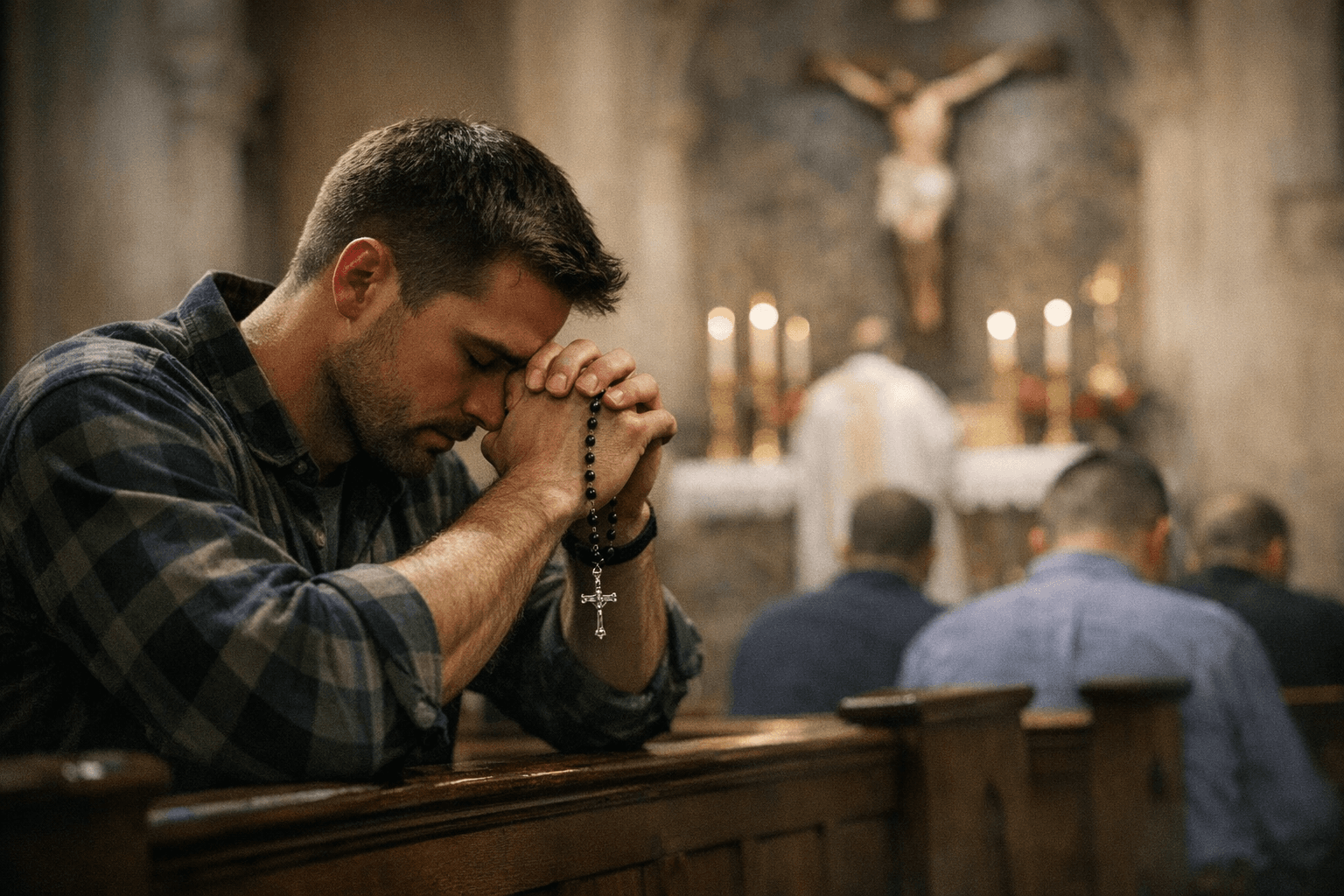
William Bogdan is the kind of convert the Catholic Church is eager to talk about publicly: a young man drawn to the faith not by family tradition or cultural obligation, but by something he says he actively sought out. His story puts a face on a phenomenon that has produced a wave of breathless media coverage and genuine sociological debate: are young men, in historically significant numbers, turning toward Catholicism?
The honest answer is: possibly, but the evidence is more complicated than the trend pieces let on.
The Numbers: Real, but Incomplete
In an ongoing election study from Harvard University, the share of Gen Z respondents who identified as Catholic rose from 15 percent in 2022 to 21 percent in 2023, surpassing the 20 percent recorded among millennials. That single data point has fueled considerable excitement in Catholic media. At the parish level, there are striking individual stories too: at one parish tracked by Catholic media, the number of people receiving first sacraments at Easter remained steady between 13 and 16 annually from 2021 through 2024. In 2025, that number jumped to 35.
Yet the picture has real gaps. Updated figures for 2025 are not yet available from Pew or from the Official Catholic Directory, which likely will not be published until summer or fall 2026. Converts like Ashwin Mannur, 21, a University of Nebraska-Lincoln senior who joined the Church in 2025, point to packed daily and Sunday Masses on campus as evidence the momentum is real, but anecdote and data are not always the same thing.
The broader Christian identity numbers show a 2-3 point uptick, from roughly 60 percent in 2022 to 62-63 percent in 2024; while encouraging for believers, researchers note that change is small and sits within the margins of error.
A Gender Gap in Reverse
The more durable statistical signal may not be about growth in absolute terms, but about who is showing up. In September 2024, the New York Times published a story under the headline "In a First Among Christians, Young Men Are More Religious Than Young Women," a claim that would have been nearly unthinkable a generation ago. Data from 2025 shows that 46 percent of Gen Z men and 55 percent of Millennial men attended church in the past week, compared to 44 percent of Gen Z women and 38 percent of Millennial women.
The driver of that shift is not a male revival so much as a female departure. Young women have secularized at a faster rate than young men, thereby narrowing a gap that has historically favored female religiosity. Pew's 2023-2024 survey still finds women reporting higher levels of religious commitment overall, but the trajectory is pulling in opposite directions by gender. Part of the explanation lies in how young women perceive institutional religion itself: nearly two-thirds of Gen Z women say churches do not treat men and women equally. As researchers Daniel A. Cox and Kelsey Eyre Hammond have noted, many conservative denominations restrict women from formal leadership positions, which makes the Church's patriarchal structure a recruitment asset for some young men even as it drives young women away.
What Problem Is Catholicism Solving?
The question underneath the trend is not just whether young men are joining, but why. Young men in their 20s and 30s are increasingly drawn to the Catholic Church as they seek truth, beauty, and, as one Washington Post report put it, girlfriends. That last item is not a throwaway detail. A 2000 study of the RCIA program conducted by the U.S. bishops found that when young adults were asked why they were entering the Church, 88 percent cited marriage or family reasons, compared to just 12 percent who named a personal spiritual quest. The social architecture of Catholic parish life, with its built-in community of young marriageable adults, appears to function as a genuine pull factor, not just an incidental benefit.
The cultural mood is also doing some of the recruiting. Broad secularization has eroded the hold that churches and other institutions once had on people's everyday routines and sense of authority. Into that vacuum, Catholic intellectuals like Bishop Robert Barron have argued that the Church offers young men something they are not finding elsewhere. The confluence of #MeToo and widespread rhetoric about toxic masculinity has, in Barron's framing, sent a message to young men that society does not want them and views them as a toxic presence. The Church, by contrast, offers what Barron describes as a space where young men can encounter a more positive vision of what it means to be a man.
That pitch lands differently for different people. For some converts, the draw is theological: a structured moral framework in an era of ambient relativism. For others, it is aesthetic: the architecture, the ritual, the sense of historical weight. At St. Joseph's parish in New York, a 24-year-old parishioner named Thomas L. described the congregation with characteristic candor: "The joke is that St. Joe's is the ultimate place to date Catholic in New York because it's all the young, beautiful people that go there." Community, structure, and social belonging are doing real theological work here, whether or not they are the stated reason for conversion.
Media Mirage or Durable Shift?
Skeptics within the Church and outside it urge caution about declaring a generational turning point. The data supporting a "Catholic moment" among young men is real but partial, geographically concentrated around elite urban parishes and university campuses, and dependent on survey snapshots that can shift sharply year to year. Gen Z presents a paradox that resists simple narratives: it is simultaneously described as the least religious generation in American history and the generation going to church more than any other.
The same media attention being paid to Catholic converts has also tracked a parallel surge in Orthodox Christianity, which is attracting what one report described as "energetic new adherents, especially among conservative young men." The common thread across both traditions is not theology so much as form: hierarchy, ritual, and an unapologetically masculine iconography. Whether those features sustain converts over decades, through marriage, career, and the ordinary erosion of institutional loyalty, is the question that parish membership rolls will answer over the next ten years, not the next news cycle.
Converts like William Bogdan are not data points, but they are not nothing either. They are early signals of a realignment in how at least some young men are orienting themselves toward meaning, belonging, and moral structure in a cultural moment that has conspicuously failed to offer compelling secular alternatives. Whether the Church can retain them, and whether their numbers are large enough to reverse long-term decline, remains genuinely open.
This article was produced by Prism’s automated news system from verified source data, official records, and press releases, then run through automated quality and moderation checks before publishing. The system is built and supervised by the people who set the standards it runs under. Read our full AI policy.
Did this article answer your question?