Yuko Oka’s KNIT System Prints Modular, Repairable Facades and Flexible Interiors
Architect Yuko Oka presented the KNIT system, a robot-arm 3D printing approach that produces modular, repairable facade modules and flexible interior elements for longer-lasting, reconfigurable buildings.

Architect Yuko Oka and Oka Architecture Design & Co. of Yokohama put large-scale 3D printing at the center of design practice with CIRCULUS Atelier’s KNIT system, unveiled January 18, 2026. The system uses robot-arm printing to produce modular facade modules that combine into a knit-like textured exterior, while flexible printed elements hang from ceilings to filter light and control acoustics inside. The emphasis was on durability, reparability, and aesthetic variation without incurring the cost of fully bespoke production.
KNIT treats printed parts as serviceable components rather than permanent finishes. Modules are designed to be disassembled, repaired, and reconfigured so a facade can evolve over time instead of being replaced. The studio uses reusable synthetic resins for printing, reducing material waste and supporting repeated production cycles. Interiors apply the same logic: printed, flexible screens mount to suspension points to tune daylighting and damp reverberation, and can be swapped or repaired as program changes.
Technical workflow is integrated into the design process, not outsourced as a novelty. CIRCULUS Atelier’s documentation and photos show a robot-arm-driven workflow that produces discrete panels and hanging elements in a factory setting before on-site assembly. The studio highlights joinery and attachment details that make onsite swapping straightforward, and the module-based approach allows visual variety across a facade while keeping per-unit costs controlled. Unique printed modules can be mixed across an elevation to achieve texture and pattern without the time and expense of casting or machining individually.
For makers, fabricators, and small firms, KNIT demonstrates practical pathways from experimental printing to built projects. The project maps to familiar shop workflows: repeatable print runs, staged post-processing, and modular logistics for transport and installation. The choice of reusable synthetic resins and repair-friendly connections addresses lifecycle costs that often get overlooked when large-format printing is treated as a one-off stunt.
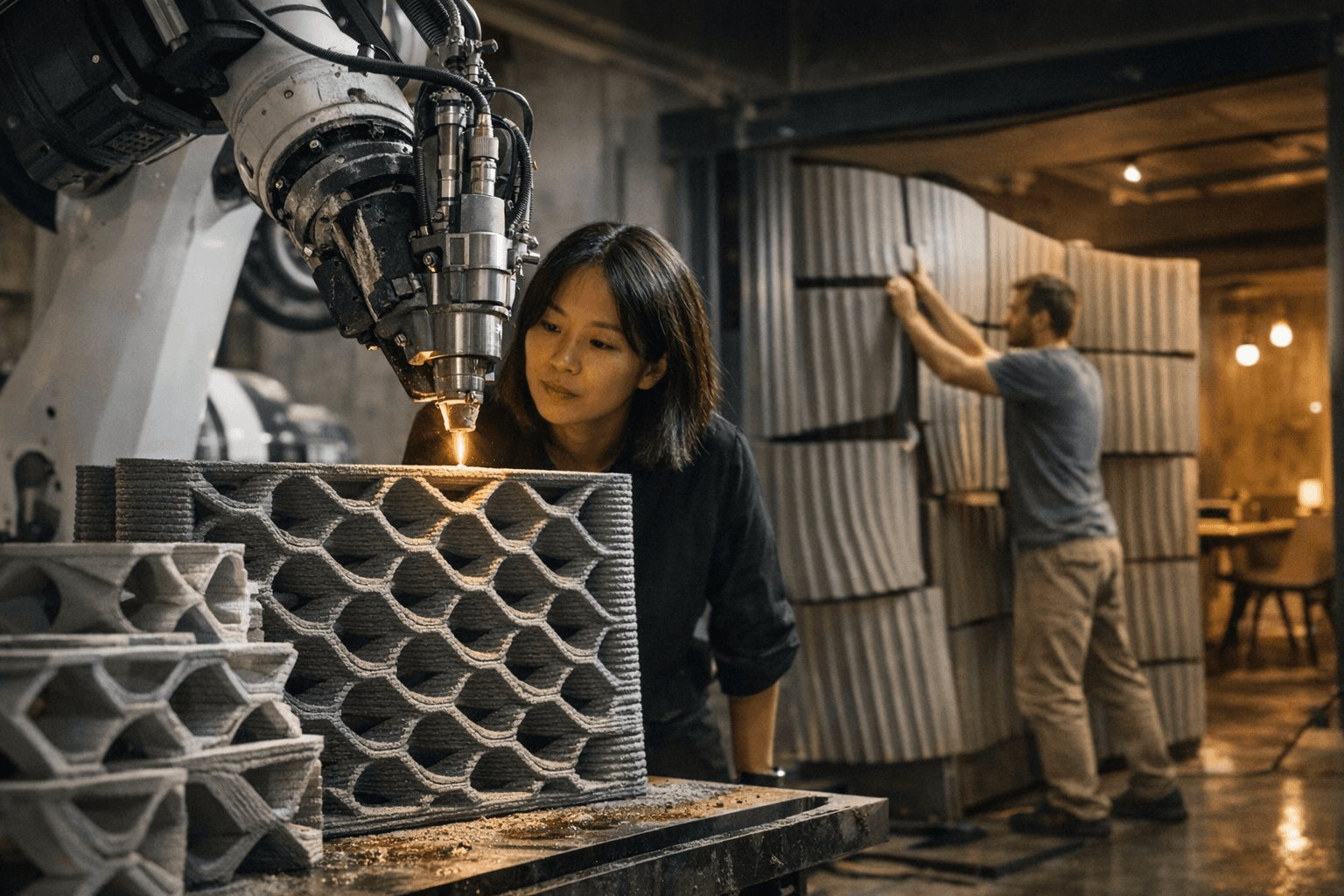
The community implications are tangible. KNIT shows how parametric variation and modularity can deliver the visual richness designers want while keeping maintenance manageable for building owners. It also reframes 3D printing as a maintenance and circularity tool, not just a fabrication gimmick, opening doors to retrofits, seasonal installations, and incremental upgrades.
Consider modularity and reparability when planning large-format prints. Expect more studios to translate robot-arm workflows into practical assemblies that save material, simplify repairs, and let printed architecture age gracefully rather than become disposable.
Know something we missed? Have a correction or additional information?
Submit a Tip