Yvette Cooper heads to China and India amid security tensions
Cooper’s China-India tour will test whether London can deepen trade ties without softening its security line on Beijing.
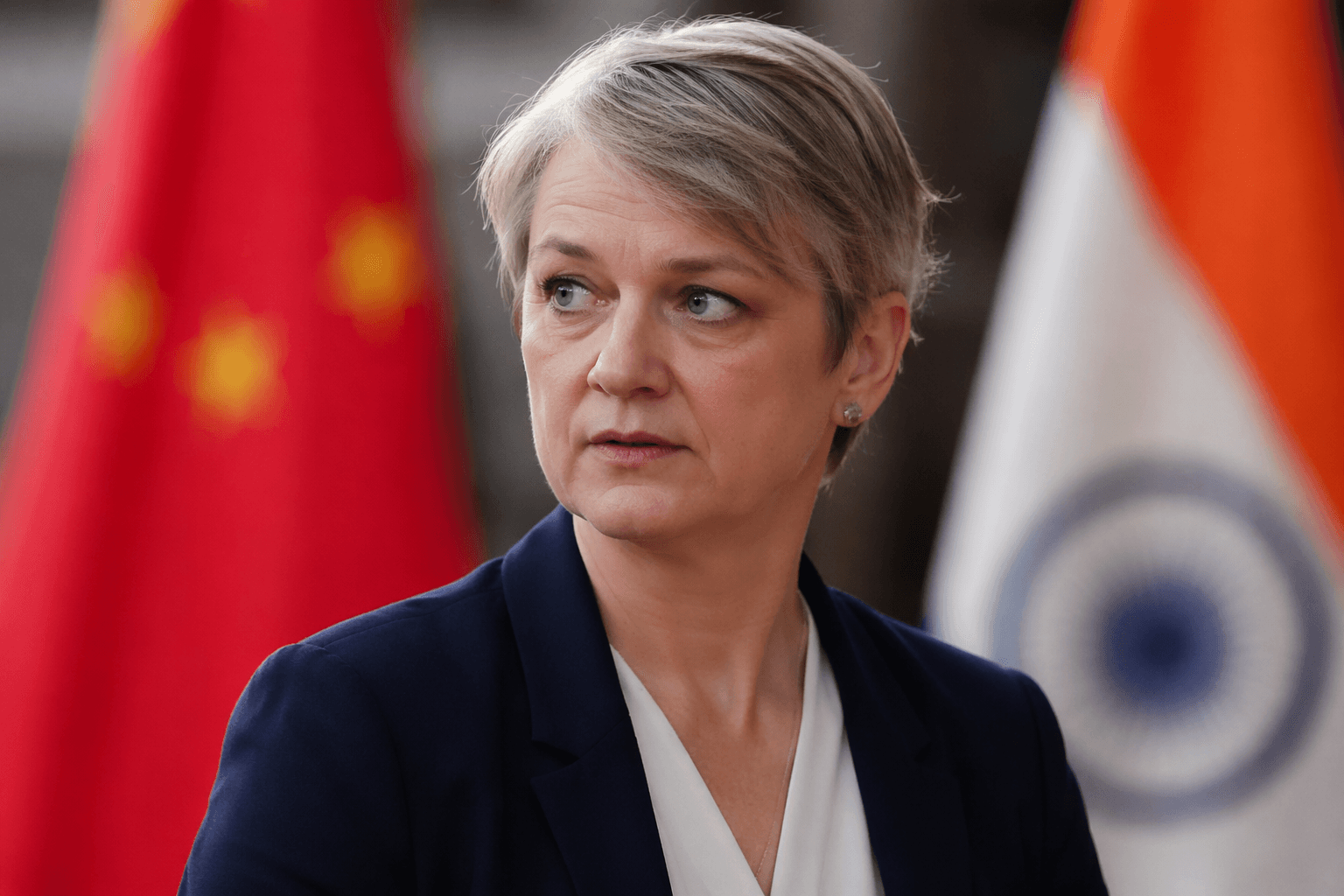
Yvette Cooper will travel from China to India with Britain trying to prove it can talk to rivals and partners at the same time. The foreign secretary’s trip puts trade, security, and technology policy on the same itinerary, with London seeking leverage in Asia even as tensions with Beijing remain high.
Cooper will be in China from June 1 to 3, where she will hold the 11th China-UK Strategic Dialogue. She is scheduled to meet Wang Yi, China’s foreign minister, and Han Zheng, the Chinese vice president, and to stop in Shenzhen for discussions centered on business and on science and technology. The agenda reaches far beyond bilateral diplomacy, spanning the Strait of Hormuz, the Russia-Ukraine war, and the Ebola outbreak in Africa.
That breadth matters because Britain is trying to keep channels open with Beijing without losing sight of security concerns at home and abroad. The government approved plans for a new Chinese embassy in London in January 2026 after years of delay and controversy, a reminder that the relationship remains politically sensitive even as London explores a more practical opening with China. The Shenzhen leg, with its emphasis on science and technology, also signals that Britain still sees room for commercial and innovation ties despite the wider strategic competition between the West and China.
India will offer a different test later in the week. Cooper is scheduled to hold bilateral talks with India’s external affairs minister, S. Jaishankar, on Thursday and then meet business and academic figures, underscoring that the trip is aimed at both state-to-state diplomacy and economic outreach. The visit sits within India-UK Vision 2035, endorsed by the two prime ministers in London on July 24, 2025, and built around sustained high-level political engagement, annual review by India’s external affairs minister and the U.K. foreign secretary, and ministerial mechanisms covering technology, trade, investment, financial-sector cooperation, and defense and security.
Taken together, the China and India legs show the shape of Britain’s broader strategy. London wants access to two of Asia’s most important powers, one a source of economic opportunity and the other a crucial partner in supply chains, defense alignment, and long-term growth. But those ambitions collide with the realities of intensified U.S.-China rivalry and with Britain’s own security concerns, leaving Cooper to sell engagement as a necessity rather than a concession.
This article was produced by Prism’s automated news system from verified source data, official records, and press releases, then run through automated quality and moderation checks before publishing. The system is built and supervised by the people who set the standards it runs under. Read our full AI policy.
Know something we missed? Have a correction or additional information?
Submit a Tip