Zillow data shows record share of rentals offering move-in deals
Nearly 40% of Zillow rentals listed a concession this spring, the highest share ever recorded for the season.

Move-in deals have become a map of America’s rental divide. In Zillow’s spring 2026 data, 39.8% of rental listings offered concessions, up 5 percentage points from a year earlier and the highest share ever recorded for this time of year. The strongest discounts clustered in Denver, Charlotte and Dallas, where landlords have been leaning on free rent, waived fees, discounted move-in costs and perks such as free parking to fill apartments.
The geography matters. Zillow said the deal-heavy markets are concentrated in Sun Belt metros, where apartment construction has been most aggressive and new supply has outpaced demand more quickly than in tighter coastal markets. In places like Austin and Nashville, Zillow’s city-level data also showed some of the largest concession shares, a sign that renters in fast-growing metros have gained leverage on price, lease terms and concessions.

That leverage comes from a historic wave of building. Developers completed 608,000 multifamily units in 2024, the most in nearly 40 years and the highest level since 1986, according to the U.S. Census Bureau. That pipeline helped push the national rental vacancy rate to 7.3% at the start of 2026, up from 5.6% in 2021. More empty units have forced landlords to compete more aggressively for tenants, a sharp reversal from the post-pandemic scramble when listings disappeared quickly and renters had little room to negotiate.
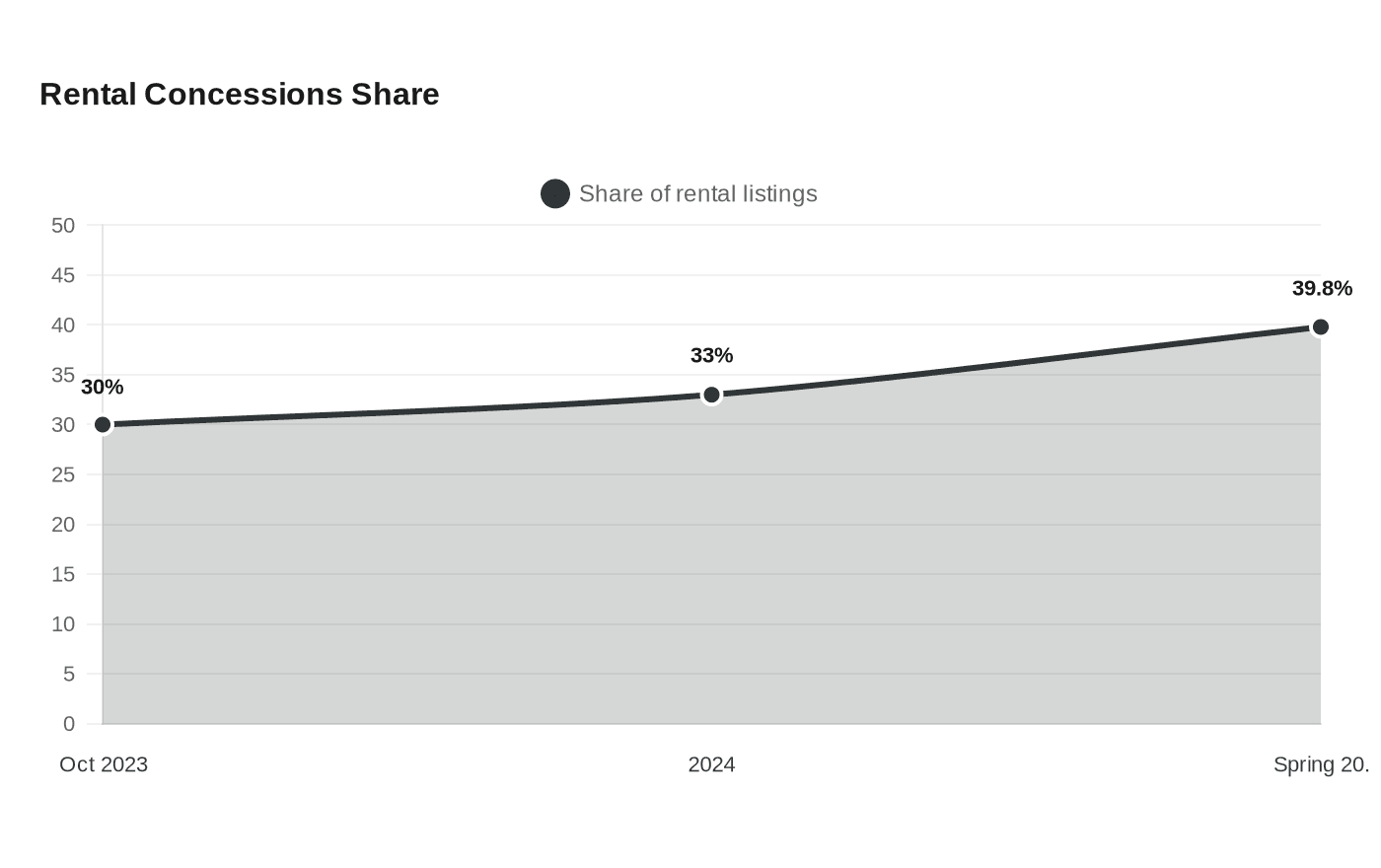
The shift did not happen overnight. Zillow’s earlier data showed about 30% of rentals offered concessions in October 2023, and roughly one-third did so in 2024. The latest spring reading suggests the renter-friendly market is the result of several years of added supply, not a one-month surge in promotions. For landlords, especially in oversupplied metros, the competition now extends beyond rent levels to upfront cash savings and move-in terms.
Broader market data point in the same direction. Realtor.com said the average rental vacancy rate across the 50 largest U.S. metros rose to 7.6% in 2025, up from 7.2% in 2024, and only six of those 50 metros still favored landlords in early 2026. The national picture is no longer a simple shortage story. In many Sun Belt cities, renters can shop for concessions; in tighter coastal markets, the balance still tilts toward landlords.
This article was produced by Prism’s automated news system from verified source data, official records, and press releases, then run through automated quality and moderation checks before publishing. The system is built and supervised by the people who set the standards it runs under. Read our full AI policy.
Know something we missed? Have a correction or additional information?
Submit a Tip