Zoom adds verified human badges to fight AI deepfakes in meetings
Zoom is putting a Verified Human badge on meeting tiles, but the deeper question is who must prove humanity and what biometric data that proof leaves behind.

Zoom is adding a Verified Human badge to meeting tiles as it tries to blunt a growing workplace threat: AI-generated deepfakes, impersonation and fraud inside live video calls. The new verification feature is tied to World’s identity network and is meant to help hosts and attendees confirm that the face on screen belongs to a real person, not a synthetic clone.
World says its identity check starts at an Orb device, which verifies that a person is a unique human. After that, World ID is stored on the user’s phone in the World App. The company says its Deep Face system is built for real-time humanness verification during video calls and can run from World App to World App or be installed on a computer for popular video conferencing and video chat apps.
The mechanics matter because they show how much identity data sits behind the badge. World says a Verified Human badge appears only when three signals line up: a signed image captured during Orb registration, a real-time face scan from the user’s device and a live video frame visible to other participants. In other words, the badge is not just a cosmetic marker. It is the visible endpoint of a biometric verification stack controlled through World’s identity system and carried on the user’s phone.
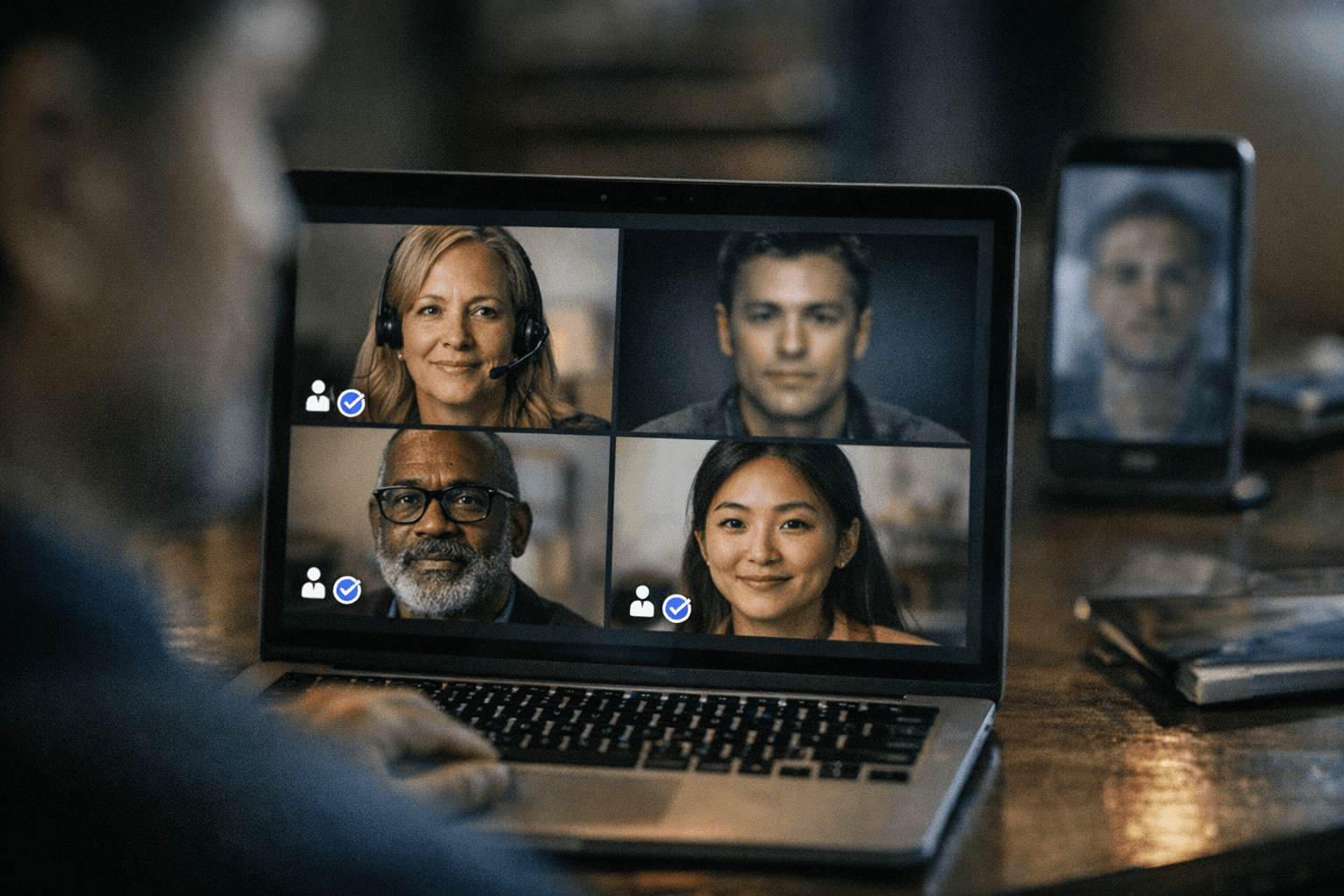
Zoom is framing the feature as a security upgrade for meetings that can be sensitive or high-stakes. Its security guide warns that meetings can otherwise be attended by someone who is not invited, and Zoom already offers waiting rooms, passcodes and watermarking. The company also already supports badges inside meetings through its Badges app, where hosts can place participant badges on video tiles. The World integration builds on that visual framework and may make identity confirmation feel like a normal part of the meeting interface.
Zoom has also said hosts can enable a Deep Face waiting room, requiring participants to verify identity before entering. That shift could turn “verified human” from a helpful signal into a condition of participation, especially in executive calls, client meetings and internal reviews where fraud risk is highest. World says its system has already been used across Discord, Telegram and Shopify, and it says more than 17,962,766 people are already verified humans through World ID. The same day, World also announced a Tinder rollout for orb-verified users, showing that Zoom is part of a broader push to make biometric proof of personhood a standard layer across consumer and workplace software.
This article was produced by Prism’s automated news system from verified source data, official records, and press releases, then run through automated quality and moderation checks before publishing. The system is built and supervised by the people who set the standards it runs under. Read our full AI policy.
Did this article answer your question?


