Zoom AI Companion raises privacy concerns as meeting summaries become default
Meeting summaries flipped to default at Cal State Fullerton, while campuses told hosts to warn attendees before Zoom AI Companion turns spoken remarks into a record.

Cal State Fullerton’s IT knowledge base said Meeting Summary with AI Companion changed from opt-in to opt-out, making Zoom-generated notes turn on by default unless someone disables them. That small settings change has widened a basic workplace question: when a conversation can become a searchable record, who gets to decide whether it is captured at all?
Georgetown University Information Services says Zoom AI Companion is similar to meeting recording and live transcription because it creates a record of what is said and done in a meeting. The University of Colorado Boulder Office of Information Technology also ties Zoom transcription options to AI Companion and meeting recordings, while the University of Idaho tells hosts that it is their responsibility to discuss with attendees whether to enable or disable Zoom AI Companion. In practice, that puts the burden on the people running the meeting to make privacy visible before the first word is spoken.
Zoom introduced AI Companion in late 2023 and unveiled it publicly on September 8, 2023, then expanded the product with AI Companion 2.0 on October 9, 2024, and AI Companion 3.0 in September 2025. Zoom’s support documentation now includes pages on enabling or disabling Meeting Summary and on how AI features handle data, underscoring that the system is meant to be managed rather than ignored. The speed of that rollout has outpaced the informal habits people once relied on, like assuming a side conversation stayed in the room or that a quick remark would fade once the call ended.
The pushback has come from users who do not want every meeting turned into a record they cannot control. A Zoom developer forum thread asked for a way to limit AI summaries to internal users only, signaling demand for narrower access and tighter boundaries around who can read the output. ZDNET described Zoom as being “entangled in an AI privacy mess,” and related scrutiny has reached other meeting-AI products as well, with Otter.ai facing a class-action lawsuit in California in 2025 over allegations that it recorded private conversations without consent.
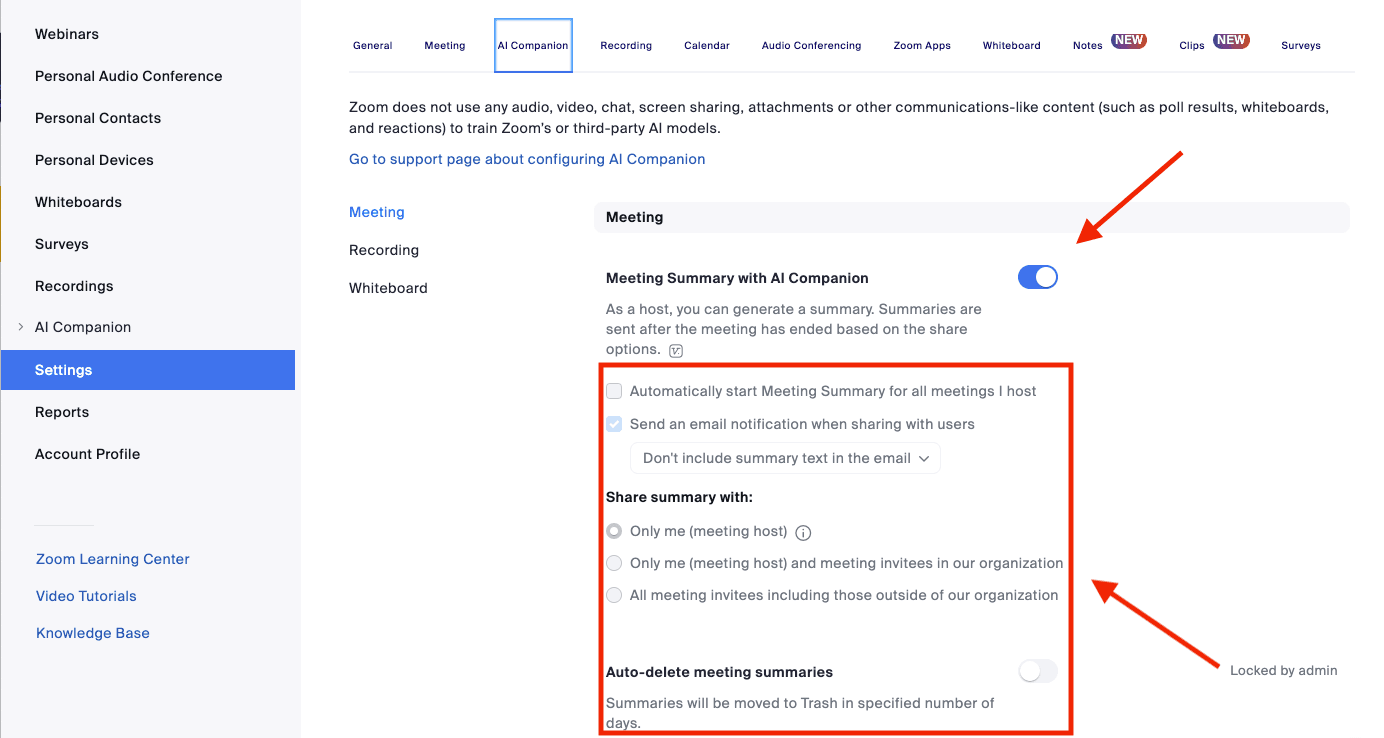
The issue now reaches beyond whether AI summaries are helpful. For workers, students, and anyone brought into a call, the real pressure point is consent: who was told, who can review the transcript, how long it is kept, and whether a meeting that once disappeared into memory now lives on as a permanent, searchable file.
This article was produced by Prism’s automated news system from verified source data, official records, and press releases, then run through automated quality and moderation checks before publishing. The system is built and supervised by the people who set the standards it runs under. Read our full AI policy.
Did this article answer your question?