AHL rule book explains overtime, shootouts and game structure
The AHL’s rule book turns overtime into a 3-on-3 chess match and shootouts into a separate test, while the playoffs snap back to full-team hockey.
AHL regular-season games are built on three 20-minute periods, then 3-on-3 overtime and, if needed, a shootout. That structure changes how coaches handle lines, defense pairs and puck possession. The 2025-26 AHL Rule Book on TheAHL.com sits alongside standings, shootout-format and qualification pages that link game management and playoff positioning.
How an AHL night is built
When the score is tied, regular-season overtime opens the ice into a 3-on-3 format that looks nothing like five-on-five hockey. That extra space rewards speed, puck security and mobile defensemen, while punishing teams that mismanage the puck in transition.
For coaches, that means overtime is less about grinding than about survival and spacing. A single turnover can become a clean break the other way, so line choices matter more than they do in most late-game situations. When the game reaches the shootout, the skill test changes again: practiced puck carriers and composed goaltenders tend to matter more than board-play specialists.
Why the league’s published pages matter
The AHL publishes the current 2025-26 AHL Rule Book, a separate standings page, a shootout-format page and a qualification rules page for the 2025-26 season. The path from one point in the standings to postseason seeding is part of the same system as the on-ice rule book.
Every point carries weight, every late-game decision can affect qualification, and the league’s structure ties regular-season results to playoff positioning. For fans watching the AHL as a development league, a coach’s choice to chase a win or secure a point often reflects more than one night’s result.
A concrete example from the All-Star Challenge
The 2025 AHL All-Star Challenge used shortened 3-on-3 hockey in a league event. Games 1-6 were listed as 10:00 each at 3-on-3, played in two halves. If a game was tied after regulation, it went to a three-round shootout.
If a game was still tied after three shootout rounds, it was declared a tie.
Why the playoffs feel different
The AHL publishes a 2024 Calder Cup Playoff Primer and a 2026 Calder Cup Playoff Primer separately from the regular-season material. In the playoffs, the game shifts back toward full-team endurance and five-on-five structure, which changes both strategy and personnel usage. Coaches cannot lean on the same quick-hit overtime tactics that work in November; they need depth, disciplined defensive layers and players who can win repeated battles late in games.
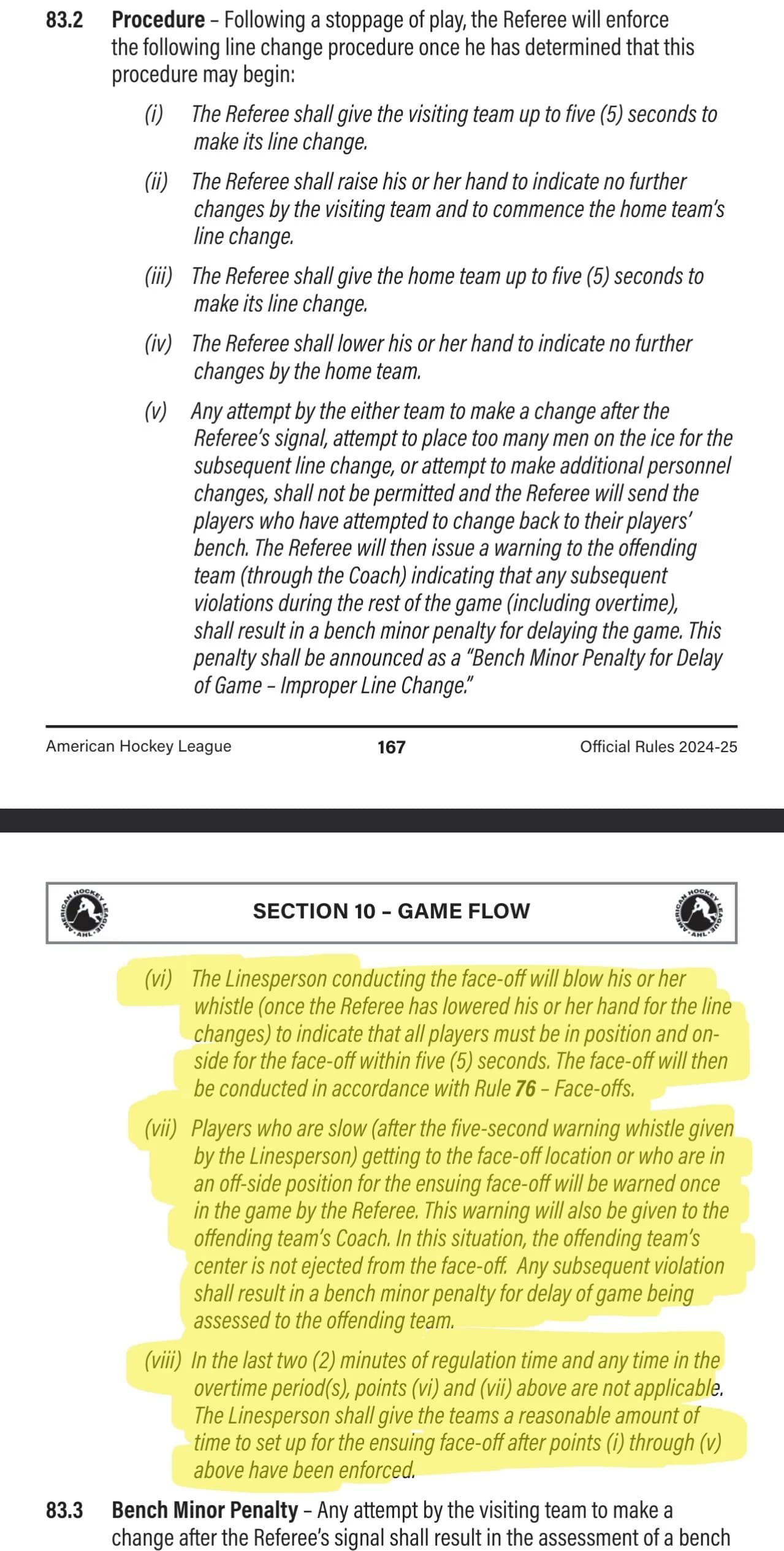
The AHL is the top development league for all 32 NHL teams. Players are constantly adjusting to pro-level standards on penalties, substitutions, faceoffs and game management while also preparing for possible NHL recalls. The league has been in operation since 1936.
The league has also published stories about the longest AHL game ever and playoff overtime games.
What to watch the next time a game goes past 60 minutes
The rule book turns into a viewing guide once you know what to look for. The late-game details tell you who is playing for a point, who is pressing for two and which bench still has the personnel to survive the next shift.
- In overtime, watch which coach trusts speed over size, because the 3-on-3 setup stretches the rink and exposes slow recoveries.
- After an icing, see which line gets protected, because faceoff choices and matchups become even more valuable when one mistake can end the night.
- If a bench is short on right-shot defensemen, that vulnerability shows up quickly in overtime when puck movement and retrievals matter most.
- In the shootout, the matchup becomes individual: a composed puck carrier against a goaltender trying to hold his line without biting early.
- In the standings race, keep an eye on the qualification rules page, because the AHL’s points system and seeding structure turn every late-season result into a direct playoff consequence.
This article was produced by Prism’s automated news system from verified source data, official records, and press releases, then run through automated quality and moderation checks before publishing. The system is built and supervised by the people who set the standards it runs under. Read our full AI policy.
Did this article answer your question?