Amerks tracker signals early roster planning for 2026-27 season
Rochester's June 8 tracker already maps the Amerks' 2026-27 core, with Zac Jones, Konsta Helenius and Buffalo-linked prospects driving the next Calder Cup window.
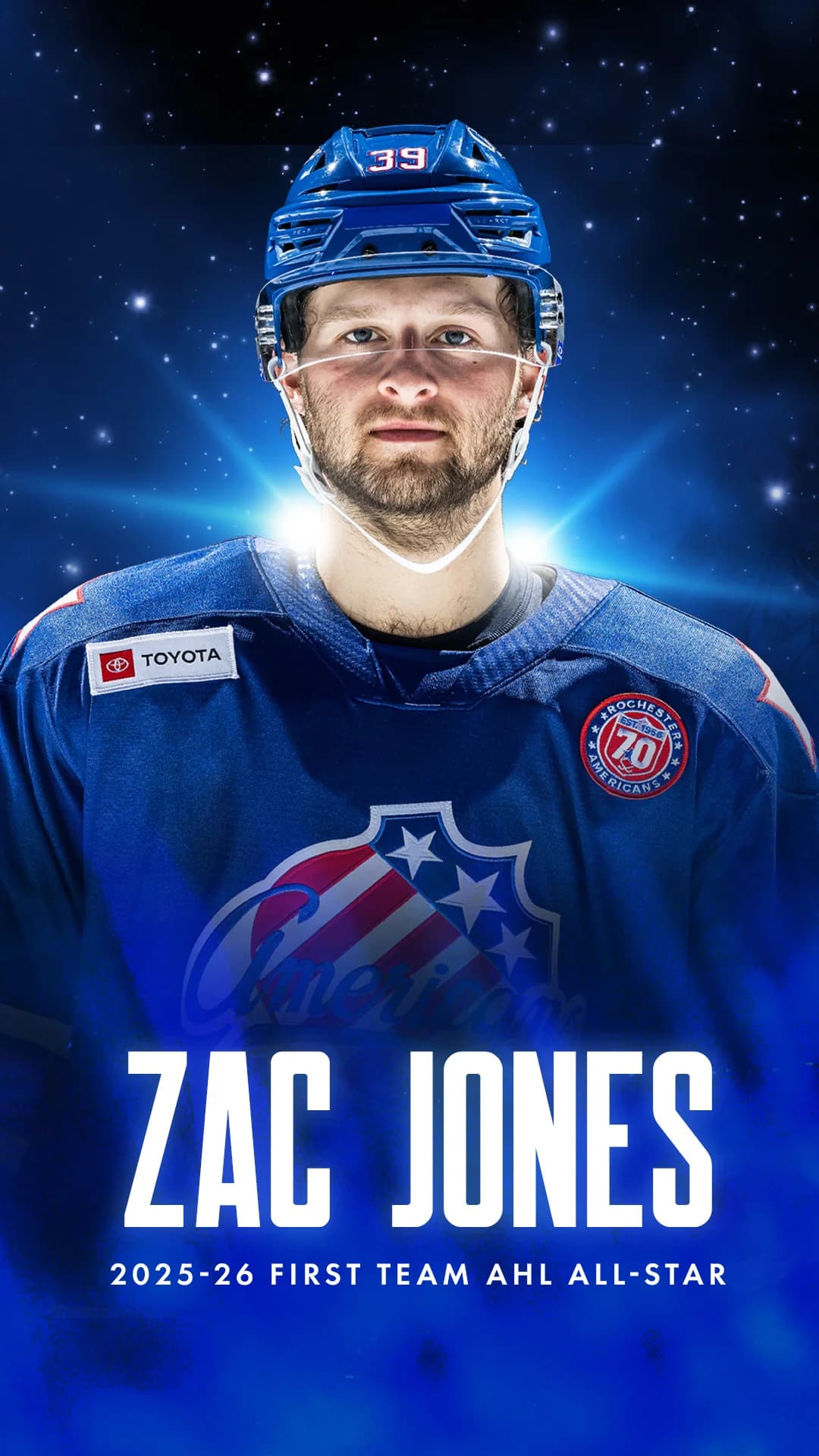
The Amerks’ June 8 player tracker is already doing more than listing names. It is Rochester’s first public blueprint for 2026-27, showing where the roster is stable, where Buffalo can pull talent upward, and where the club still has real offseason decisions to make. With the season ending on April 26 after a three-game first-round loss to Toronto, the page reads less like a ledger and more like a forecast for the next Calder Cup push.
The tracker’s biggest message: the roster is still pliable
Rochester’s tracker lays out a modern AHL reality in plain view: some players are clearly under NHL control, some are pending RFAs or UFAs, and a separate group is already tied to AHL contracts. That spread matters because it tells you exactly where the Amerks can build around certainty and where they have to prepare for turnover once Buffalo’s summer business heats up.
Two calendar markers jump off the page. June 30, 2026 is the date listed for RFAs to begin discussing potential offer sheets with other teams, and July 1, 2026 at 12 p.m. ET is when unrestricted free agency opens. Those dates are not just administrative. For Rochester, they are the first real checkpoints for figuring out whether next season starts with continuity, a youth push, or another round of shuffling between Rochester and Buffalo.
The contract calls that will shape the core
If you want the clearest read on the Amerks’ future, start with the names that sit in the middle of the decision tree. They are the players whose status most directly affects whether Rochester can keep a playoff-quality spine intact.
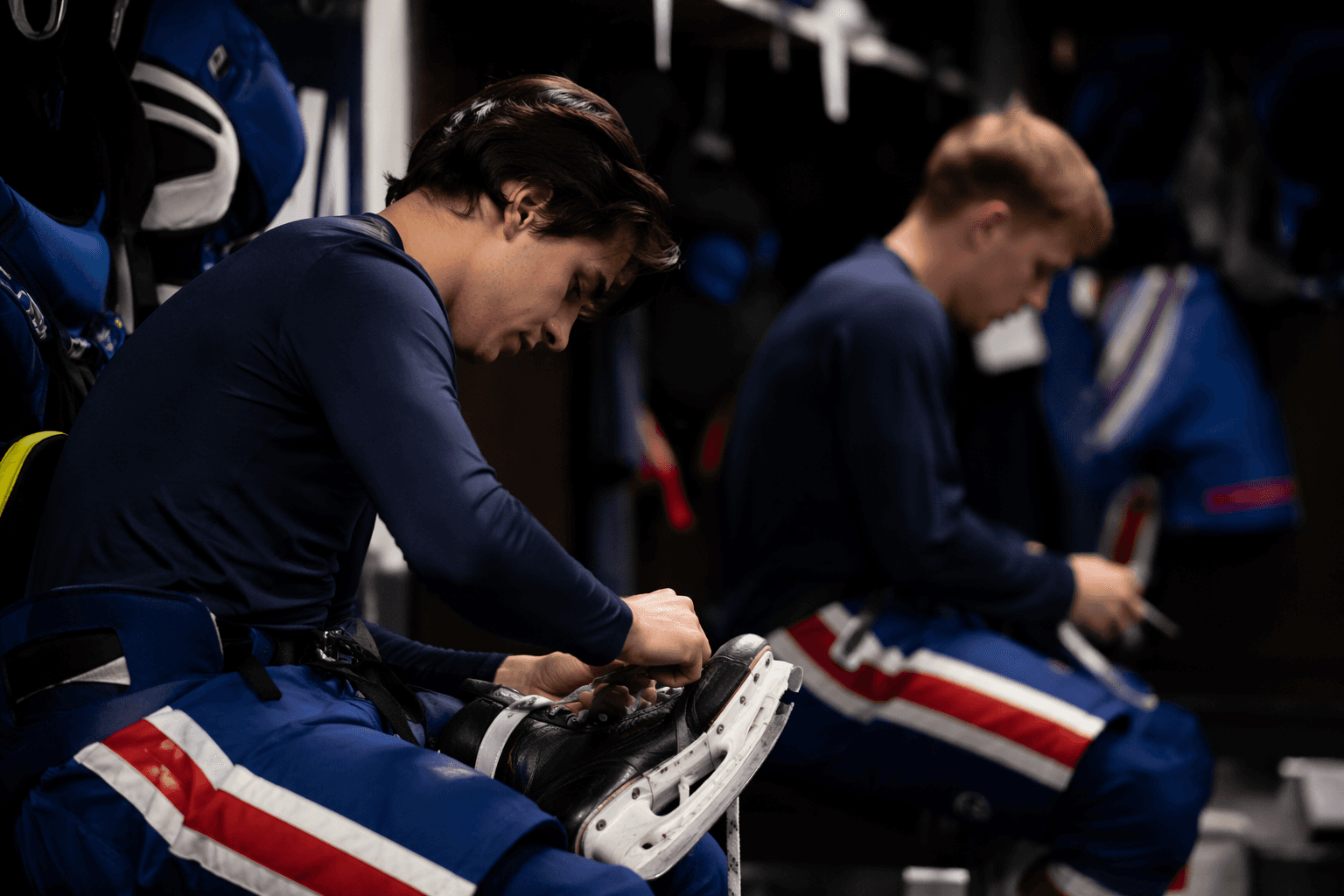
- Zac Jones is the loudest case. The defenseman won the AHL’s Eddie Shore Award on April 21, 2026 as the league’s outstanding defenseman, and his RFA status makes him central to Rochester’s blue-line planning. If the Amerks keep him in the fold, they keep a proven top-end defender who already looks capable of driving a playoff run.
- Isak Rosén and Noah Östlund represent the skill-forward side of the picture. Their RFA status keeps them in the conversation as both Rochester scoring pieces and Buffalo-call-up candidates, which is exactly the kind of dual role that can either stabilize a lineup or strip it of production when the NHL needs help.
- Konsta Helenius, Ryan Johnson, Devon Levi, Ukko-Pekka Luukkonen and Jack Rathbone show how much of this roster can swing on NHL decisions. These are the names that can be in Rochester one week and Buffalo the next, and that kind of movement is what makes the Amerks a development team with real win-now pressure. Helenius, in particular, arrives with momentum after scoring Finland’s overtime golden goal on June 1 to win the IIHF World Championship against host Switzerland.
- Matteo Costantini, Noah Laaouan, Red Savage, Graham Slaggert, Liam Valente and Brendan Warren are the AHL-contract backbone. That group matters because it gives Rochester a lower-cost, more controllable depth layer, the kind that often decides whether a team can absorb injuries and call-ups without collapsing. Costantini, Laaouan, Slaggert and Warren were already part of the club’s June 2025 AHL-contract business, and their presence points to a more internal build rather than a complete reset.
Why this matters for Buffalo’s pipeline
The tracker is valuable because it shows the Amerks and Sabres are still tightly linked. Rochester can start camp with a meaningful amount of age, talent and name recognition, but several of the most recognizable pieces are also the ones most exposed to NHL movement. That creates two kinds of risk at once: the risk of call-ups draining Rochester’s best players, and the risk of a talent pipeline that becomes too shallow if the next wave does not arrive quickly enough.
This is where the season context matters. Rochester’s 2025-26 campaign was defined by resilience, not smoothness. The Amerks clinched the final North Division playoff spot on the last day of the regular season, then split the Toronto series by winning Game 2 4-0 at Blue Cross Arena before dropping the decisive Game 3 in Toronto. The club’s own season reflection also made clear that injuries and call-ups created opportunities for Olivier Nadeau, Matteo Costantini and Noah Laaouan to produce breakout years, which tells you the 2026-27 build will likely lean even harder on internal growth.
That is also why the tracker should be read as a timeline, not just a roster sheet. Rochester just came through a season that forced younger players into bigger minutes, and that experience can be an asset if the front office uses it to build a sturdier core. Helenius’ gold-medal moment in Switzerland gives the pipeline a headline name with international momentum. Jones gives the blue line an award-winning anchor. Levi, Luukkonen and Johnson keep the NHL-Rochester connection fluid. And the AHL-contract group gives the Amerks enough depth to avoid starting from scratch.
A roster map with real stakes
The hidden value of the tracker is that it shows where Rochester’s identity could come from next fall. If the club keeps Jones and its other key RFAs, the Amerks have a legitimate top layer to build around. If Buffalo pulls more of those names upward, the AHL club may have to rely more heavily on Costantini, Laaouan, Warren, Slaggert and the rest of the AHL-contract group to hold the line.
Either way, the June 8 update makes one thing clear: Rochester is not waiting for summer to define its future. The 2026-27 shape is already visible, and the next few weeks will decide whether the Amerks enter camp with a true core, or with another roster that has to be assembled piece by piece.
This article was produced by Prism’s automated news system from verified source data, official records, and press releases, then run through automated quality and moderation checks before publishing. The system is built and supervised by the people who set the standards it runs under. Read our full AI policy.
Did this article answer your question?