Anaheim development camp showcases deep Ducks prospect pipeline
Anaheim’s 29-player camp puts all nine 2026 draft picks in one room, and the real question is which names are already close to San Diego.

Anaheim brought 29 players to Great Park Ice & FivePoint Arena, and the roster already looks like a pecking-order test. All nine Ducks picks from the 2026 NHL Draft are in Irvine, turning this week into the first real summer checkpoint for a prospect group the organization wants to move from draft-day promise to AHL usefulness.
A tighter camp, a clearer hierarchy
The camp runs Monday, June 29 through Wednesday, July 1 at Great Park Ice & FivePoint Arena in Irvine, California, and it is open to the public at no charge. Most of the June 30 and July 1 itinerary is devoted to off-ice work rather than the traditional parade of practices and scrimmages. Anaheim is using the week to evaluate habits, conditioning, leadership and professionalism, not just hands and footspeed.
The roster breaks down to 17 forwards, nine defensemen and three goaltenders, a smaller and more focused group than the Ducks have brought to recent summer gatherings. Last year’s development camp roster had 30 players, and the 2024 training camp list was much larger at 66. This summer’s shape narrows the lens to a more specific question: who is closest to San Diego, and who still needs another season or two before the AHL becomes a real option?
The 2026 draft class sits at the center
That question starts with the draft class itself. Anaheim selected Nikita Klepov 15th overall and Marcus Nordmark 28th overall, after acquiring two first-round picks from the St. Louis Blues in the Mason McTavish trade and then moving the 29th and 117th picks to the Vegas Golden Knights to climb one spot. Those maneuvers left the Ducks with a draft board that was both aggressive and flexible, and camp is the first place that strategy becomes tangible.
Anaheim’s Day 2 haul added seven more names to the mix: Jayden Kurtz, Mathis Preston, Rian Chudzinski, Eric Frossard, Gleb Peshkov, Noah Kosick and James Rieber. Put together with the first-round pair, the 2026 class gives the Ducks a concentrated group of young players whose timelines can now be compared against one another, not just against the rest of the organization.
The roster also includes Roger McQueen, Anaheim’s 2025 first-round pick, along with Maxim Masse, the Canadian Hockey League Player of the Year. McQueen sits as the next layer in the chain, while Klepov and Nordmark arrive as the newest premium pieces, and Masse brings the kind of decorated junior resume that can force a quicker internal conversation about AHL ice time.
Who is closest to San Diego
If the goal is to identify the prospects most likely to push for San Diego Gulls minutes this season, Damian Clara is the clearest name in the camp with actual AHL mileage. Milano Cortina 2026 lists him as Italy’s goalkeeper after he qualified on June 16, 2025, and identifies him as a Brynäs IF goalie born in Brunico/Bruneck on January 13, 2005. Anaheim said Clara’s San Diego Gulls debut in April 2025 made him the youngest goaltender born and raised in Italy to play in the AHL.
He is already inside the league boundary, and a camp with only three goaltenders gives him a clean chance to show how close he is to becoming a regular San Diego option. In July 2025, Clara called the Olympic stage an exciting challenge.
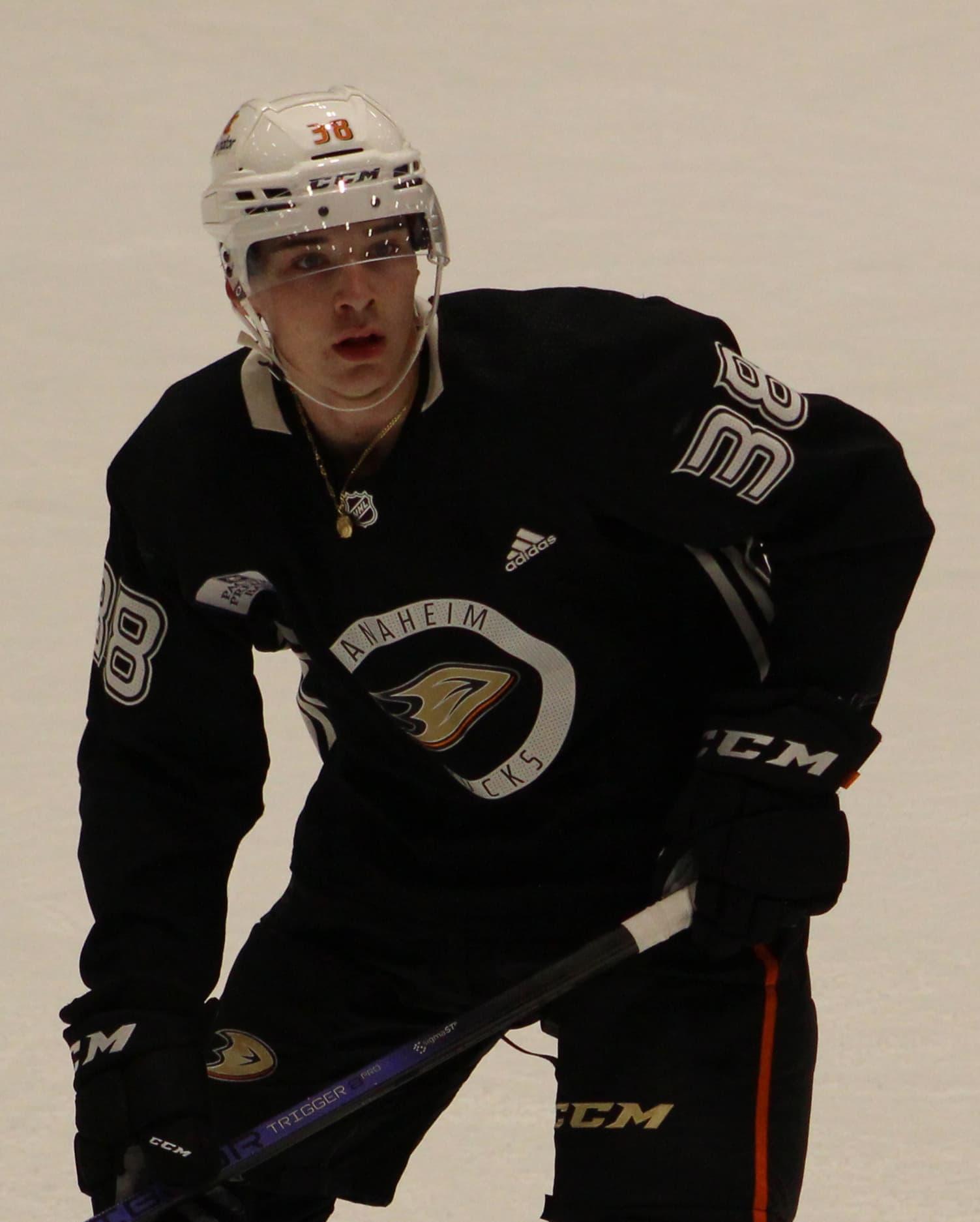
Klepov is the other standout in the “how fast can this move?” conversation. Pat Verbeek said Klepov might have a chance to fast-track to the NHL. Nordmark does not come with the same shortcut label, but as a first-round pick in a camp built around evaluation, he is already part of the internal race for who clears the first AHL threshold first.
McQueen, meanwhile, sits in the middle ground that matters most for San Diego planning. He is close enough to be part of the discussion, but still young enough that camp is about setting benchmarks rather than demanding immediate AHL production. That same logic applies to the Day 2 group, which is farther back in the development queue and likely to spend more time in junior, European or NCAA environments before the Gulls become the destination.
What the camp format says about Anaheim’s rebuild
The off-ice-heavy schedule reflects Anaheim’s patience as much as the roster size does. The Ducks are using development camp as an organizational teaching week, with player-development and strength staffs guiding team-building, leadership development and elite performance-habits sessions. The club wants its prospects to arrive in San Diego with structure, not just skill.
Pat Verbeek has also been clear that the Ducks intend to stay active in free agency and on the trade market to strengthen the roster.
This article was produced by Prism’s automated news system from verified source data, official records, and press releases, then run through automated quality and moderation checks before publishing. The system is built and supervised by the people who set the standards it runs under. Read our full AI policy.
Did this article answer your question?