How AHL rules shape pace, development and playoff overtime
AHL hockey is built to force decisions fast. Its overtime, roster rules, and safety tweaks turn every night into a test for prospects, officials, and NHL depth.
In the AHL, the last 60 seconds of regulation are only the start of the real test. A tied regular-season game turns into five minutes of 3-on-3 overtime, then a shootout that begins with three rounds per side and can run into sudden death; in the Calder Cup Playoffs, the league strips away the gimmicks and plays 20-minute, full-strength overtime until someone scores. Add a roster rule that requires 13 of the 18 dressed skaters to qualify as development players, and the league stops looking like a smaller NHL and starts looking like a pressure cooker built to speed up decisions.
The night changes once regulation ends
The AHL’s regular-season format rewards speed, structure, and poise in a way that changes how games feel from the bench and from the stands. Three-on-three overtime opens the ice, forces cleaner exits, and punishes hesitation because one missed read can become an odd-man rush in a heartbeat. If nobody finishes it there, the shootout starts with three attempts apiece, then moves to sudden-death rounds, which means a game can swing on one calm release or one goalie read under the brightest possible spotlight.
The playoffs are the opposite kind of stress. Once the Calder Cup bracket begins, overtime becomes a grind: 20-minute periods at full strength, repeated until a goal ends it. That shift matters because it changes the value of every shift, every line change, and every defensive-zone decision, especially for players who are learning how to survive longer, heavier hockey without the safety net of a shootout.
The roster math is part of the lesson
The AHL does not just develop players through ice time. It builds development into the roster sheet itself, with a rule that of the 18 skaters a club dresses, at least 13 must be development players. Of those 13, 12 are capped at 260 or fewer professional games, and one more can have played up to 320.
That is not a cosmetic number. It means prospects are not hidden at the edge of the lineup while veterans soak up the difficult minutes. They are in the middle of the action, taking defensive-zone draws, penalty-kill reps, and third-period shifts that matter. The result is a league where young players have to think faster, because the structure gives them less room to coast and a shorter runway to prove they can handle an NHL call-up.
The league’s own framing matches that setup. Player development is a top priority, and the AHL says roster rules adopted before the 1994-95 season sharpened its focus as the NHL’s top development league. The point is not just to identify talent, but to stress-test habits against pro pace, travel, and pressure until those habits hold.
The rulebook is written for live management
The 2025-26 AHL Rule Book reads like a manual for running a fast, crowded system. Its table of contents breaks the game into playing area, teams, equipment, officials, physical infractions, restraining infractions, stick infractions, other infractions, and game flow. That kind of structure tells you what the league values: clear boundaries, consistent enforcement, and enough detail to keep games moving without turning them into chaos.
That is also why the AHL uses two referees in all regular-season and Calder Cup Playoff games. The setup was first planned for a phased rollout beginning in 2010-11, with 25 percent of regular-season games and all playoff games in the initial model, and it now covers every game. Slightly over one-quarter of the assignments are handled by NHL-contracted referees, while the rest are AHL-contracted prospects, which makes the officiating pool part of the same development machine the players are in.
Two referees matter because the AHL game is compressed and fast enough that one official cannot see everything cleanly. With more eyes on the play, the league can manage a tighter, more modern pace while giving young officials the same kind of pro exposure that young players get. That is not a side note; it is the design.
Hybrid icing is the clearest example of the league as a test lab
The AHL adopted hybrid icing for the full 2013-14 season, and the rule’s mechanics are simple but consequential. The linesman makes the icing call when the first pursuing player reaches the end-zone faceoff dots, which removes the race all the way to the end boards. The league framed the change as a way to reduce unnecessary risk and improve safety, and that logic is exactly why the rule fit the AHL so well.
The league had already used hybrid icing on a trial basis during the NHL lockout before making it permanent for a full season. NHL and NHLPA support at the time underscored what the AHL has long been: the place where a safer, faster version of the game can be tested in real competition before the sport leans on it more broadly.
The playoff format proves the point
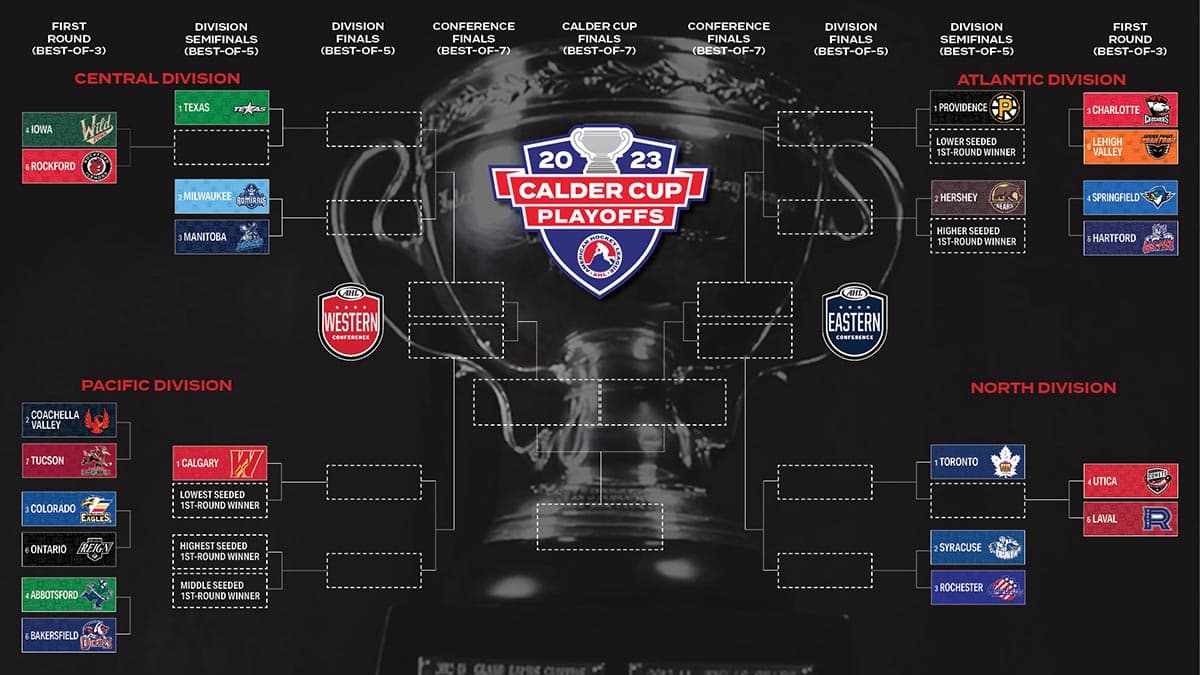
The 2026 Calder Cup Playoffs put 23 teams into a five-round race to the championship, with qualification based on division finish rather than a single league-wide bracket. That structure keeps travel, seeding, and depth management front and center, because the path to the title is not just about talent. It is about surviving a format that asks clubs to manage veterans, prospects, and goaltending as if every decision has a second job.
The Toronto Marlies winning the 2026 Calder Cup over the Chicago Wolves is the cleanest reminder that none of this is theoretical. Every rule, from 3-on-3 overtime to the development-player quota to hybrid icing, is built to shape how a game is played and how a player is prepared. That is why the AHL matters: it is where NHL habits are formed under conditions that do not let anybody hide.
This article was produced by Prism’s automated news system from verified source data, official records, and press releases, then run through automated quality and moderation checks before publishing. The system is built and supervised by the people who set the standards it runs under. Read our full AI policy.
Did this article answer your question?