Marlies turn late-season slump into unlikely Calder Cup Finals run
Toronto shook off a six-in-eight skid, then rode Nylander, Nielsen and Lettieri into a Calder Cup Finals lead.
The Marlies looked like a team headed for an early exit after losing six of their final eight regular-season games, because that kind of slide usually strips away postseason trust before the bracket even opens. Instead, Toronto turned the doubt into fuel, tightened the details that matter in April and June, and kept winning once the games got heavier and the margins got thinner. That is how a fourth-place North Division team ended up one step from the Calder Cup.
Why Toronto was supposed to stop
Toronto finished the 2025-26 regular season fourth in the North Division at 36-26-5-5, good for 82 points, and nothing about that profile screamed “conference champion.” The Marlies’ .569 points percentage was the lowest by an eventual Calder Cup finalist since Wilkes-Barre/Scranton’s .538 in 2004, which is the kind of stat that explains why so many people expected the run to fade sooner. In a 23-team playoff field with five North Division qualifiers, Toronto did not enter with the cleanest résumé, but it did enter with enough depth and enough time to fix what had gone stale.
That is the part that makes this run unusual. Teams that stumble that hard down the stretch usually get remembered as dangerous if they catch the right bounce, not as clubs built to survive three rounds and still have something left. Toronto has flipped that script by becoming harder to play against as the pressure rose, which is exactly when regular-season assumptions tend to break.
The overtime goal that changed the tone
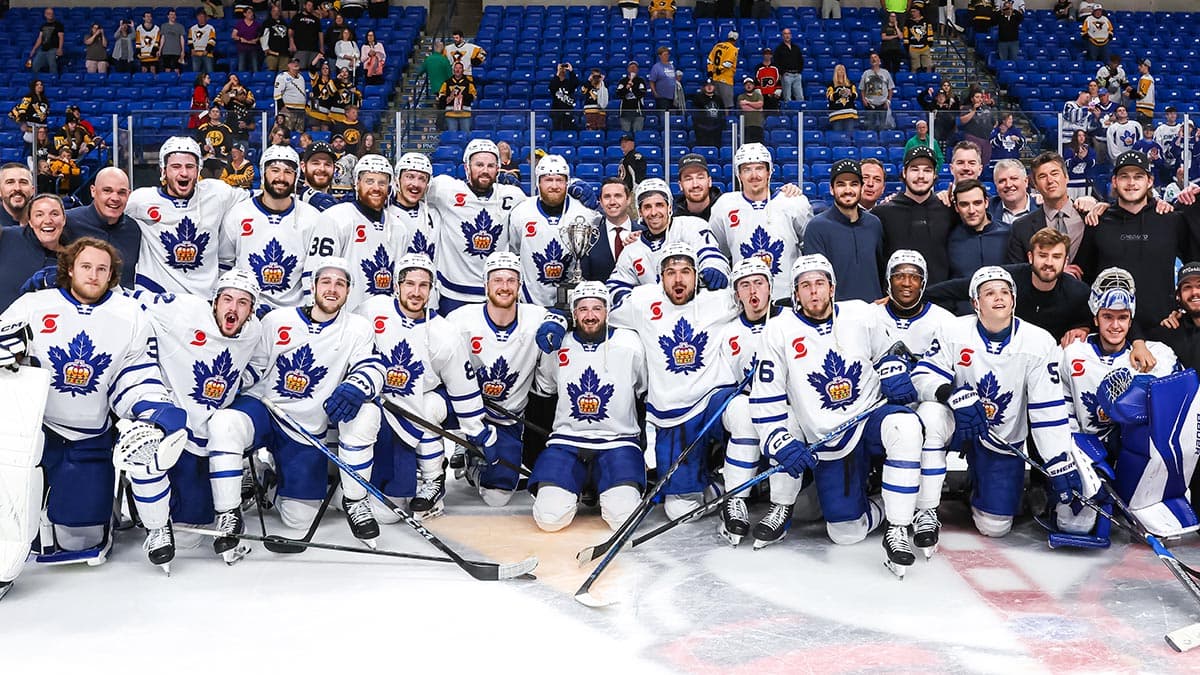
The biggest inflection point came on June 7, 2026, when the Marlies beat the Wilkes-Barre/Scranton Penguins 2-1 in overtime in Game 6 of the Eastern Conference Finals to win the Richard F. Canning Trophy. Former Penguins forward Alex Nylander scored the series-clinching goal at 13:44 of overtime, and that single play sent Toronto to its third conference championship. It was the kind of moment that does more than win a series, because it changes the way a team is seen inside the room and outside it.
That goal mattered because the Eastern Conference final was exactly the kind of series that punishes teams without structure. Toronto had to win ugly, stay composed, and keep making the next right play when the game tightened up, and that is where the Marlies started to separate themselves from the pack. The comeback from late-season wobble was no longer a theory after that goal, it was a fact.
The players carrying the run
Tristen Nielsen has been one of the clearest reasons Toronto is still playing. He entered that conference-clinching game with 10 goals and 7 assists for 17 playoff points, which tied him for the league scoring lead at that point, and he already had eight multi-point games in the postseason. That is not just good production, it is the kind of repeatable offense that travels when defenses get more disciplined and space disappears.
Nylander’s overtime winner and Nielsen’s scoring run tell the same story from different angles: Toronto has enough young talent to swing a game on one shift, but not in a reckless way. The Marlies have also leaned on depth scoring and a strong special teams structure, which is why the late-season slump never turned into a postseason collapse. When a team can win with skill, then grind, then survive, the normal “they’ll come back to earth” forecast gets a lot less convincing.
Why the Finals lead matters
Toronto opened the Calder Cup Finals on June 12, 2026, and immediately showed that the conference title was not the finish line. Vinni Lettieri scored with 8:28 left in regulation to seal a 4-2 win over the Chicago Wolves in Game 1, giving the Marlies an early series lead and another late-game statement win. That matters because Finals series often turn on whether the underdog can handle the jump in pressure, and Toronto has already answered that question in two different rounds.
By the time the puck dropped against Chicago, the Marlies were 12-7 in the postseason, a record that confirms this is not a one-week heater. It is a team that has learned how to adjust after disappointment, keep its structure intact, and stay dangerous even after the league has had months to file it under “probably not ready yet.” The Finals lead is not just a good result, it is proof that the rebuilder’s version of a contender can still beat the pedigree version.
The bigger AHL picture
The Calder Cup is the AHL’s top prize, and the trophy’s current design dates to 2001. It is named for Frank Calder, the NHL’s first president and an important figure in the league’s history, which gives Toronto’s run a place in a much longer championship lineage. The Marlies did not sneak into the Finals by accident; they earned their way there after a bad finish, a dangerous bracket, and a conference final that demanded their best overtime response.
That is why this run stands out. Toronto was supposed to be a team with flaws exposed by March and April, not a club still dictating terms in June. Instead, the Marlies turned a late-season slump into proof that belief, development, and playoff resilience can outrun pedigree when the games start to matter most.
This article was produced by Prism’s automated news system from verified source data, official records, and press releases, then run through automated quality and moderation checks before publishing. The system is built and supervised by the people who set the standards it runs under. Read our full AI policy.
Did this article answer your question?