Veteran NHL players return to the AHL, led by Daniel Carr to Milwaukee
Daniel Carr's return to Milwaukee shows why AHL veterans still matter: they score, steady young rosters and make NHL call-ups more reliable.
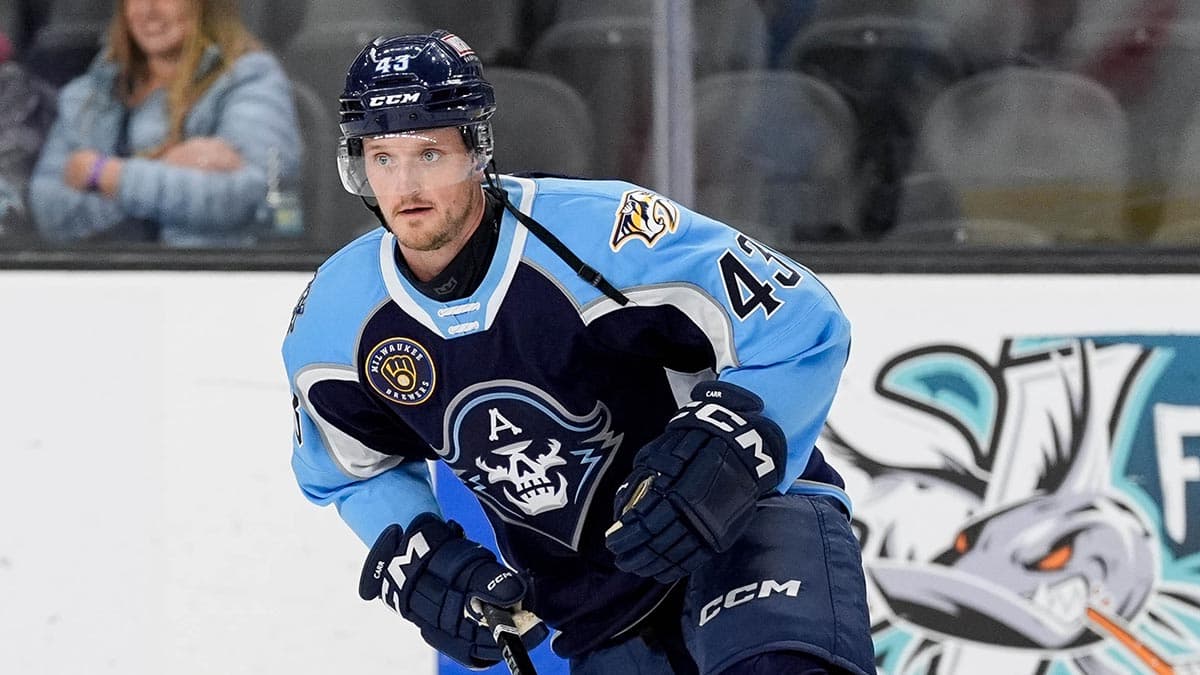
The Milwaukee Admirals did more than add a scorer when they signed Daniel Carr to a two-year American Hockey League contract. They bought proven AHL production, a former league MVP, and a veteran who can make a young roster easier to manage every night. That is the real story behind these familiar-face returns: they are not nostalgia plays, they are roster-building moves with ripple effects all the way up to the NHL parent club.
Why veteran returns still matter in the AHL
The American Hockey League has built its reputation on development, and that is still its biggest selling point. NHL organizations invest heavily in their AHL operations because the league reliably prepares players for the next level, from prospects learning pro habits to depth skaters getting ready for call-up duty. But the league is not only a conveyor belt for future NHL players.
It is also a place where players who have already hit their NHL ceiling can keep driving winning hockey. Those veterans bring the kind of steady professional routine that young teams often lack, and that matters when the schedule tightens, travel grinds down legs, and every point starts to matter in the standings. A roster with a few dependable AHL veterans can survive bad nights without losing its footing.
That is why these returns matter beyond the transaction line. A veteran who understands the league can anchor a scoring line, help drive a power play, and handle matchup-heavy minutes without the nightly learning curve that comes with younger players. Coaches can then give prospects more offensive-zone touches, more special-teams reps, and more room to make mistakes without it turning into a scoreboard problem.
Carr brings a track record Milwaukee can use immediately
Carr is not arriving in Milwaukee as a flyer or a depth bet. He spent the previous four-plus seasons with HC Lugano in the Swiss National League, and he still produced last season. In 2024-25, he finished second on Lugano in scoring with 46 points, scoring 17 goals and adding 29 assists in 39 games.
That kind of output matters because it shows he did not spend the last few years drifting into a lesser role. He was a top-end producer in a strong league, and he is returning with recent game rhythm, not the resume of a player trying to recapture old form. For Milwaukee, that makes him a candidate to step into important minutes right away rather than easing in as a passive veteran presence.
Carr also has the AHL pedigree that makes this signing feel practical instead of sentimental. He won the Les Cunningham Award as the league’s most valuable player in 2018-19, the same season he set career highs with 30 goals, 41 assists, and 71 points. That season tells you exactly what kind of player he can be when everything clicks: a driver, not just a passenger.
What a player like Carr changes inside a room
Veteran AHL returnees shape more than the box score. They set the standard for how a pro season is supposed to look, from preparation to pace to how hard it is to get touches in the middle of a long stretch of games. Younger players notice that quickly, because a veteran who has already done the daily work cannot be faked for long.
Carr fits the sort of player who can raise the nightly floor for Milwaukee. He has already lived the AHL grind, learned how to stay productive, and handled the accountability that comes with being trusted in key situations. That makes him useful on the ice and in the room, especially on a team that wants to keep prospects from being forced into roles they are not ready for.
The bigger organizational value is that veterans like Carr can absorb pressure that would otherwise land on younger players. If he handles a top scoring role or a first-unit power-play job, the Admirals can move a prospect into a better developmental lane instead of asking that player to be something he is not yet. That is how an AHL roster becomes a tool for growth instead of a weekly survival exercise.
How this helps Milwaukee and the NHL pipeline
A stable AHL roster is not just a nice idea, it is a planning advantage. When a team has a dependable veteran core, coaches can be more selective with usage, which means younger players get minutes that fit their development rather than minutes that merely plug holes. That leads to cleaner progress, fewer bad habits, and better readiness when the NHL team needs help.
Milwaukee’s signing of Carr fits that model cleanly. A two-year AHL contract gives the Admirals a veteran who can provide scoring and structure beyond one short-term stretch, which is valuable when a season turns into a long middle grind. It also gives the organization a familiar kind of player to lean on if injuries, promotions, or slumps push prospects into tougher situations.
For the parent club, that kind of stability matters because call-up readiness is built in the AHL long before the phone rings. A player coming out of a well-run environment is more likely to step into the NHL and understand pace, structure, and role discipline. A veteran like Carr helps create that environment by making the AHL team harder to play against and easier to coach.
The AHL is still a destination, not just a stop
This is the part that often gets lost when the league is discussed only as a pipeline. The AHL is where careers can be made, championships can be chased, and leadership can become a real skill rather than a buzzword. Carr’s return reinforces that the league has its own identity, one built on competition, responsibility, and the ability to win with players who know exactly what a professional standard looks like.
Milwaukee’s move is a clear example of that idea in action. Carr gives the Admirals immediate scoring ability, a proven AHL résumé, and the sort of veteran presence that helps young players develop without being rushed. In a league defined by turnover, that kind of familiar face can shape a season long before the playoff picture gets sharp.
This article was produced by Prism’s automated news system from verified source data, official records, and press releases, then run through automated quality and moderation checks before publishing. The system is built and supervised by the people who set the standards it runs under. Read our full AI policy.
Did this article answer your question?