How pickleball ratings make amateur matches fairer and more competitive
DUPR now steers who you see at open play and which brackets you can enter. Logged matches, not self-ratings, are what keep amateur games close.

A self-rated 3.0 or 3.5 can get you into the wrong court fast. The Dynamic Universal Pickleball Rating, better known as DUPR, is the number more clubs and tournament directors are using to sort open play, build brackets, and keep amateur matches competitive instead of lopsided. For players trying to avoid wasted court time, that makes the rating less like bragging rights and more like entry currency.
Why DUPR is becoming the standard
DUPR was developed in 2021 by Steve Kuhn, the founder of Major League Pickleball, with a clear goal: create a more accurate and universal way to measure a player’s level. In pickleball, beginners, former tennis players, weekend athletes, and longtime competitors often end up on the same court. A rating system gives event directors a way to build divisions, helps clubs run ladders and open play, and gives players a better shot at finding partners and opponents who can actually rally with them.
When ratings work, a rec night stops becoming a series of blowouts, and a tournament bracket stops feeling like a coin flip. The best ratings also make the game easier to enter, because beginners can be separated into sessions where they are learning instead of surviving, while stronger players get matches that test them instead of letting them cruise.
Where to find your rating
If you already have matches logged, the first step is to claim your account. Your matches may already be in the system, and you can claim them to begin. The dashboard lets you search players, look up ratings, and manage your profile instead of relying on whatever number somebody wrote on a signup sheet.
If you have ever walked into a “3.0” session and found yourself either overmatched or bored, you already know how shaky those labels can be. DUPR is meant to replace that guesswork with match results, so the number reflects how you actually play, not how you describe yourself after a good day.
DUPR’s newer profile experience includes subscores, career high, and DUPR Impact, with Impact sitting inside the Forecast tab so you can see how every match affects your rating. That is useful for amateurs because it turns the rating into something you can track, not just something you hear about when a bracket opens.
How fast the number can move
DUPR is dynamic, which means it changes as you play. The system adjusts with each match, and if you are just starting to record results or coming back after a long break, the changes can be significant while the rating is in its calibration phase. It is built to move when new evidence comes in, unlike a one-time self-rating.
The updated DUPR algorithm also looks at performance compared with the expected score. In plain terms, that means the system is not only counting wins and losses, it is judging how you performed against what the matchup predicted. A narrow loss against stronger players can say more about your level than a routine win over weaker ones, and a big tournament weekend can move your number faster than a quiet month of rec play.
If your serves, returns, and transition game improve, the system should show it. If you are stuck because your dinking consistency or serve-return footwork is holding you back, the rating can expose that too.
What it changes in open play and tournaments
Clubs are already using ratings to sort open play and structure events. One example is Pickleland in Austin, which advertises open play sorted by DUPR level, along with a free intro for new players, a beginner class, and court rentals starting at $16 an hour. That setup shapes who you see across the net before the first point is ever played.
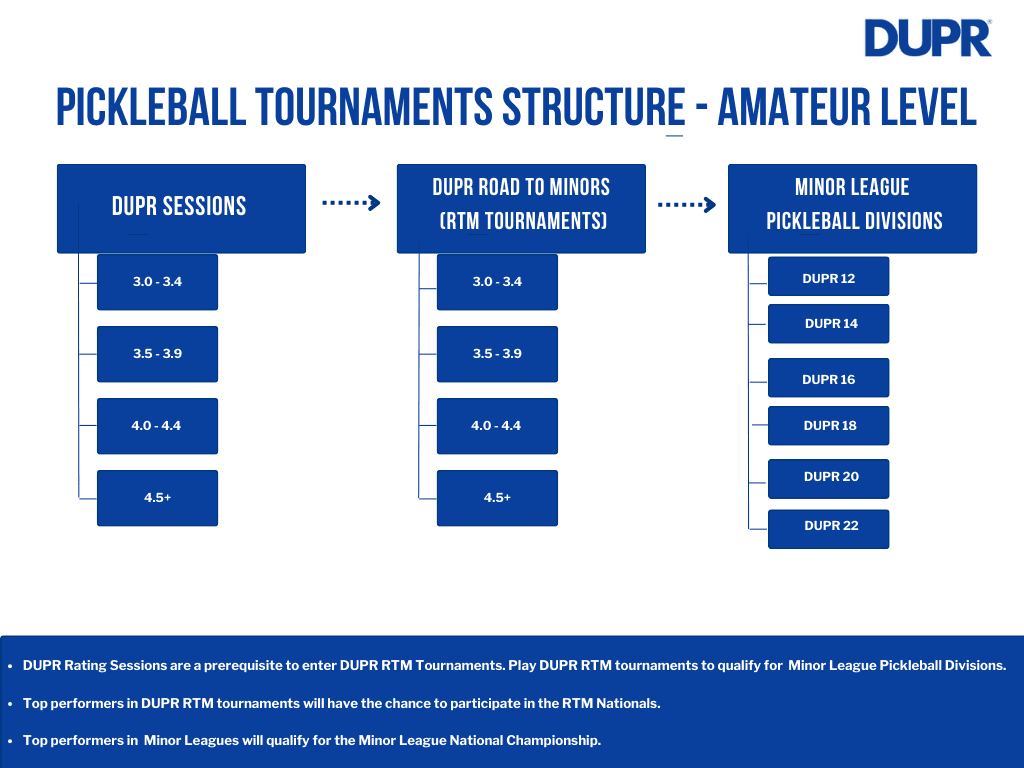
For tournament entry, the effect is even bigger. If a local event is starting to rely on DUPR, the number on a self-rated form stops being the main passport into a bracket. The director wants logged results, because that is how divisions stay fair and how brackets avoid being stacked with players who guessed wrong or gamed the signup process.
If you are deciding whether to enter 3.0 or 3.5, DUPR gives you a better answer than instinct. If you are wondering whether you are ready for ladder night, the rating is a better signal than a friend’s opinion. And if you are trying to find a mixed doubles partner at your level, a shared rating makes that search much less random.
What beginners should do now
The smartest move is to start recording real matches as early as possible. DUPR works best when there is enough data to show your level, so beginners who play in rated sessions, claim their account, and keep logging results will build a usable profile faster than players who wait until their first big tournament.
A few practical habits help right away:
- Claim your DUPR account and check whether past matches are already in the system.
- Use beginner clinics or free intro sessions when your club offers them, so early matches are against players in a similar range.
- Treat the rating as feedback, not identity, and use it to spot weak spots like serve returns, transition footwork, and dinking consistency.
- Check the app’s Forecast tab and profile features so you can see how each match changes the number.
This article was produced by Prism’s automated news system from verified source data, official records, and press releases, then run through automated quality and moderation checks before publishing. The system is built and supervised by the people who set the standards it runs under. Read our full AI policy.
Did this article answer your question?