ACA team match play brings new six-round cornhole format
ACA’s six-round team match play turns cornhole into a cleaner, higher-drama team event, with doubles, singles and a final airmail shootout.

Team match play gives cornhole a sharper competitive shape without asking players to learn a new sport from scratch. The American Cornhole Association announced the format in August 2022, said formal public adoption would follow in the fourth quarter of 2022, and built it around the same 21-point foundation players already know.
Why this format wins
The appeal is simple: more people stay involved, and the match has a built-in ending that feels different from standard singles or doubles. Team match play uses six rounds, with three rounds of doubles, two rounds of singles and one final airmail shootout, and the first team to 21 total match points wins.
That structure matters for league directors and tournament hosts because it stretches one cornhole match across several different competitive looks. Doubles rewards chemistry, singles puts the spotlight on individual shot-making, and the airmail shootout gives the night a clean, dramatic finish instead of another quiet frame-by-frame grind.
The ACA built the format to level the playing field, foster team chemistry, encourage strategic play and add drama at the end. It is also designed to run on existing equipment, which keeps it practical for parks departments, neighborhood hangouts and season-long league schedules.
How the six-round format changes the game
Standard cornhole is easy to explain because everyone understands the 21-point target. Team match play keeps that familiar finish line but redistributes the action so more players matter across the entire match. Three doubles rounds create a rhythm that feels close to traditional play, then the two singles rounds force each roster to carry its own weight before the shootout decides the last stretch.
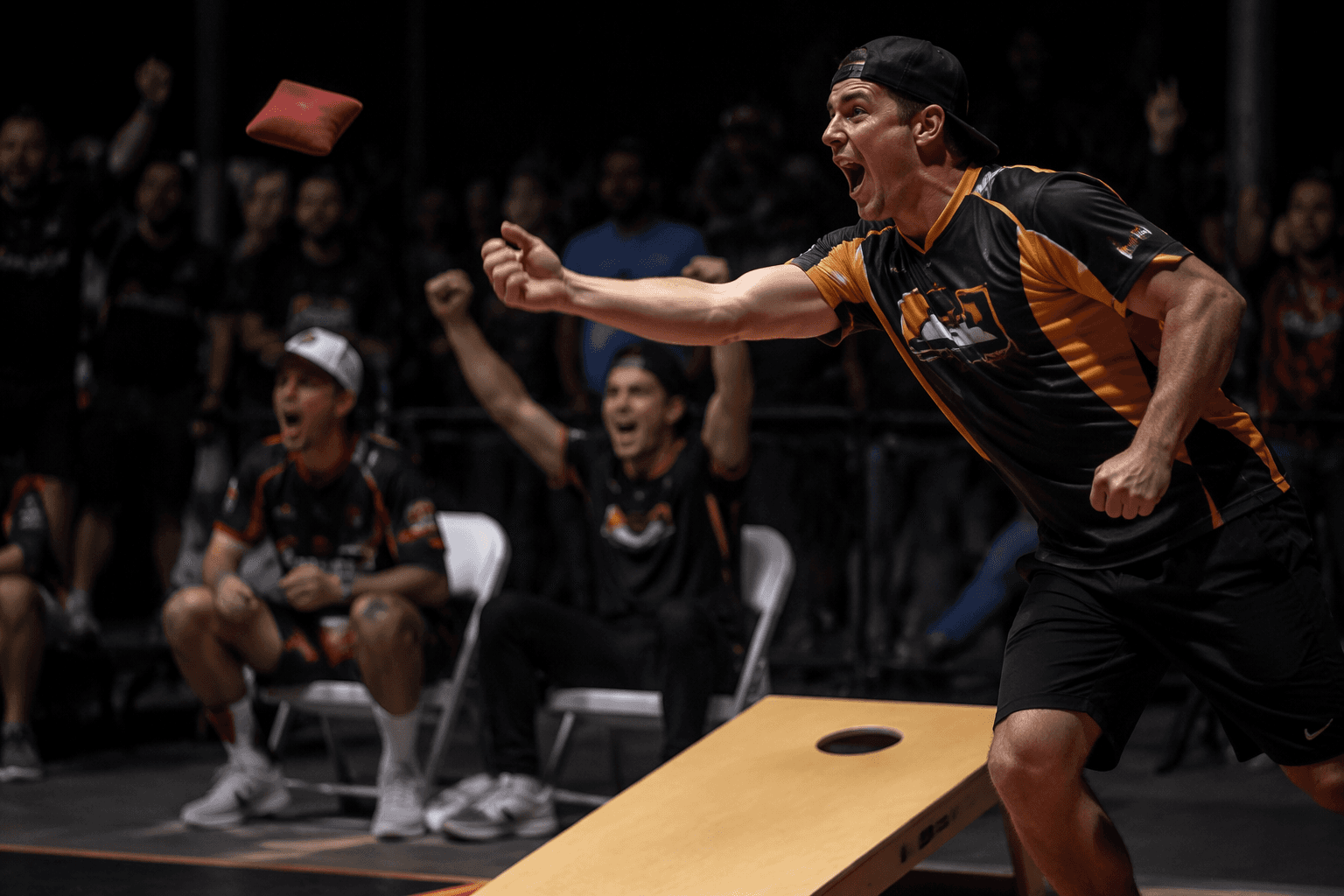
The airmail shootout is where the format separates itself from regular scoring. In that final round, a bag on the board is worth 1 match point and a bag in the hole is worth 2 match points, with no cancellation scoring. Every player on both teams must take part, and the round does not begin until the first five rounds are complete.
That last detail gives the format its strongest spectator hook. Instead of ending with one team slowly running away from the other, the match reaches a pressure point where every throw can swing the outcome, which is exactly the kind of finish that plays well in front of a crowd at a bar, club night or local tournament.
4-player or 8-player, depending on the room
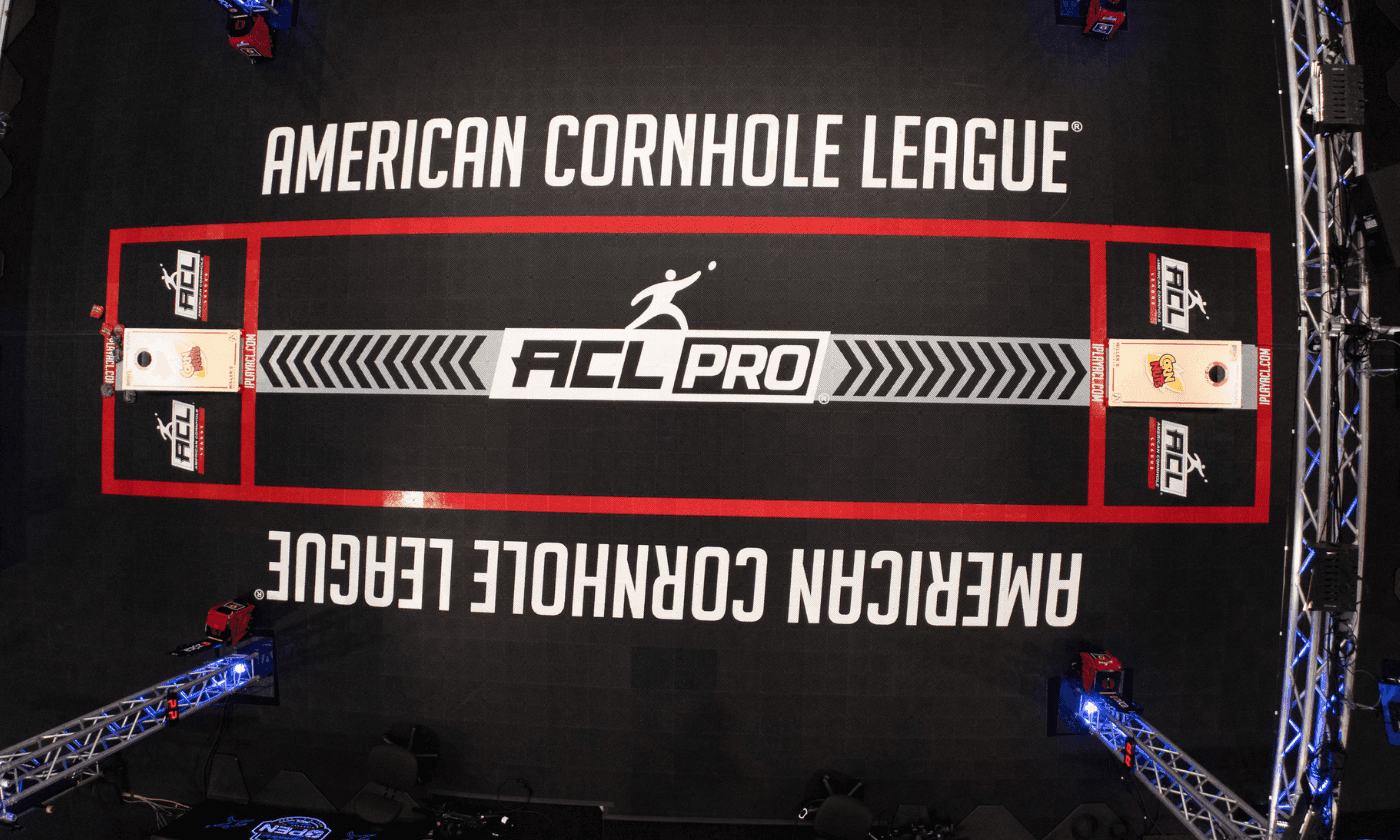
The format scales cleanly, which is one reason it works for more than one kind of venue. The ACA says team match play can be staged with either 4-player or 8-player teams, and it can be run on anywhere from one to five courts depending on roster size and layout.
That flexibility makes the choice between 4-player and 8-player match play a practical one, not a philosophical one. A smaller setup makes sense when space is tight, when the goal is to keep a bar crowd moving, or when a club wants a short, easy-to-follow team night. An 8-player setup fits better when a league has enough shooters to spread out, when a tournament wants more participation, or when a venue has the court space to support a fuller bracket.
- Use 4-player match play when the goal is speed, simplicity and a compact footprint.
- Use 8-player match play when you want more roster depth, more hands on the bags and more total participation.
- Use the larger setup when the venue can support multiple courts and the night needs a longer team format.
For a local director, the logic is straightforward:
That is where team match play beats a standard singles or doubles night. Regular formats are efficient, but they can leave players waiting around. Team match play keeps more people on the board, more often, and gives the host a format that still finishes with a clean, obvious winner.
Why leagues, bars and local tournaments care
The ACA specifically positioned the rules for local leagues and season-long schedules, which is the real business case behind the format. League operators need something repeatable, easy to explain and flexible enough to survive different venue layouts, and team match play checks those boxes without requiring a different set of boards or bags.
It also gives casual players a way into organized cornhole without making the night feel overly formal. The ACA’s official rules are used for tournament play and backyard play, so the team format fits into a rules ecosystem that already bridges serious competition and informal games. That makes it a natural choice for bars trying to build a weekly event, clubs looking for a recurring team night, or parks departments that want a format the public can grasp quickly.
The association’s own background helps explain why it can push this kind of structure into the mainstream. The ACA was established in 2003 in Cincinnati, Ohio and describes itself as the first organized corn toss organization in the United States. Team match play extends that long-running standard-setting role by giving the sport a format built for larger rosters and cleaner event flow.
How it fits into organized cornhole now
Team formats are no longer a novelty on the edges of the sport. Special Olympics North America already publishes cornhole materials for singles, doubles and assessment team match play, showing that team-based competition has become part of organized cornhole’s broader toolkit.
Special Olympics Illinois pushes that idea even further with Unified Cornhole, a new official sport offering played by Unified doubles teams made up of one athlete and one partner, ages 18 and older. Games are played to 21 points or 30 minutes, and gold medalists can advance through regionals to the 2026 Summer Games at Horton Fieldhouse in Normal, Illinois, scheduled for June 12-13, 2026.
That wider landscape shows why ACA team match play matters. It is not replacing the classic 21-point game; it is giving the sport another format that keeps more players active, creates a more obvious competitive arc and ends with a finish that spectators can immediately understand. In a sport built on precision, the best new idea is often the one that makes the next throw feel bigger.
This article was produced by Prism’s automated news system from verified source data, official records, and press releases, then run through automated quality and moderation checks before publishing. The system is built and supervised by the people who set the standards it runs under. Read our full AI policy.
Did this article answer your question?