ACO rulebook puts officiating at the heart of cornhole competition
Officiating is the hidden edge in cornhole, where foot faults, shot clocks and score corrections can swing a match before the last bag lands.
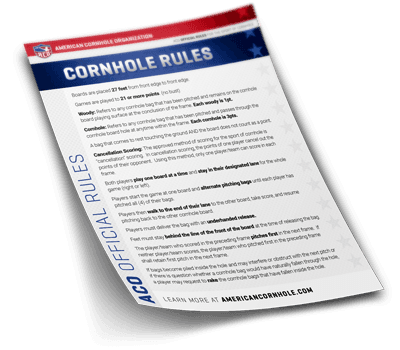
Foot fouls, accidental releases, pitching out of turn, touching bags before a frame is complete, time limits, straightening boards, approaching the opposite boards, timeouts, raking bags, sweeping bags, intentional fouls, distracting behavior and sportsmanship sit at the center of the American Cornhole Organization rulebook. They are the pressure points that decide real brackets. The rulebook is built around repeatable procedure, clean possessions and immediate penalties when a player breaks rhythm.
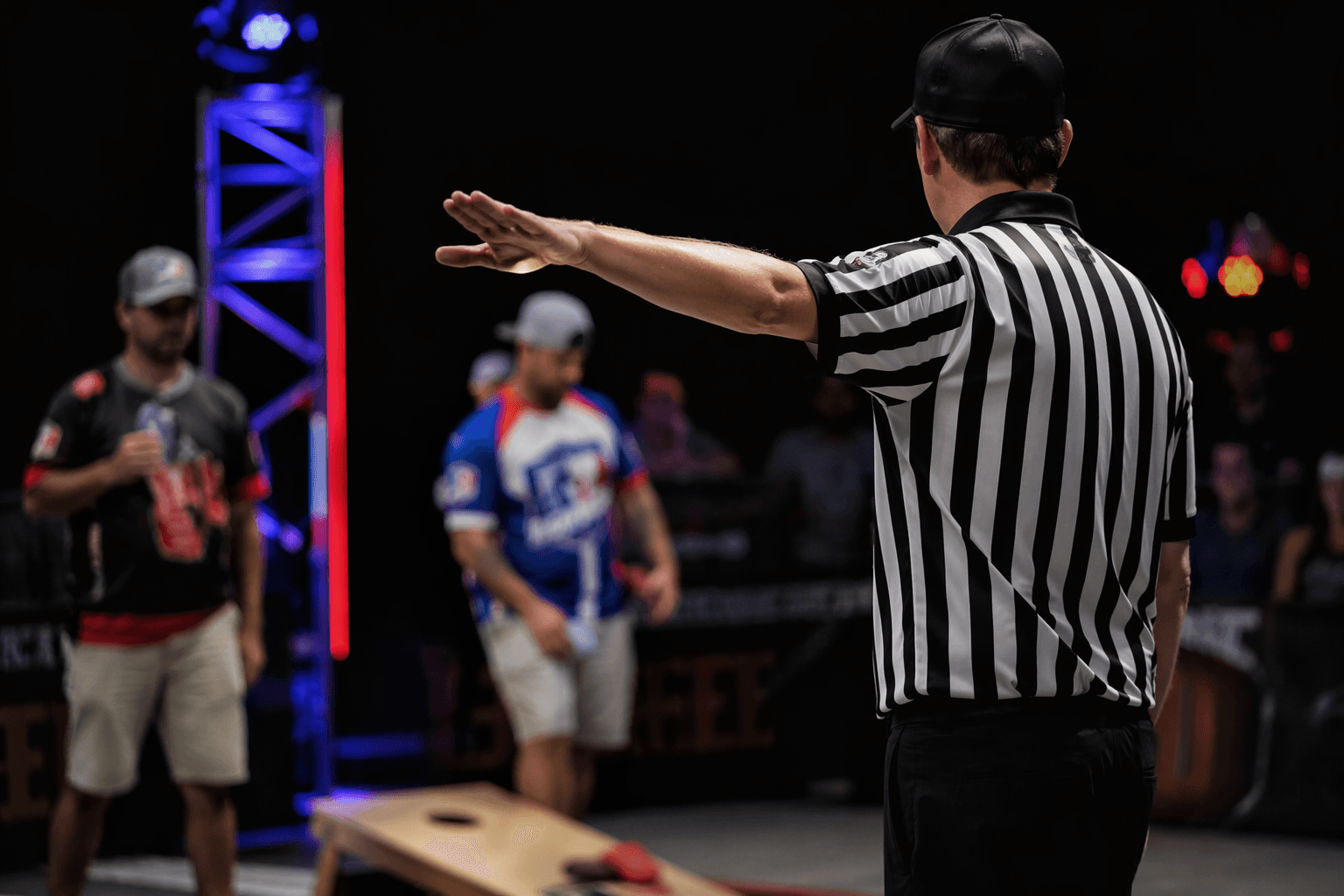
Officiating controls pace, manages possession and keeps a tight match from turning into a scramble. When the margin is a single bag, a foot on the line or a premature touch can matter as much as an airmail.
What the ACO book is really protecting
The ACO’s equipment standards are just as precise, and they are enforced through officiating rather than assumed in the background. Approved boards must use hardwood plywood playing surfaces measuring 47.5 inches to 48 inches by 23.5 inches to 24 inches, with a 6-inch hole centered 9 inches from the top edge. The surface must be smooth, and players are responsible for making sure the court is in good condition before play begins.
The rulebook also draws a hard line on what can and cannot touch the boards. Foreign substances such as Pledge, talc powder, baby powder and silicone sprays are banned, while only a dry clean cloth is allowed to wipe the boards before play. On a fast surface, the difference between a dry board and a treated one changes how bags slide, stop and block, which is why officials are asked to police it so closely.
The ACO also includes an adaptive cornhole division in its rules, so the same structure has to work across more than one competitive setting. The standard stays intact whether the match is for a local bracket, a national title or a division built around different physical needs.
Why the ACL keeps tightening the screws
The American Cornhole League has taken those same principles and made them even more exact in its 2025/2026 rules. Practice throws are prohibited during non-player-related technical delays, and the first shot-clock violation when timeouts remain now triggers an auto-charged timeout. If a player takes practice throws during a timeout, the next bag is forfeited, and if a player adjusts the target board mid-round, the next bag is forfeited as well.
A timeout is now a resource that can disappear if the shot clock gets abused, and a board adjustment mid-round can cost a bag and flip the score on the next end.
The ACL also makes scorekeeping part of competitive integrity, not administrative cleanup. Match officials are responsible for confirming that the correct score is entered after a violation, which means the whistle does not just stop play, it protects the actual result.
Conduct rules are now part of the strategy
The ACL’s player conduct rules show how far the sport has moved from backyard chaos. Players are prohibited from wearing headphones, and excessive celebrations can lead to disciplinary actions. They protect concentration and keep the broadcast stage from becoming a distraction contest.
In a tight final, noise, delay or over-the-top behavior can run into the same conduct rules that ban headphones and permit discipline for excessive celebrations.
From Frank Geers to Stacey Moore, the sport built its own structure
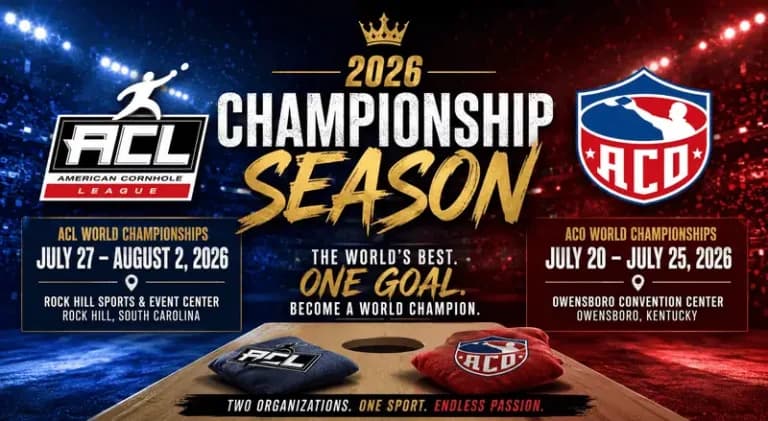
The ACO was established in 2005 in Camp Dennison, Ohio, by Frank Geers, and it held its first ACO Nationals Championship in December 2006 in Northern Kentucky. The organization calls itself the sport’s first and official governing body and says it created the world’s first officially recognized leagues, tournaments and World Championships.
The ACL came later, founded in 2015 by Stacey Moore, and it helped push cornhole into a bigger media and business lane. The league streamed its first championship event in 2016, reached ESPN2 in 2017 and later created USA Cornhole in 2019 to support Olympic aspirations. Moore says about 20% of ACL pros can play full-time, a useful marker of how far the pro layer has grown even while many players still balance tournaments with regular jobs.
The ACL calls itself the premier league for professional and recreational cornhole in the United States. Its 2024 World Championships page points to more than $700,000 in payouts and 30 events.
The biggest stages demand the strictest calls
Cornhole will debut as an official sport at the 2026 USA Games in Minnesota, after serving as a demo sport at the 2022 USA Games in Orlando. The Special Olympics USA Games says more than 4,800 athletes and Unified partners train and compete in cornhole each year.
This article was produced by Prism’s automated news system from verified source data, official records, and press releases, then run through automated quality and moderation checks before publishing. The system is built and supervised by the people who set the standards it runs under. Read our full AI policy.
Did this article answer your question?