Airmail shot gives cornhole players a high-risk, high-reward scoring edge
The airmail is the cleanest scoring shot in cornhole, but only when the board layout demands precision over safety. It can win a frame fast, or hand the other team the round just as quickly.
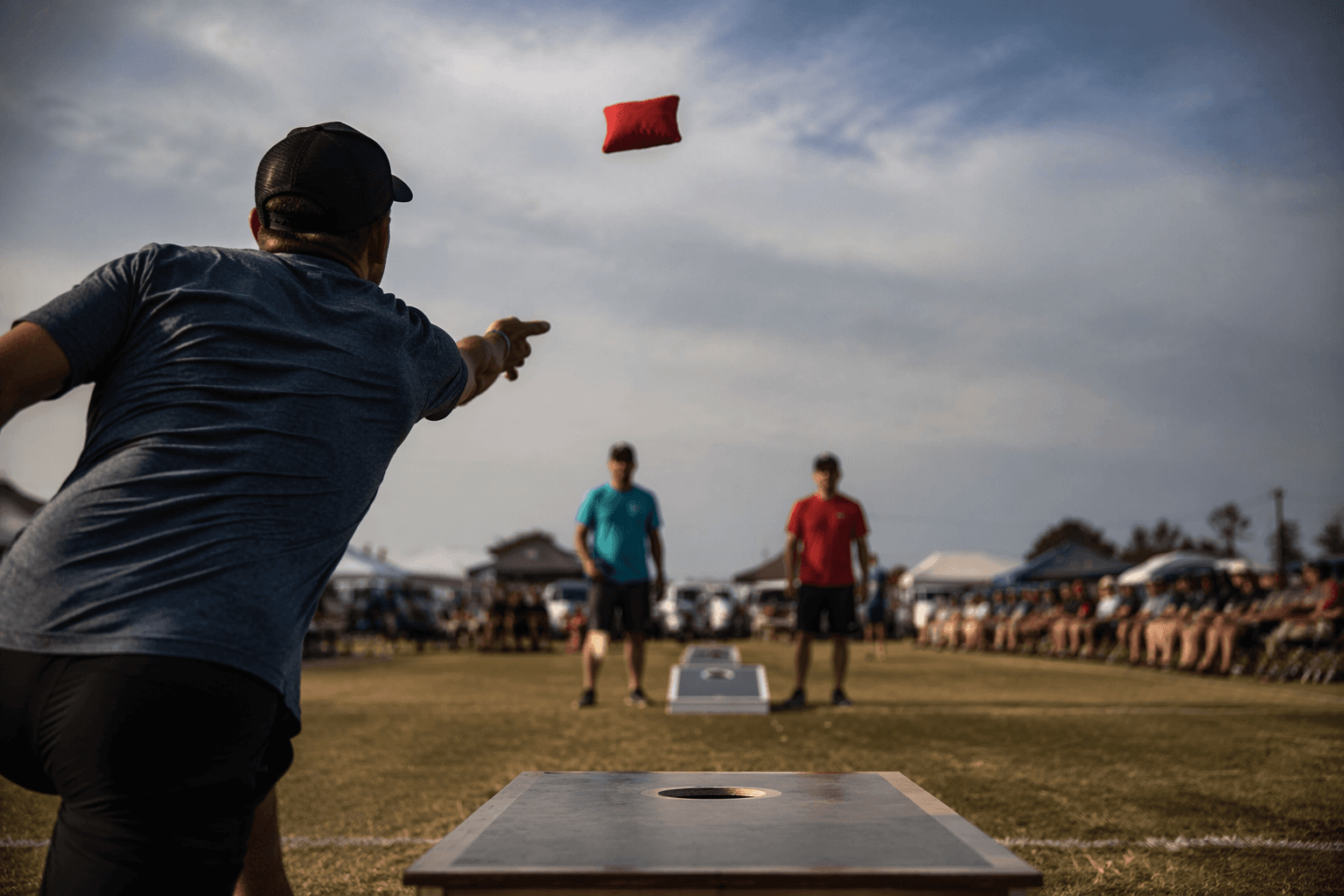
An airmail is cornhole at full throttle: the bag flies straight into the hole without touching the board, which is why it can be the best shot on the board and the most punishing miss in the same frame. ESPN has called it the most difficult type of throw because it demands elite accuracy, and that is exactly why the shot matters when the board is crowded, the lane is blocked, or a player needs a clean finish without changing the setup.
Why the airmail is different
The airmail sits in a small group of core cornhole shots that the American Cornhole Association identifies as part of advanced play: flat bag, slide, blocker, airmail, push, roll, and bully. The airmail stands apart because it does not use the board as a runway. It goes straight at the hole, which makes it the purest scoring attempt in the sport and also the least forgiving.
That risk-reward tradeoff is why the shot feels so big in real games. Under American Cornhole League rules, a regulation match uses two boards placed 27 feet apart, each team throws four bags per round, and scoring uses cancellation, so one side’s points erase the other’s points each frame. A bag through the hole is worth 3 points, while a bag on the board is worth 1. In that system, a successful airmail can turn a tight round into a swing frame in one throw.
When the airmail is the right shot
The airmail is the right answer when the board position makes every other option messy. If an opponent has planted a blocker in the hole line, a slide shot may not clear it cleanly, and a roll may leave too much to chance. If your own bags are already arranged for a controlled round, the airmail lets you score without knocking that structure apart.
It is also the shot to reach for when the math demands a pure score rather than a setup move. In a game played to 21 or more points, one clean 3-point bag can matter more than a safer 1-point board bag, especially late in a round when cancellation scoring can wipe out the value of a conservative throw. That is why top players trust it in pressure moments: the shot takes the argument out of the frame and goes straight to the best possible outcome.
Airmails can also be the smartest choice when the board is dangerous to touch. If there is a blocker sitting in front of the hole or a bag that is sitting in a way you do not want to disturb, the direct throw keeps the rest of the setup intact. That is the hidden value of the shot: it is not just flashy, it is surgical.
When it backfires
The same direct path that makes the airmail beautiful also makes it fragile. Because the bag never uses the board for help, there is less room for error than with a slide or a roll. A little too short and the bag dies in front of the hole; a little too long and it skips away with no score at all.
That is why the shot can backfire in exactly the moments when players get greedy. If the hole is open but the bag is not dialed in, a conservative board shot may be worth more over the course of the round than a low-percentage attempt at 3 points. In cancellation scoring, empty possession is expensive, and a missed airmail can hand the other team a chance to control the frame instead of forcing a finish.
Why the sport has built around the shot
The airmail is not just part of the player vocabulary. It has shaped the way the sport trains and organizes itself. The American Cornhole Association says it was established in 2003 in Cincinnati, Ohio, and was the first to host official cornhole rules online. The American Cornhole Organization says it was founded by Frank Geers in 2005, held its first ACO Nationals Championship in December 2006 in Northern Kentucky, and introduced an “Airmail Box and Challenge” in 2007. That timeline says a lot: precision airmail practice became formalized early because the shot was already central to competitive play.
The training side has caught up too. The ACA sells reduced-surface Airmail Cornhole Boards designed to help players improve accuracy, using an 18-by-18-inch practice surface for a smaller target. That kind of equipment exists because the shot is so hard to repeat under pressure. You are not just learning to throw at a hole. You are learning to repeat the same release, arc, and landing point over and over until the shot becomes usable in tournament conditions.
What pro conditions demand
The modern pro game makes the airmail even more important. The ACL describes itself as the premier league for professional and recreational cornhole in the United States, and its official 2025/2026 rules, updated on October 24, 2025, set a tighter standard for competition. Boards must measure 2 feet by 4 feet, sit 27 feet apart, and all ACL State and higher events will require ACL-marked and approved boards starting October 1, 2026.
That kind of standardization raises the value of repeatable precision. ESPN’s 2018 explainer notes that pro boards must be sturdy wood with a smooth finish, and pro bags use specific material construction with a sticky side and a slick side. When the board and bag are standardized, the airmail becomes less about improvisation and more about controlled execution. The shot is still hard, but the conditions are built to reward the players who can hit it consistently.
Why fans keep paying attention
Cornhole has also outgrown the backyard image that once defined it. ESPN’s 2024 coverage described the sport as a social network as much as a competition, one that can turn strangers into friends as they travel together through tournaments. That matters because the airmail is one of the shots that gives the sport its edge. It is a clean, decisive play that casual viewers can understand immediately and serious players can spend years chasing.
ESPN has also profiled Dayton Webber, a quadruple amputee and competitive cornhole player, which shows how broad the competitive field has become. The airmail fits that kind of sport perfectly: it rewards touch, repetition, and nerve, not just brute force. That is why the shot still has such a hold on top players. It can erase a blocker, preserve a board, and steal a frame in one throw, but only if the release is exact.
The smartest cornhole players do not treat the airmail as a trick shot. They treat it like a scoring tool with a narrow but decisive job: finish when the board asks for precision, and stay away from it when a safer line protects the round. That is the difference between a highlight and a mistake, and in cornhole, the margin is often one throw.
This article was produced by Prism’s automated news system from verified source data, official records, and press releases, then run through automated quality and moderation checks before publishing. The system is built and supervised by the people who set the standards it runs under. Read our full AI policy.
Did this article answer your question?