Cincinnati turned cornhole from backyard game into a national sport
Cornhole’s roots are disputed, but Cincinnati gave it a modern identity in 2005, with rules, rankings, and titles turning a tailgate game into a real sport.

Cornhole’s origin story is a fight over folklore, but its rise into a serious sport has a much clearer address: Cincinnati. The game can claim a 14th-century German myth, a Native American origin story, or a Kentucky farmer tale, yet the modern version that matters was organized in Ohio, where rules, rankings, and national titles turned a backyard pastime into a marketable competition.
The origin debate is part of the sport now
The strongest share hook in cornhole is the contradiction at its center. A game that now has sanctioned tournaments and pro divisions still carries three different founding myths, and none of them fully settles who gets credit for the sport’s first toss. That uncertainty matters because it shows how cornhole moved from oral tradition and local habit into an organized product with competing claims over legitimacy.
What used to be a casual backyard game now has a history argument attached to it, and that argument is not a distraction. It is the proof that cornhole has outgrown its old identity. When a sport becomes popular enough for multiple groups to argue over its beginnings, it is no longer just a game people play at cookouts.
Cincinnati is where the modern sport took shape
The modern turning point came in the early 2000s, when Frank Geers said few people outside Cincinnati knew the game well enough to treat it as more than a novelty. He founded the American Cornhole Organization in 2005 to turn cornhole into a national sport, and the group says it is headquartered near Cincinnati, in Camp Dennison, Ohio. The organization’s work was practical, not symbolic: it offered official rules, sanctioned products, tournament listings, and event information that made the game easier to run at scale.
At the same time, the American Cornhole Association was already publishing basic rules online, including board spacing and scoring methods. That mattered because a sport cannot grow quickly if every backyard uses a different setup. Once the measurements, spacing, and scoring were written down, tournaments could be repeated, regulated, and compared from one city to the next.
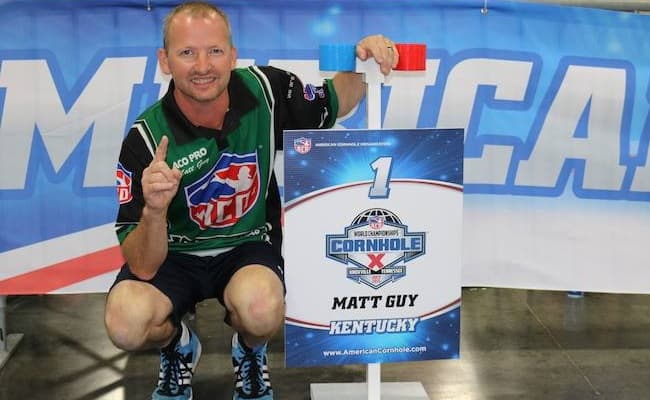
The ACO pushed the structure further by adding a ranking system and point system, which moved cornhole away from informal neighborhood play and toward a formal competitive ladder. Its first Nationals Championship took place in December 2006 in Northern Kentucky, where it crowned the first official national King of Cornhole. That date is the cleanest marker of when the sport stopped being a regional pastime and started acting like a national circuit.
The rules are simple, but the structure is serious
Cornhole’s appeal starts with equipment that is easy to understand and even easier to move. The official ACA rules describe the standard game as four players, two boards, and eight bags, with one point for a bag on the board and three points for a bag in the hole. The first player or team to 21 wins, and official play depends on details like board dimensions, bag specifications, underhand pitching, and court layout.
That simplicity is part of the sport’s power. Because the game has a fixed scoring system and a fixed piece of equipment, it can be standardized without losing the casual feel that made it popular in the first place. The official rulebooks also serve a second purpose: they settle backyard disputes, which is another sign that cornhole has crossed from informal fun into a sport that needs refereeing language.
The ACO’s rules go even further, with chapters covering approved equipment, court layout, scoring, gameplay, and backyard rules. In practice, that means the sport now has a manual for both the competitive bracket and the family party. Few games make that leap so cleanly.
Why cornhole spread so fast
Cornhole did not become national because it was obscure and then suddenly glamorous. It spread because it was portable, cheap to understand, and easy to stage anywhere people were already gathering. Historic Hudson Valley traces one major channel of growth to Cincinnati Bengals tailgates, where fans carried the game from NFL parking lots to other tailgate scenes, and from there it spread into backyards, beaches, breweries, and campgrounds.
That movement made cornhole unusually versatile. It works for mixed ages and skill levels, so the same setup can serve a family picnic, a bar patio, or a tournament qualifying event. The game’s portability also helped it travel better than many backyard sports because two boards and eight bags are enough to create a match anywhere with a flat space.
That combination of simplicity and mobility explains why the sport could be commercialized so quickly. Once the rules were standardized, the game became easy to sell, easy to sanction, and easy to schedule. It stopped being only a pastime and became a repeatable event product.
The pro era has tightened the path to the top
Cornhole’s newest stage is less about folklore and more about access. The American Cornhole League says it is the premier league for professional and recreational cornhole in the United States, and its pro materials show how much more selective the sport has become. The pro division includes more than 200 of the best players in the world, but starting in the 2025-2026 season only 100 players can earn ACL Pro status.
That change signals a sport with gatekeeping, advancement, and operational growth. There is now a clear line between the broad recreational base and the smaller elite group that can claim pro status, which means players are not just throwing bags for fun, they are trying to qualify into a narrower tier. In the modern cornhole economy, access is part of the story.
The bigger picture is simple: cornhole’s founding story may stay disputed, but its modern identity is not. Cincinnati gave the sport its organizing center, its rulebook logic, and its competitive pathway, and that is why the game now belongs in the same conversation as other structured American sports with real titles, real rankings, and a real ladder to climb.
This article was produced by Prism’s automated news system from verified source data, official records, and press releases, then run through automated quality and moderation checks before publishing. The system is built and supervised by the people who set the standards it runs under. Read our full AI policy.
Know something we missed? Have a correction or additional information?
Submit a Tip