Cornhole strategy is hidden in the official rules and equipment specs
Cornhole strategy starts with the measurements, not the throw. The 27-foot lane, 1-pound bags, and cancellation scoring reward control before highlight shots.
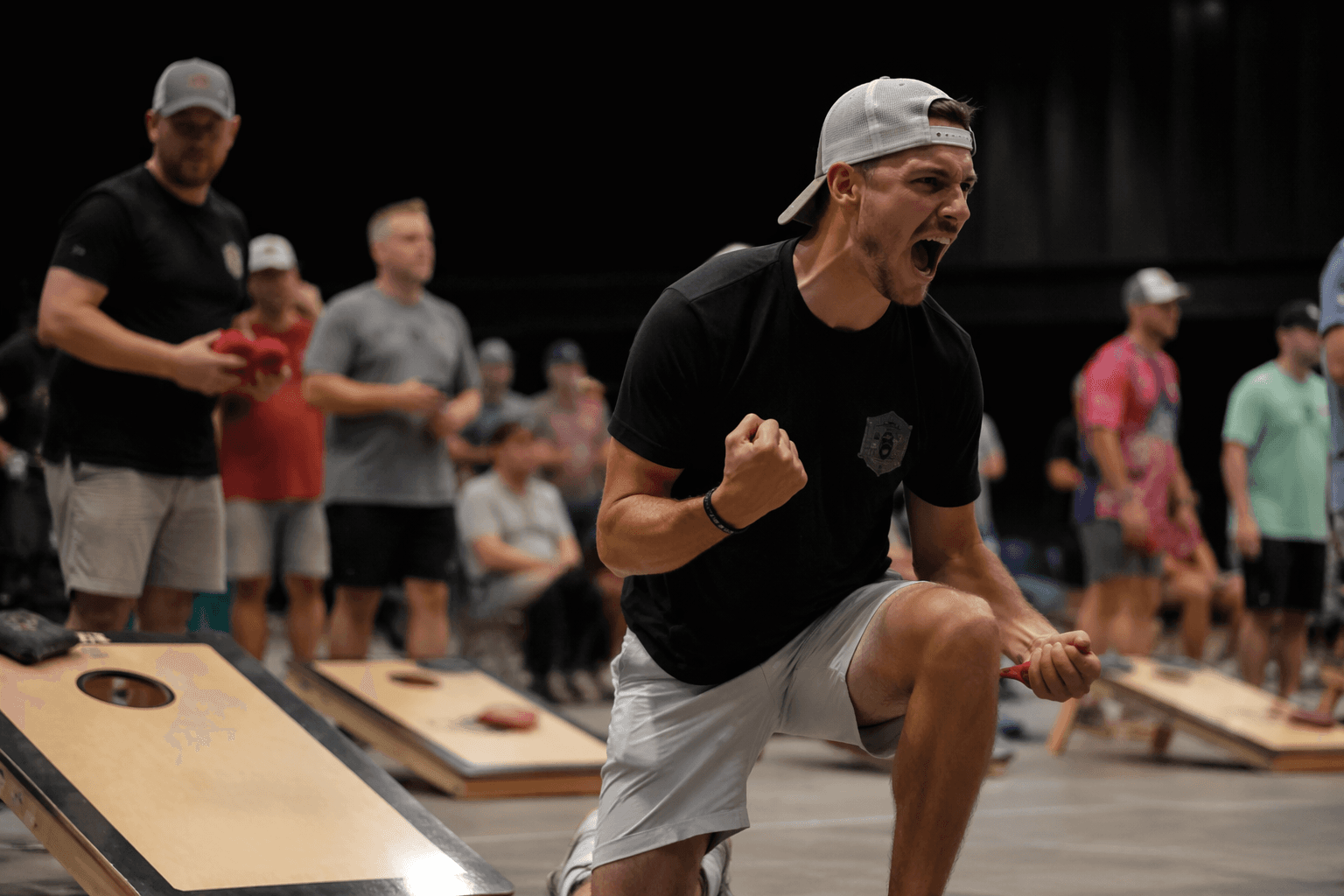
Two boards sit 27 feet apart, eight 6-inch square bags weigh 1 pound each, and the round does not end until every bag has been thrown. That setup makes elite play about more than landing one perfect shot, because every throw changes what the opponent can score next.
The first edge is built into the lane
Official play uses two 2-by-4-foot boards. At that distance, players have to manage speed as much as aim, because a bag that arrives a little too hard can skid past the scoring zone, while one that dies too early leaves easy return options. The 6-inch square bag adds another layer, since the bag is large enough to block lanes and small enough to slip into the hole if the angle is right.
The opening throw is rarely just a score attempt. It is a decision about tempo, board position, and whether to force a later mistake from the other side. In high-level ACL play, a simple blocker can carry more value than a showy airmail because it reduces the other team’s clean path to points before the round settles.
Why the board itself changes shot selection
The board specs matter because they change how bags move after contact. The American Cornhole Organization specifies a hardwood plywood surface that is roughly 47.5 to 48 inches long and 23.5 to 24 inches wide, with a 6-inch hole centered 9 inches from the back edge. It also calls for a board height of about 3 to 4 inches in front and 12 inches in back, which gives the surface a subtle incline.
That incline, paired with a smooth finish, shapes how bags move after contact. Bags that are thrown with repeatable speed can crawl, stop, or roll depending on where they land on the board, and the player who knows the board best can use that behavior to protect points or create a launch path into the hole. The ACL’s equipment standards require a smooth wood surface and a 6-inch hole, then prohibit foreign substances such as baby powder or silicone spray after purchase.
Scoring turns defense into offense
Cornhole’s scoring system makes the sport look simple and play complicated. A bag in the hole is worth 3 points, a bag resting on the board is worth 1, and a miss is worth 0. The catch is cancellation scoring, where the lower score is subtracted from the higher score to determine the round total, so raw volume matters less than winning the round by the widest margin.
That is why a board full of bags can still be a trap. If one side piles up singles and the other side answers with a pair of holes, the round can swing hard even when both teams are landing bags consistently.
Singles and doubles change the rhythm
The rules also change the feel of the match depending on format. In doubles, teammates throw from opposite boards in the same lane, so each side has to coordinate speed, bag placement, and recovery from one end of the lane to the other. That setup turns a cornhole lane into a shared problem, where one player’s blocker can set up the partner’s finish or leave the next throw with no clean route at all.
Singles is a different kind of test. One player walks the lane from one board to the other after each round, which changes the pace and makes reset routines part of performance. The walking format can expose a player who depends on rhythm from one end alone, while also rewarding the competitor who can reset quickly and reproduce the same speed on both boards.
The governing bodies show how far the sport has gone
The American Cornhole Association calls itself the original and official governing body of cornhole since 2003, and the American Cornhole Organization was established in 2005 by Frank Geers and is headquartered near Cincinnati, Ohio. ACO membership can qualify players for sanctioned tournaments, cash and prizes, world rankings, and the ACO World Championships.
The ACL calls itself the premier league for professional and recreational cornhole and the worldwide governing body for professional, competitive, and recreational play, and it says it has run more than 40,000 events. The league says it sets standards for cornhole technology, media, and equipment.
The championship calendar shows the stakes
The ACO held its first Nationals Championship in December 2006 in Northern Kentucky, and its World Championships of Cornhole 21 are listed for July 20 to 25, 2026 in Owensboro, Kentucky. The ACL’s 2026 World Championships run July 27 to August 2, 2026 at the Rock Hill Sports & Event Center in Rock Hill, South Carolina.
The ACL lists more than 50 events and over $800,000 in guaranteed cash payouts for that event.
This article was produced by Prism’s automated news system from verified source data, official records, and press releases, then run through automated quality and moderation checks before publishing. The system is built and supervised by the people who set the standards it runs under. Read our full AI policy.
Know something we missed? Have a correction or additional information?
Submit a Tip