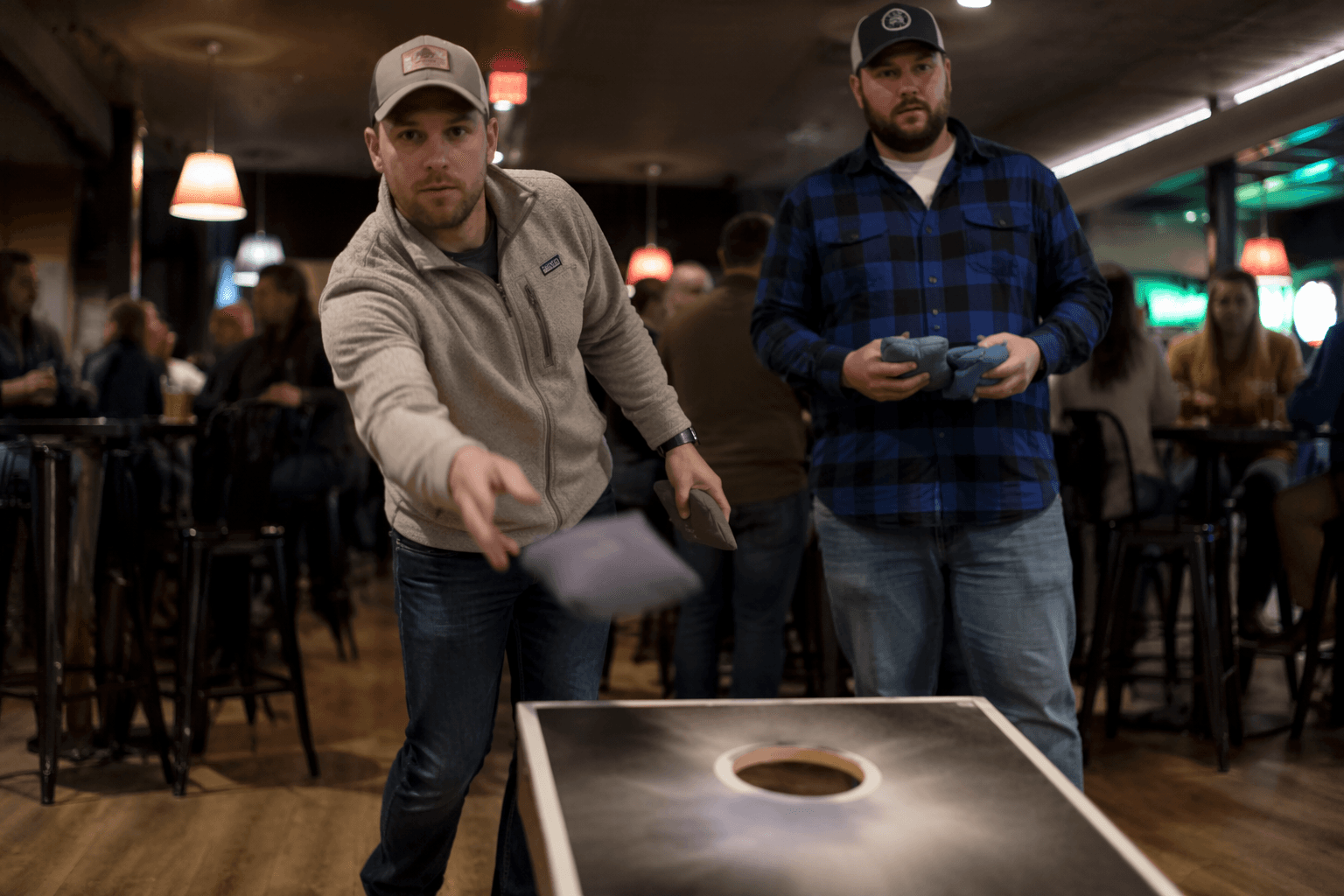
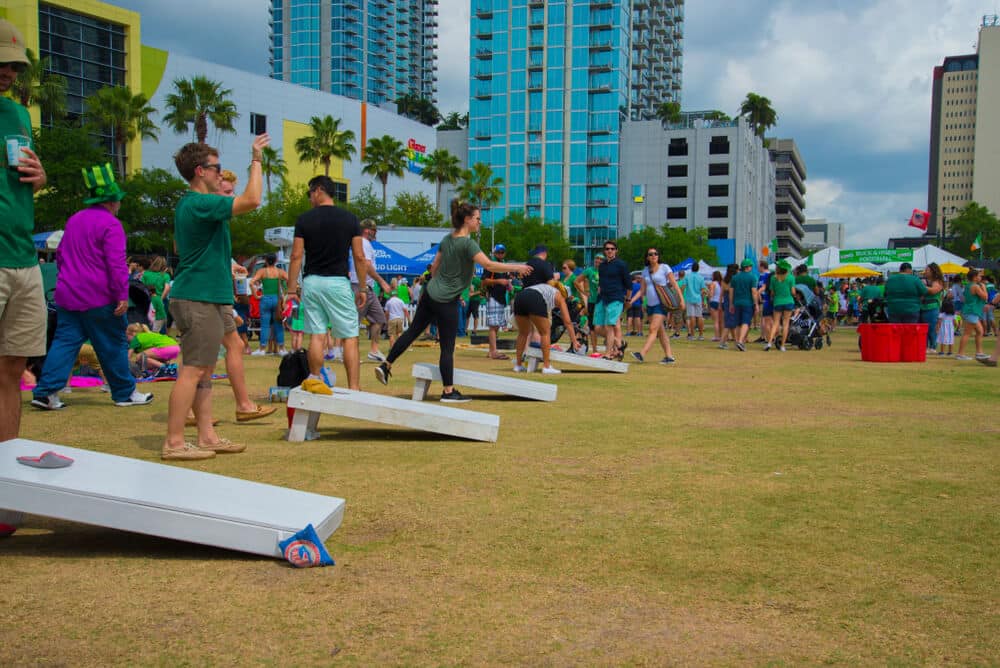
Cornhole helps students master projectile motion in STEM classrooms
A cornhole toss becomes a classroom lab when students test angle, speed, and gravity against real throws.
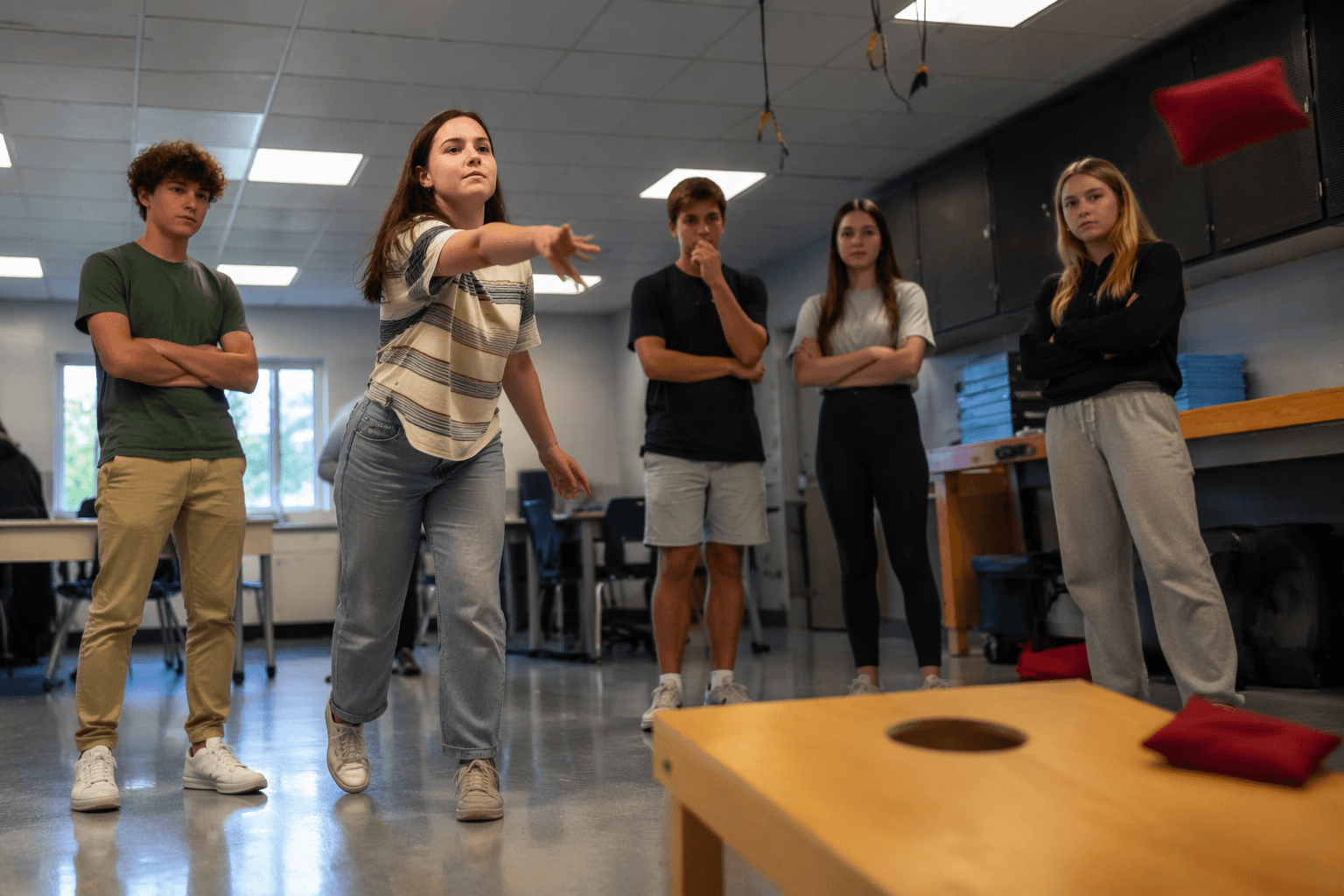
Put a board 27 feet away, hand a student one bag, and the first toss already shows why cornhole works in STEM class. The arc is visible, the result is immediate, and the question is concrete: what launch angle and speed put the bag cleanly through the hole instead of off the lip or short on the slope? NSTA uses that exact setup to turn projectile motion into a lesson students can test with their own eyes.
Why cornhole fits STEM instruction
Benjamin Galluzzo, Michael W. Ramsdell, Joshua D. Thomas, Kathleen Kavanagh, Corey Ryder, Darlene Bissonette, and Jennifer M. Knack built the lesson for science and math instruction at roughly grades 6-10. Projectile motion is accessible across grade levels, and cornhole pulls together data collection, analysis, and physical and mathematical modeling in one familiar game.
The lesson was designed to fit into two class periods, but it can be split into smaller pieces when time is tight. The activity was tested at a grant-funded STEM camp serving about 80 students in grades 7-12, including students in rural poverty with heterogeneous skill sets, and teachers from five school districts helped shape the activity.
The physics students can actually see
Projectile motion is the path of an object after launch when air resistance is negligible and gravity is the main force. Cornhole makes that easy to teach because the bag leaves the hand, follows an arc, and then responds to the board and hole in a way students can measure, compare, and model.
In official play, boards are placed 27 feet from front edge to front edge, the board measures 48 inches by 24 inches, the hole is 6 inches across, and the front of the board sits 3 to 4 inches off the ground while the back rises to 12 inches, which creates a built-in tilt of roughly 10 degrees. That geometry turns the airmail shot into a precise problem in launch speed, launch angle, and trajectory.
How the lesson runs
The activity unfolds in three connected stages: a computer simulation that lets students brainstorm what matters, an Excel-based model that shows how launch angle and speed affect the result, and a live data-collection phase where students throw bags, track the trajectory, and compare reality with the model. The point is not to guess the “right” throw once, but to compare predictions with actual outcomes and revise the model as the data comes in.
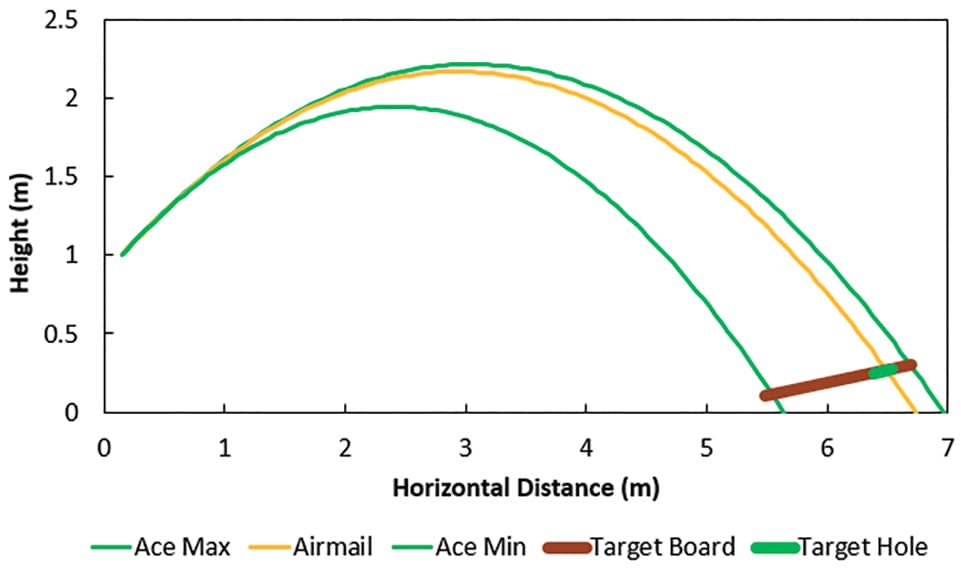
A student can see that a small change in release angle shifts the bag’s path, then use the spreadsheet and the simulation to test whether the same relationship holds across multiple throws.
Why the sport context matters
Cornhole’s move from lawn game to organized sport gives the lesson a stronger frame. The American Cornhole Organization has been the official governing body since 2005, was founded by Frank Geers, held its first Nationals Championship in December 2006 in Northern Kentucky, and is headquartered near Cincinnati, Ohio. Official rules standardize both backyard play and tournaments, so the classroom version borrows from an established sport rather than an improvised game.
This article was produced by Prism’s automated news system from verified source data, official records, and press releases, then run through automated quality and moderation checks before publishing. The system is built and supervised by the people who set the standards it runs under. Read our full AI policy.
Did this article answer your question?