Cornhole’s top pros earn millions as league eyes full-time future
Top ACL pros are earning real money, but the gap between prize checks and full-time pay still leaves cornhole split between grind and profession.

Cornhole has crossed into a different business era. The American Cornhole League says its pros collected roughly $7.7 million in prize money in 2024, and the numbers at the top now look less like side cash and more like a salary fight. What makes the sport’s current inflection point so striking is not just the size of the purse, but how many players are still balancing elite competition with a day job.
Prize money has become the first test of legitimacy
The clearest sign that cornhole has entered a new phase is the earnings spread at the top of the ACL. Jeremiah Ellis, a father of four from Columbus, Ohio, who works at UPS by day, earned $61,458 across all events in 2024 and finished second in ACL earnings among roughly 300 players. That is enough to make the sport feel professional, but not enough to erase the reality that one of the best players in the field still goes to work after he throws bags.
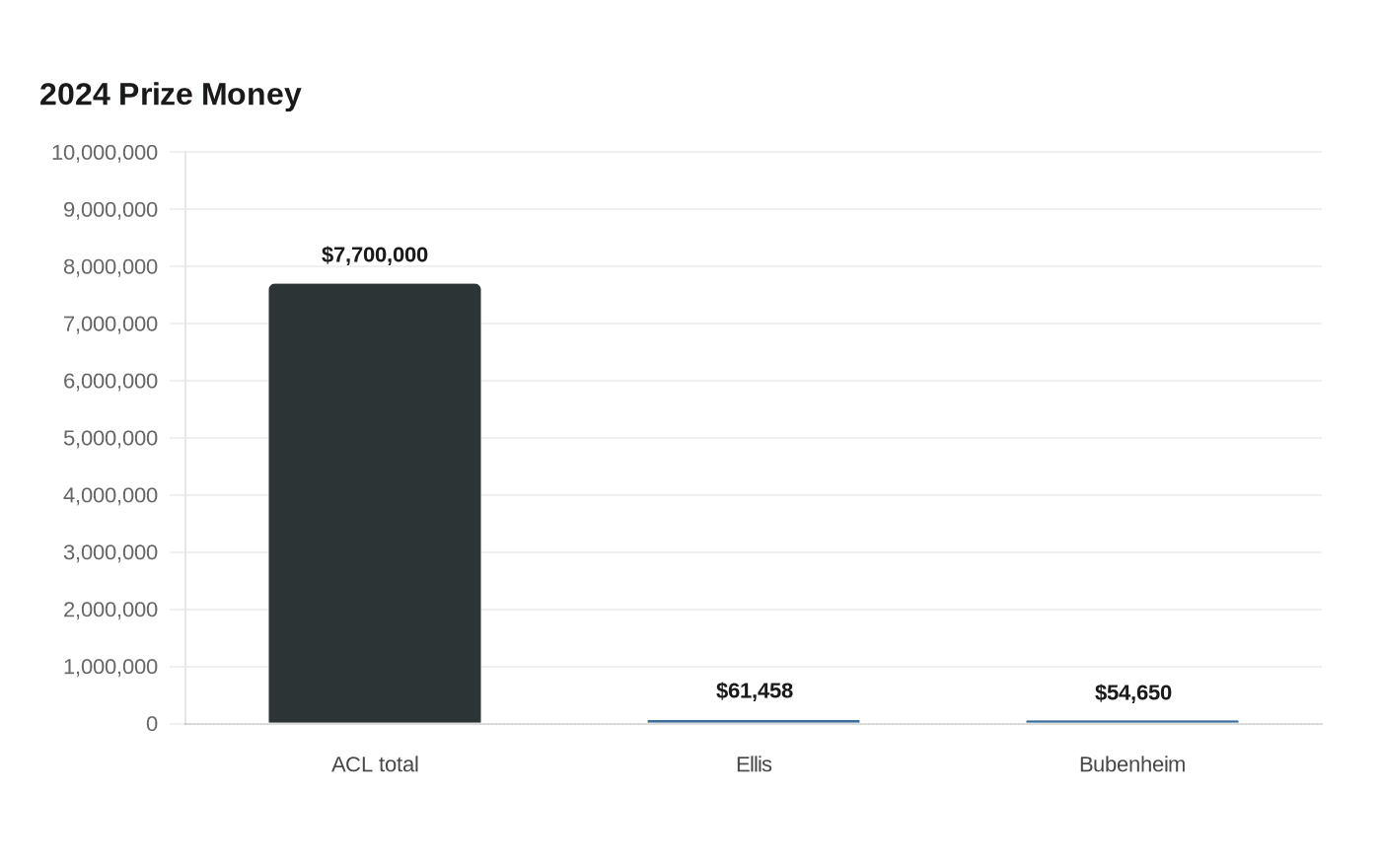
Cheyenne Bubenheim tells the same story from a different angle. She earned $54,650 in 2024, making her the ACL’s highest-earning woman and the fifth-highest overall earner. The money matters, but so does the fact that the gap between the very best and the rest still leaves most players outside the range of a dependable standalone income.
What a real paycheck in cornhole actually looks like
The league’s own numbers suggest cornhole is moving from hobby economy to performance economy, but only at the top. Stacey Moore says about 20 percent of the ACL’s pros can currently play full time, and his goal is to get every player on the pro tour there within three to five years. That is the line that separates a niche tournament circuit from a true labor market: the ACL is no longer just rewarding winners, it is trying to build a class of athletes who can live off the tour.
That is why Bubenheim’s comments about sponsorship land so heavily. She has said sponsorship is the most important guaranteed monthly income she has, which means the modern cornhole paycheck is built from more than prize checks alone. For the sport’s top names, money now comes from a mix of tournament winnings, sponsor support, and the visibility that comes with being on a growing media stage.
The income stack is still narrow, though. Prize money can put a player near the top of the sport, but it does not automatically create stability. The difference between Ellis’s $61,458, Bubenheim’s $54,650, and the much larger world of players behind them shows that cornhole has stars, but not yet broad financial depth.
The ACL is scaling like a serious league
The American Cornhole League describes itself as the premier league for professional and recreational cornhole in the United States, and the scale behind that claim helps explain why the money is rising. Reporting tied to the league says it hosts more than 25,000 tournaments a year and has an active player base of more than 100,000. That is a massive participation funnel for a sport that still feels accessible enough to show up at a tailgate or brewery night.
Stacey Moore founded the ACL in 2015, which makes the league young by major sports standards but aggressive in the way it has built inventory and visibility. It has moved fast enough to create a recognizable pro ladder, a broad amateur base, and enough tournament volume to support repeat attention from sponsors and media partners. In business terms, cornhole now has the one thing every emerging sport needs before serious money arrives: scale.
The ACL’s 2024 Pro Teams structure also reflects that more formalized approach. Its payout setup includes prize allocation for regular-season games and pooled prize money for participating players, which is a step toward a league model rather than a simple tournament series. That kind of structure matters because it gives cornhole a clearer path from occasional winnings to repeatable income.
Media exposure is turning attention into value
The sport’s media footprint is growing at the same time its money conversation is getting louder. Forbes reported that the ACL has media-rights deals with ESPN and CBS Sports, and that Cheyenne Bubenheim was competing in a major event on ESPN+. That kind of exposure matters because it gives the sport more than highlights, it gives players something marketable when they ask sponsors to invest.
This is where cornhole starts to look less like a backyard pastime and more like a real business platform. National television and streaming appearances do not guarantee a living, but they create legitimacy, and legitimacy is what turns sponsor interest into monthly income. For players chasing full-time status, media visibility is not just a bonus. It is part of the paycheck.
The sport’s roots show how far it has come
The ACL is not the only organization shaping cornhole’s competitive identity. The American Cornhole Organization says it was established in 2005, was founded by Frank Geers, and held its first Nationals Championship in December 2006 in Northern Kentucky. The ACO says it is headquartered in Camp Dennison, Ohio, and positions itself as the world governing body for the sport.
That older history matters because it shows cornhole did not suddenly become organized overnight. The sport has been building structure for nearly two decades, and the ACL’s rise sits on top of that longer competitive foundation. What has changed now is the economics: the top end is finally producing enough money, sponsorship value, and media attention to make a professional path believable.
Cornhole is not a mass-market full-time career for everyone, not yet. But with $7.7 million in prize money, league-wide growth, ESPN and CBS Sports exposure, and a commissioner openly aiming for an all-full-time pro tour, it is no longer a joke to call it a profession. For a small group at the top, the paycheck is real, and the rest of the sport is racing to catch up.
This article was produced by Prism’s automated news system from verified source data, official records, and press releases, then run through automated quality and moderation checks before publishing. The system is built and supervised by the people who set the standards it runs under. Read our full AI policy.
Know something we missed? Have a correction or additional information?
Submit a Tip