How cornhole scoring works, woody vs cornhole and cancellation scoring
Cornhole scoring is a margin game: a woody is 1 point, a cornhole is 3, and cancellation scoring decides what really counts.
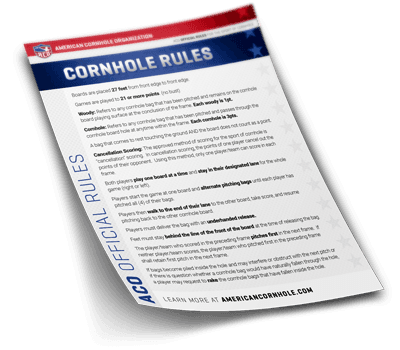
Cornhole looks like a backyard toss until a bag clips the board, hangs on the lip, or clears the hole by a sliver. The American Cornhole Organization's rulebook makes the scoring precise: bags count differently depending on where they stop, and only the net difference survives each frame. Once a player or team reaches 21 or more, there is no bust, so the target is simple even when the tactics are not.
The two scoring calls that decide most frames
The first number to remember is the woody. A woody is any bag that lands on the board and remains there at the end of the frame, and it is worth 1 point. The second is the cornhole, which is any bag that passes through the hole during the frame and is worth 3 points. That 1-point and 3-point split is what gives the sport its shape: not every bag that looks good is equal, and not every bag that finishes on the board survives the scorecard.
There is one call that trips up new players more than almost anything else. A bag that touches the ground and the board at the same time does not count as a point. In practice, that means a bag can look settled from one angle and still be dead on arrival from another, which is why experienced players and officials care so much about where the bag finishes, not where it seemed to land.
Why cancellation scoring changes the strategy
Cornhole does not add up both teams' raw totals and then sort it out later. The approved method is cancellation scoring, which means the lower score in a frame is subtracted from the higher score, and only the difference counts. If one side lands two woodies and one cornhole while the other side lands two woodies, the first team does not get 5 points for the frame. It gets the net difference.
That one rule changes the whole rhythm of play. A single blocker can erase a point, and a missed shot can do more damage than a missed opportunity to score. The ACO's rules sheet even uses the term "non cancelled" bag while explaining how scoring works, a reminder that every bag is part offense and part defense until the frame is tallied.
Cancellation scoring is why players talk so much about control shots, blockers, airmails, and push shots. A bag thrown purely to score can be just as important as one thrown to spoil the other side's line to the hole. The frame becomes a small battle over margin, not just accumulation.
How a game gets to 21
The setup is fixed before a single point is scored: the boards are placed 27 feet apart, measured front edge to front edge. From there, the game is played to 21 points or more, and there is no bust. That means a player or team can go over 21 and still win, instead of being forced to land on the number exactly.
That detail matters because cornhole does not punish overshooting the way some target sports do. If a side is sitting on 20 and scores 4 in the next frame, the game is over at 24. The finish line is straightforward: get to 21 first, or beyond it first.
For anyone learning the game in real time, the math is easier once you separate raw throws from net score. A frame can feature multiple good bags on both sides, but only the difference moves the total. That is why a run of small wins can matter as much as one huge frame when the score gets tight.
The rulebook behind the board
The American Cornhole Organization says it was established in 2005 and is headquartered in Camp Dennison, Ohio, which it also describes as near Cincinnati, Ohio. The group says it was founded by Frank Geers and presents itself as the first and official governing body for the sport. Its rule sheets are where the 27-foot board distance, the 21-point target, the no-bust finish, the woody, the cornhole, and cancellation scoring are standardized together.
The organization also ties the modern game to a championship history that began in 2005. The first American Cornhole World Championships were held that year, and an ACO announcement dated July 17, 2018 said there had been eleven more world championships since then in locations across the United States, including Las Vegas, Nevada and Knoxville, Tennessee. That matters because the same scoring language used on a local board is the same language carried into organized competition.
The names and roots around the sport
Cornhole has worn several names over time. The ACO says the game has also been called Corn Toss, Bean Bag, Bean Toss, Soft Horseshoes, and Indiana Horseshoes, though many players in Kentucky and southern Ohio simply call it cornhole. That regional language still lingers around the sport even as the rulebook has become more formal.
The organization also says the game was said to have originated in Germany in the 14th century and later rediscovered in Kentucky over 100 years ago, while noting that the true origin is uncertain. That mix of folklore and formalized rules is part of why the sport feels both familiar and surprisingly exact. A bag can still be a backyard bag, but once the frame starts, the count is strict: 1 for a woody, 3 for a cornhole, and only the difference on the board.
This article was produced by Prism’s automated news system from verified source data, official records, and press releases, then run through automated quality and moderation checks before publishing. The system is built and supervised by the people who set the standards it runs under. Read our full AI policy.
Did this article answer your question?