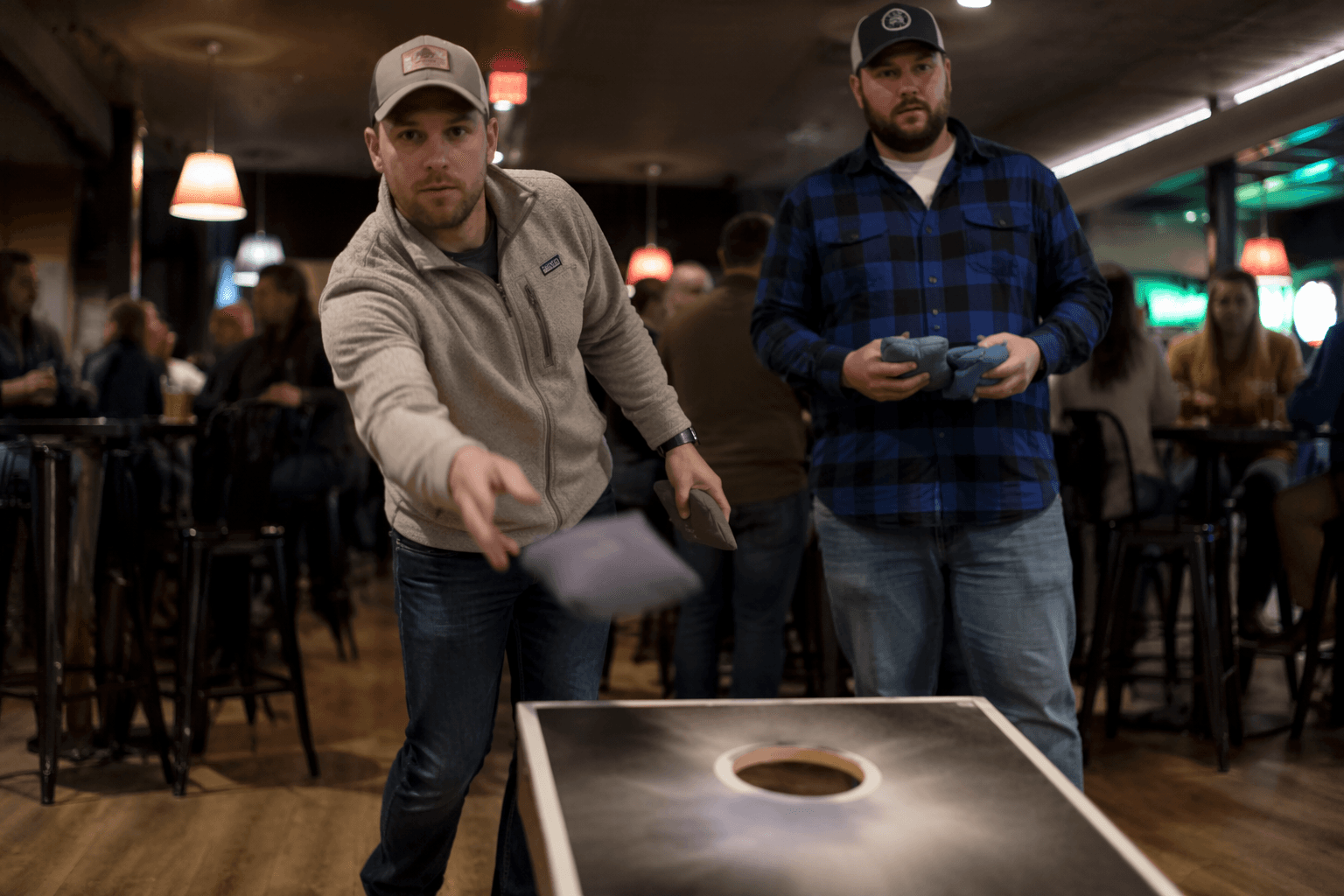
How to become a professional cornhole player through ACL competition
The route to ACL-level cornhole is not guesswork anymore. It starts with membership, division placement, and points, then climbs through local to national events toward bags, money, and TV.

Backyard tossers do not turn into ACL players by accident. The sport now has a ladder: membership, division placement, ACL points, local events, and then the climb into regional, conference, national, and championship play. That structure is why professional cornhole is no longer a novelty, and why the difference between casual and competitive comes down to measurable steps, not vague talent.
Start with membership and a player profile
The first gate is official registration
The ACL player app is the cleanest starting point because registering with ACL creates a profile and allows a player to compete for ACL points. That profile is not just paperwork. It records the player’s type, skill level, and standing, which is how the league begins sorting newcomers into the right competitive lane.
This matters because the ACL does not treat every entrant the same. Its player guidance says divisions are designed to group players of similar skill levels together for competitive and social play, which keeps early matches from becoming a brutal mismatch and gives players a clear way to measure progress.
Know where you fit before you try to move up
The ACL’s division structure breaks players into Backyard, Social, Competitive, and Advanced. The Competitive division is for players who are good, but not quite ready for Advanced, which gives that middle tier real meaning instead of making it a vague holding pen.
That division system is the first benchmark in a real pro pathway. If you are still in Backyard or Social, the immediate job is simple: improve enough to earn a place in Competitive. If you are already Competitive, the next goal is more direct: prove you belong with Advanced players and start collecting the points that make the jump worthwhile.
The equipment standard is part of the job
Professional cornhole is measured on standardized gear
The ACL’s equipment pages specify board dimensions of 4 feet by 2 feet and set testing and approval standards for bags. That is not trivia. It means the game you are trying to master is played on regulated equipment, and the bounce, slide, and hole rate you practice on at home needs to translate to the same dimensions used in sanctioned play.
That standardization is one reason the professional route is more serious than a backyard version of the sport. If the board size and bag rules are fixed, then improvement becomes easier to track. A player who can control flat throws, airmails, and blockers on ACL-approved gear is building skills that carry from local draws all the way up the ladder.
The ladder runs from local events to the biggest stage
Local tournaments are where the climb begins
The ACL’s current schedule page shows a formal path through local, regional, conference, and national events. That is the actual route upward. Local tournaments are the entry point, but they are also the proving ground where ACL points start to matter and where players learn whether their division placement is accurate.
From there, the route gets more demanding. Regional events filter the field, conference events raise the stakes, and national events separate players who can win one night from players who can survive a full circuit. The guide’s long-term target is the Championship of Bags, where more than $50,000 is on the line, which gives the climb a concrete destination instead of a fuzzy dream.
The Championship of Bags is the pay day and the pressure test
The Championship of Bags is where the professional path gets real. It is not simply a big event at the end of a season; it is the destination the ladder is built to feed. A player chasing that stage has to survive enough local and mid-tier competition to stack points, sharpen consistency, and earn entry into the upper end of ACL play.

The 2024 ACL World Championships show how far the sport has scaled. They were billed as the culmination of the season, with more than $700,000 in payouts across 30 events. That number tells you the circuit is not a side show anymore. It is a full competitive calendar with enough money and volume to reward players who can hold form over time.
Why the ACL path looks more like a circuit than a hobby
ESPN is treating ACL as repeatable inventory
ESPN currently carries ACL content that includes live and on-demand pro singles, doubles, teams, and college and high school championships. That breadth matters because it shows cornhole is being scheduled like a sport with multiple formats and levels, not as a one-off curiosity.
The network’s current coverage is also the clearest proof that the professional pathway has a public stage. When singles, doubles, teams, college championships, and high school championships all live in the same broadcast ecosystem, players can see a direct line from their own events to the televised upper tier.
The growth from 2016 to now shows what changed
In 2016, ESPN reported that the ACL launched with 10,000 registered participants, a few hundred tournaments, and $50,000 in total prize money. Compare that with the current structure, where ESPN is carrying pro and championship inventory and the ACL World Championships are offering more than $700,000 in payouts across 30 events, and the scale shift is obvious.
That growth is the reason the sport now supports a true pathway. A player is not chasing a fantasy. The ladder exists, the points exist, the divisions exist, and the prize structure is large enough to make the grind worth it for players who can actually climb.
What it really takes to move up
The milestones are practical, not mystical
The fastest way to think about the pro path is as a sequence:
1. Register with ACL and build a profile.
2. Enter the correct division and learn where you stand.
3. Use local tournaments to start earning ACL points.
4. Move from Backyard or Social into Competitive, then push toward Advanced.
5. Take on regional, conference, and national events as results justify it.
6. Aim first for the Championship of Bags, then for the season-ending World Championships.
Each step is measurable. The profile tells you where you begin. The division system tells you whether you are under- or over-matched. The points tell you whether you are improving in the right places. The prize pools tell you whether you are operating at the level where professionalism is a realistic goal.
The real standard is consistency
Cornhole’s recent growth, from ESPN’s broad ACL coverage to the league’s 30-event World Championships, has changed the definition of serious play. A player who wants to become professional has to be good enough to travel through the ladder, disciplined enough to compete on standardized gear, and consistent enough to keep earning points as the field gets tougher.
That is the reality check. The sport rewards the player who treats every local draw like a step toward the next division, because in ACL competition, that is exactly what it is.
This article was produced by Prism’s automated news system from verified source data, official records, and press releases, then run through automated quality and moderation checks before publishing. The system is built and supervised by the people who set the standards it runs under. Read our full AI policy.
Did this article answer your question?