Why cornhole boards are built to exacting official standards
A regulation cornhole board is a 2-by-4-foot wood surface with a 6-inch hole, and tiny measurement drift can decide whether it belongs in sanctioned play.
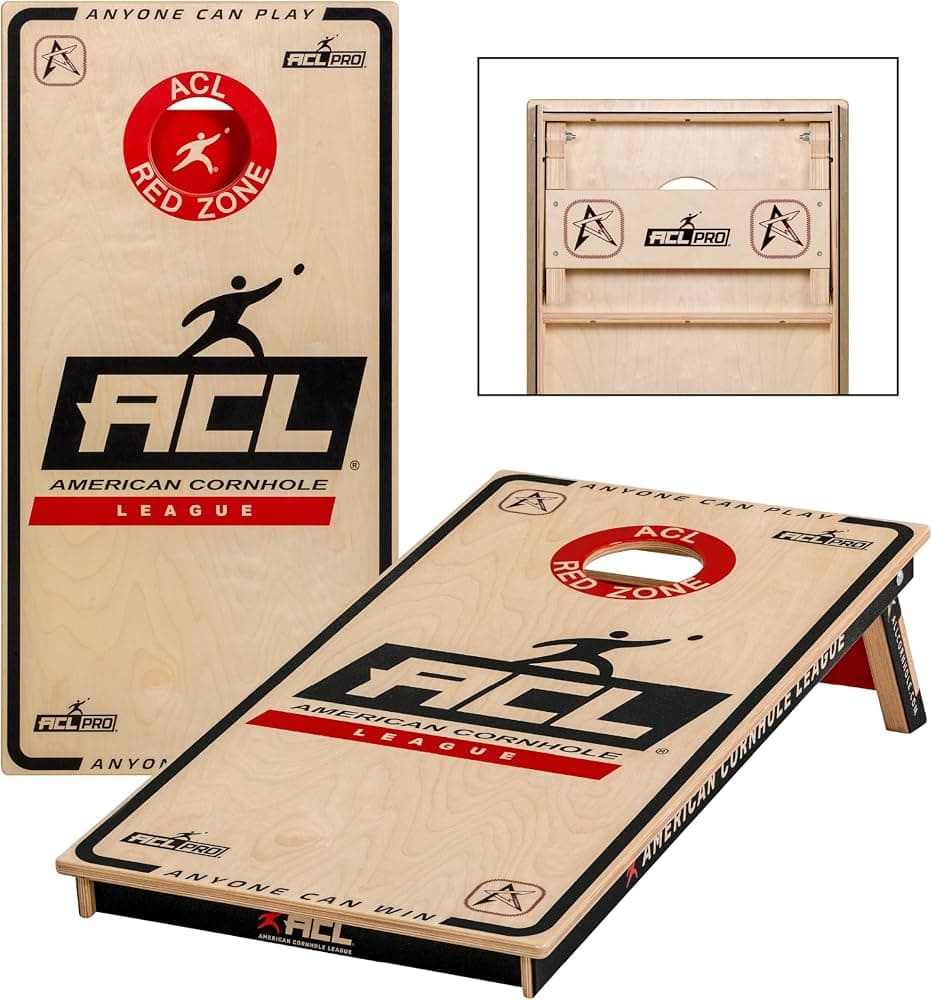
The first thing a sanctioned cornhole setup gets right is not the bag, the scoreboard, or the crowd. It is the board: wood only, 2 feet wide, 4 feet long, with a 6-inch hole centered width-wise and set 9 inches from the back edge. That geometry is not decoration; when the hole drifts or the surface grabs too much, the same throw can skid, stop, or roll differently, and a board that misses those measurements belongs in a driveway, not sanctioned play.
The board is where backyard play turns official
The American Cornhole League requires boards made of wood with a finished coat that has a smooth texture. Its rules call for a minimum top layer thickness of 1/2 inch with cross-section support, or 3/4 inch without it, and the league allows only a plus or minus 1/4-inch tolerance on board dimensions and a plus or minus 1/8-inch tolerance on hole diameter and placement. Birch and oak are the most common woods named in the ACL rules, and that mix of material and measurement controls how a bag slides, checks up, or hangs at the lip.
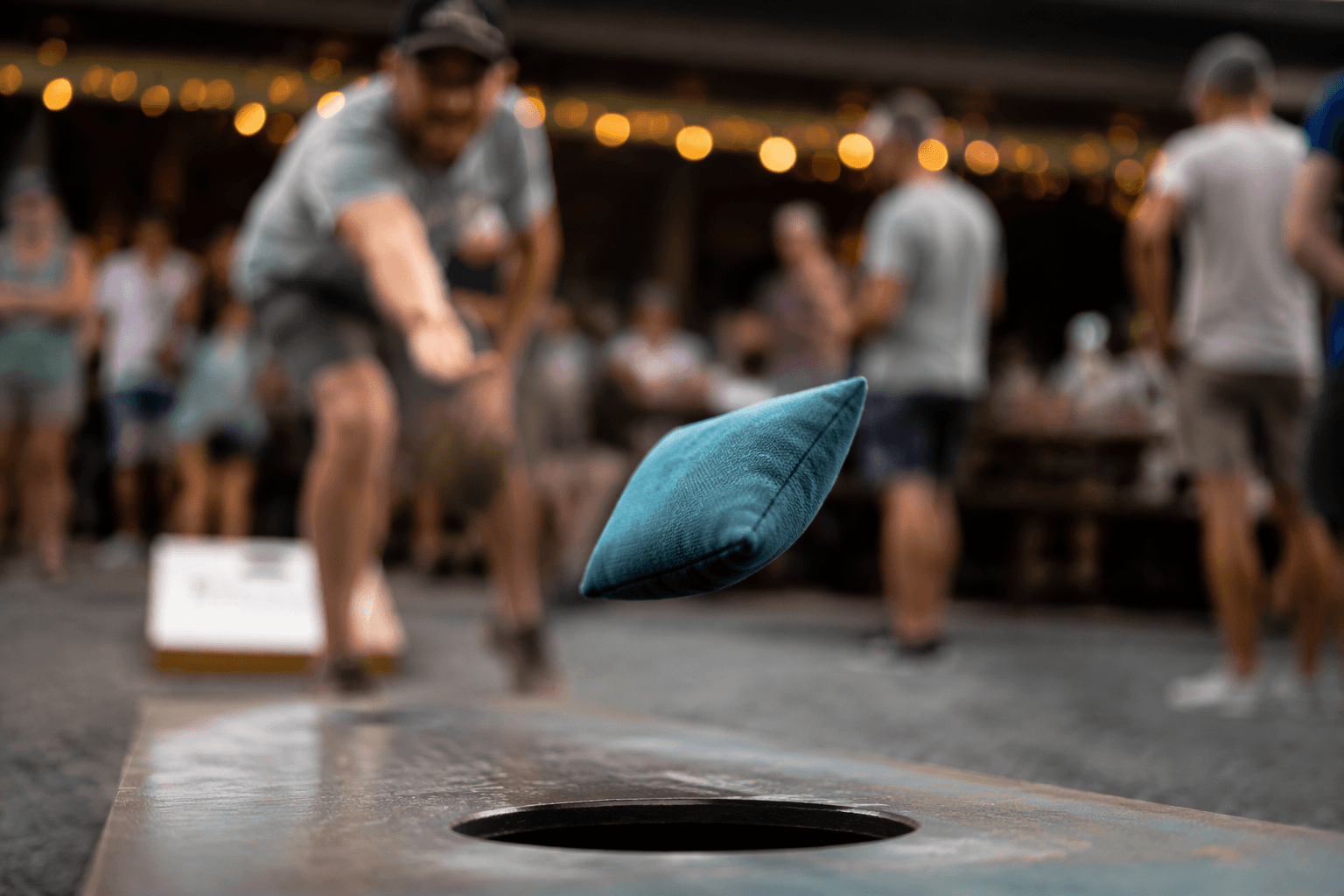
Those details are why a board can look right in a garage and still fail the feel test on a competition lane. A rough finish changes speed and slide. A board that is too thin or built without proper support can react differently on impact, while a hole that is slightly off center changes the target every time the bag leaves a hand.
The American Cornhole Association also treats the board as part of a broader standard, describing regulation boards as smooth plywood. Its rules are written around consistent play, which is the real purpose behind the exact measurements: the same throw should meet the same conditions whether the event is in one state or another.
The lane is part of the equipment
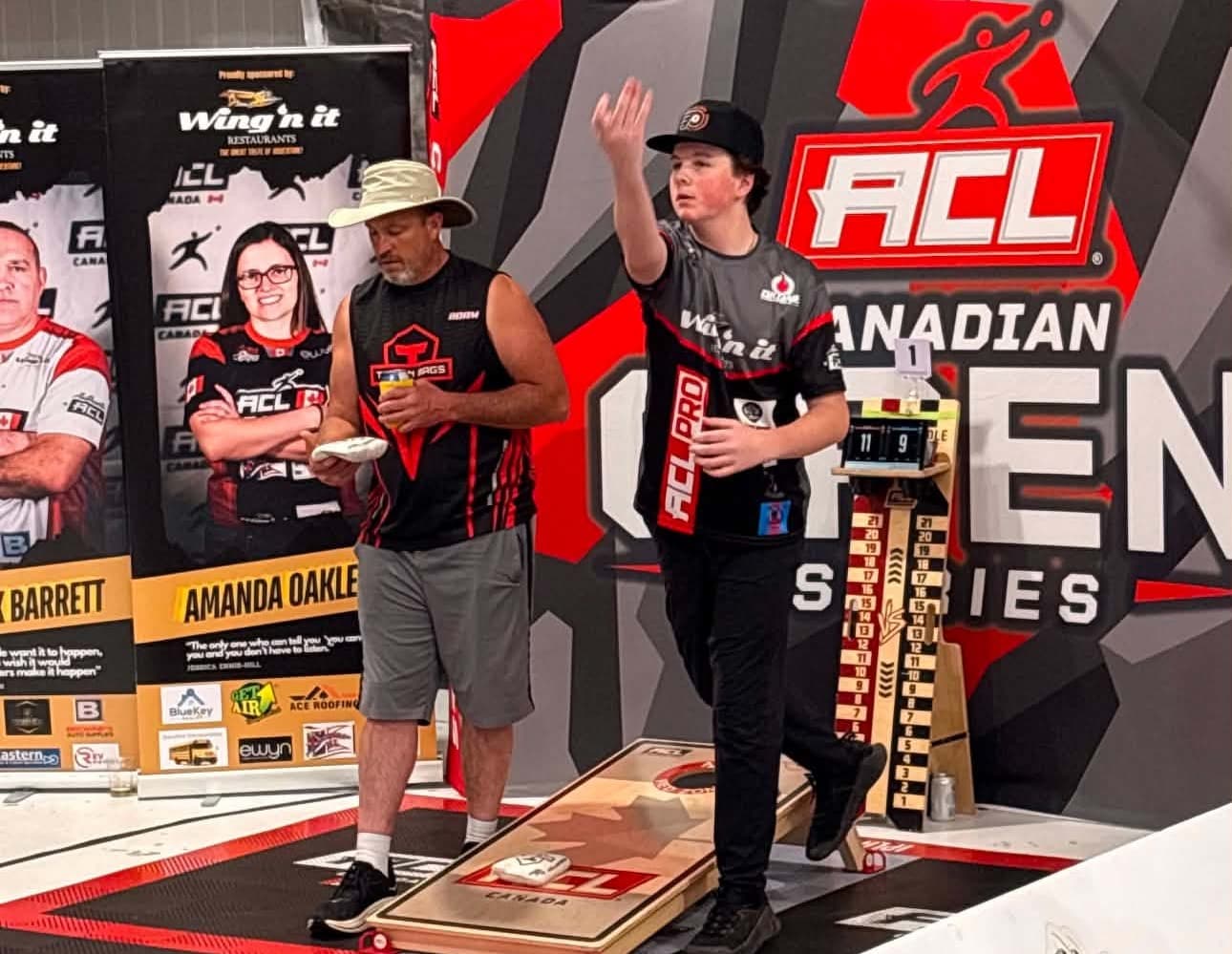
ACL official play uses boards set 27 feet apart. At that distance, cornhole stops feeling like a casual toss across a patio and becomes a precision game where the airmail, the blocker, and the slider all depend on the same fixed geometry. The lane matters because a bag that lands short by a few inches or skips a little harder can change the entire shot pattern on the other board.
The American Cornhole Association defines a court as a level rectangular area 8 to 10 feet wide and a minimum of 40 to 45 feet long, with a 4-foot-by-3-foot pitcher’s box at each end. The ACA rules also distinguish foul lines for adult and junior play, which makes clear that regulation cornhole is not just about the board face. It is about the full throwing lane, the launch area, and the space that frames every legal toss.
Why standardization decides fairness
Uniform equipment removes the quiet advantage of homemade variations. It gives players the same target, the same lane, and the same surface behavior from venue to venue, so a win in one city means the same thing in another. That is the logic behind both the ACL and the American Cornhole Association: standard play is what makes scoring credible across tournaments, leagues, and backyard-to-bracket transitions.
The timing of that push matters. Modern cornhole has been around since the 1970s, and the game became more competitive in the early 2000s. Once the sport started moving from tailgates and casual circles into organized events, the difference between a board that is almost right and one that is regulation became more than a matter of taste.
How the governing bodies shaped the sport
The American Cornhole League was founded in 2015 by Commissioner Stacey Moore, with the goal of becoming the next great professional sport in the country. The American Cornhole Organization says it has been the official governing body for cornhole since 2005 and traces its founding to Frank Geers near Cincinnati, Ohio. Those two organizations helped turn a backyard game into a rule-bound sport with equipment standards exact enough to enforce at sanctioned events.
That shift explains why the details are so specific. A smooth coat, a legal thickness, a fixed hole size, and measured court spacing are not side notes. They are the conditions that make the sport repeatable, comparable, and fair when the pressure rises.
What to check before an ACL-style event
Before entering an ACL-style event, inspect the setup as if every inch matters, because it does. Anything outside the standard can leave a board fine for casual play but out of step with sanctioned competition.
- Make sure the boards are wood.
- Confirm each board measures 2 feet wide by 4 feet long.
- Check that the hole is 6 inches in diameter, centered width-wise, and placed 9 inches from the back edge.
- Measure for the ACL tolerance window: plus or minus 1/4 inch on board size and plus or minus 1/8 inch on hole diameter and placement.
- Look for a finished coat with a smooth texture.
- Verify the thickness requirement: a minimum top layer of 1/2 inch with cross-section support, or 3/4 inch without it.
- Set the boards 27 feet apart for ACL official play.
- If the court is built to ACA standards, keep it level, 8 to 10 feet wide, and at least 40 to 45 feet long, with 4-foot-by-3-foot pitcher’s boxes.
That checklist is the difference between a setup built for the yard and one ready for sanctioned play. In cornhole, the rules are not separate from the action. They are what make the action count.
This article was produced by Prism’s automated news system from verified source data, official records, and press releases, then run through automated quality and moderation checks before publishing. The system is built and supervised by the people who set the standards it runs under. Read our full AI policy.
Did this article answer your question?