How the Ranch became the birthplace of the CrossFit Games
The Ranch gave the CrossFit Games their first brutal test, and the Girls gave athletes a repeatable way to measure whether training actually works.
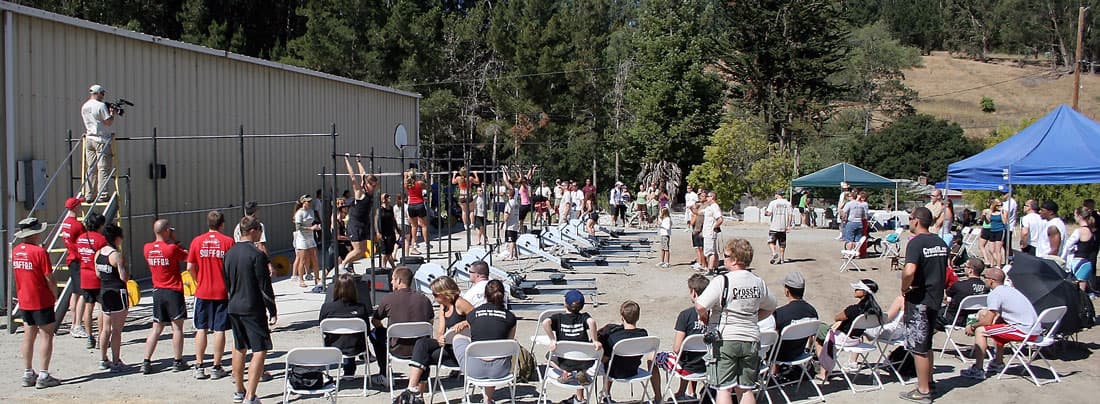
The CrossFit Games did not begin in a polished arena built for television. They started at CrossFit Ranch in Aromas, California, on a cement slab, with heat, terrain, and unpredictability baked into the test from the opening weekend. That setting mattered because it gave CrossFit something every sport needs and few training systems have: a place where performance could be measured against the environment, not just against the clock.
The Ranch made the Games what they were
The first CrossFit Games ran June 30 to July 1, 2007, and the inaugural champions were James Fitzgerald on the men’s side, Jolie Gentry for women, and CrossFit Santa Cruz in the team division. CrossFit’s own history pages keep returning to the Ranch because the venue was never just a backdrop. It was the proving ground that defined the early Games as a test of broad fitness, not a showpiece event.
That identity shows up in the way CrossFit describes the early setup. One account reduces the whole scene to a few barbells and a barbecue at the Ranch, which is about as far from a conventional sports venue as you can get. Another internal equipment list tells the same story from the opposite angle: 15,000 pounds of bumper plates, 30 rowing machines, 50 barbells, 40 plyo boxes, 50 medicine balls, 12 GHDs, 50 sets of dumbbells, 15 squat and press stands, 25 sets of rings, 50 sandbags, 60 kettlebells, 50 jump ropes, and 20 sets of parallettes. That is not the inventory of a single-lane specialty sport. It is the equipment spread of a competition that wants to see whether athletes can handle everything.
CrossFit later said the Games started in 2007 on a ranch in Aromas and eventually expanded to the Home Depot Center. That shift matters because it shows how the sport moved from a remote, homespun test to a more formal competition environment without losing the logic that made the Ranch famous. Even then, the Ranch never disappeared from the story. A 2016 Open announcement pointed back to the first Games event there, and CrossFit’s later Ranch history coverage tied the site to the 2020 Games finals, when the live and in-person competition again began in Aromas.
Why the Ranch still carries weight
The reason the Ranch keeps resurfacing is simple: it embodies the CrossFit idea that the unknown and unknowable are part of the score. Outdoor conditions and uneven terrain made the athletes compete against more than one another. They had to solve the workout, the environment, and the day itself. That combination is why the Ranch still reads like the sport’s original logic test.
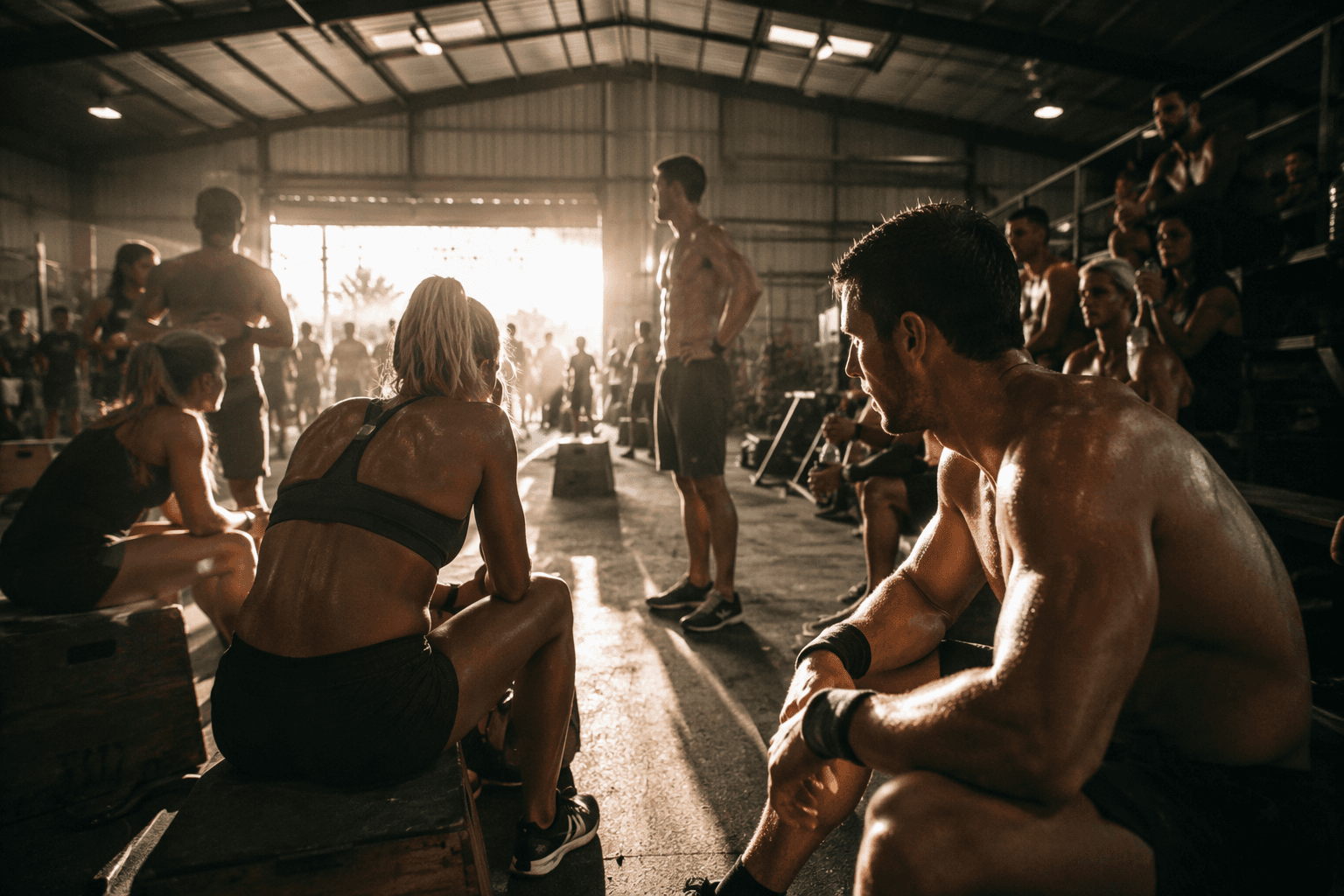
The place also gives casual observers a clean read on what CrossFit rewards. If a venue can expose grip failures, pacing errors, and bad heat management in the same weekend, it is doing the job the sport asked of it. The Ranch was never about comfort, and that is exactly why it became the birthplace of the Games.
The Girls gave CrossFit its simplest progress meter
If the Ranch gave CrossFit its birthplace, the benchmark workouts gave it a way to keep score between visits. In September 2003, CrossFit introduced its first benchmark workouts, the originals that later became known as “The Girls”: Angie, Barbara, Chelsea, Diane, Elizabeth, and Fran. In the following months, Grace and Helen were added to the list. CrossFit Journal issue 13 in September 2003 and the related workout posts make the naming convention clear: benchmark workouts would be distinguished from ordinary workouts by being given a female name.
That naming scheme was not trivia. It solved a practical problem for a system built on constant variation. CrossFit’s benchmark materials describe the workouts as a way to measure performance and improvements through repeated efforts, which is exactly what everyday athletes need when the daily program changes but the need to track progress does not. A benchmark only works if it comes back often enough to show whether the engine, not just the mood, changed.
That is why the “Girls” stuck. They became a shared reference point across affiliates, classes, and competition prep. When an athlete repeats Fran or Chelsea, the comparison is not nostalgia. It is data: the same workout, the same standards, a different result. That is the whole point of a benchmark.
How to use old scores without turning them into museum pieces
The cleanest way to use benchmark scores is to treat them like a training log, not a highlight reel. If the workout is standardized, then the old score only means something when the test is truly the same, which means the same movement standards, the same loading, and the same pacing conditions as close as you can make them. CrossFit coach Eric O’Connor answered the retest question bluntly: “Likely more than you think.”
That is the right instinct. If you wait so long that you only revisit a benchmark once in a blue moon, you lose the trend line that makes the score useful. Retesting after a training block, or when a benchmark comes back into programming, gives you a cleaner picture of whether capacity moved. The score is not just the finish time or the rep total. It is the gap between what you could do before and what you can do now.
The best use of an old score is to ask what changed beneath it. Did the time come down because your transitions got faster? Did the round structure hold longer before the wheels came off? Did the same workout feel calmer because the pacing was smarter? Those details tell you whether your fitness improved in a way that matters outside the whiteboard.
Why the Ranch and the Girls still belong together
The Ranch and the Girls are the two simplest objects in CrossFit history, and that is why they still matter. The Ranch shows where the sport learned to punish comfort and reward adaptability. The Girls show how CrossFit learned to measure progress without changing the question every time. Put those together and you get the core of the sport: a place that made the test real, and benchmark workouts that let athletes prove they got better.
This article was produced by Prism’s automated news system from verified source data, official records, and press releases, then run through automated quality and moderation checks before publishing. The system is built and supervised by the people who set the standards it runs under. Read our full AI policy.
Did this article answer your question?