PDGA’s Know the Code frames etiquette as disc golf’s backbone
PDGA’s code turns etiquette into the sport’s safety net: pace, courtesy, and scoring discipline decide whether a card stays fair, safe, and playable.
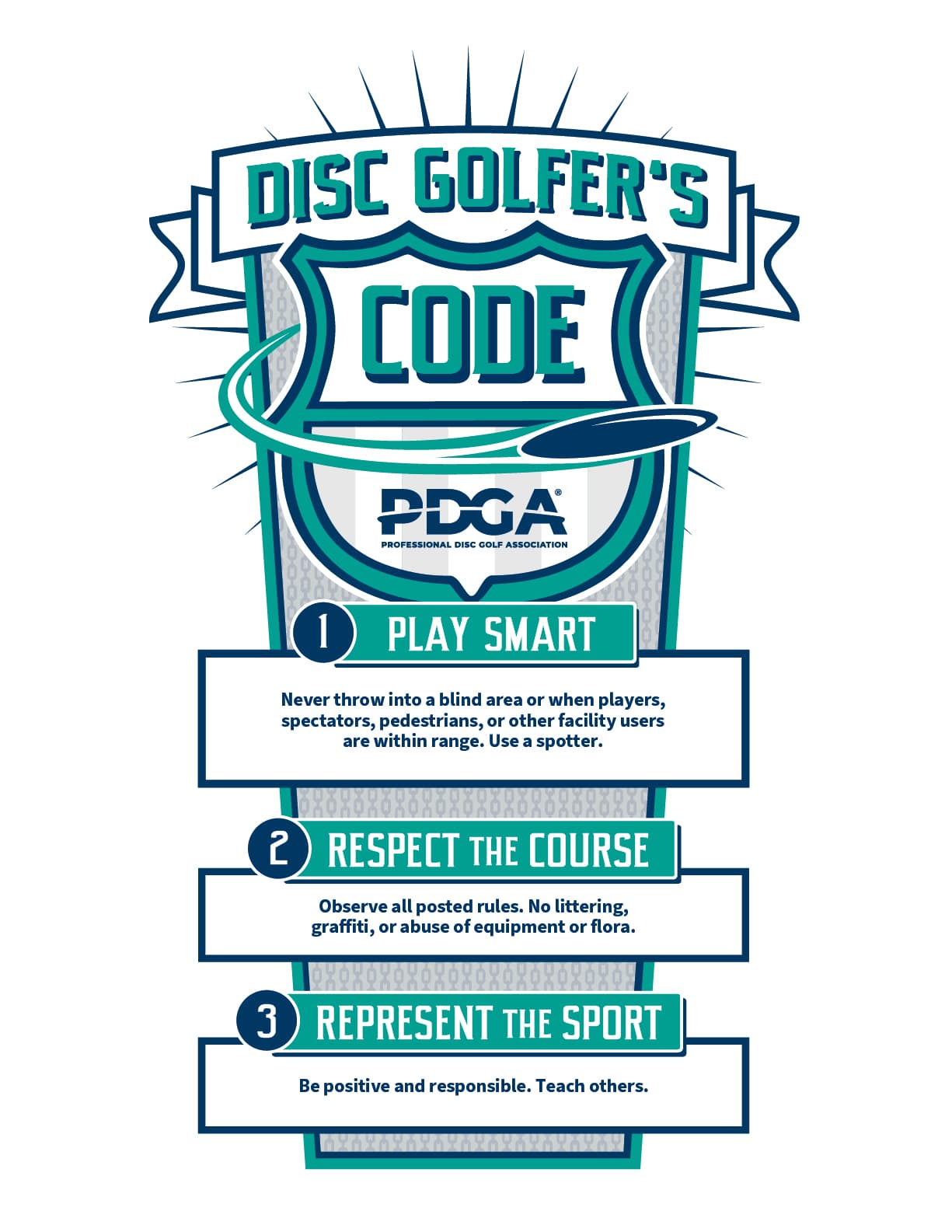
The PDGA’s “Know the Code” was developed during the 2015 PDGA Board of Directors Fall Summit in Appling, Georgia, on Sept. 14-15, 2015. The PDGA calls it a Disc Golfer’s Code of Ethics, and with players officiating themselves on most cards, it functions as the framework that keeps a round fair, safe, and moving.
Why etiquette is part of the game, not separate from it
Disc golf is played in a setting where small lapses ripple fast. A shouted conversation near a tee pad, a player wandering ahead of the group, or a delay while someone searches for a lost disc can throw off rhythm for an entire card. Because so many rounds happen without referees, the code helps players handle the moments that would otherwise turn into disputes.
That is especially important in public parks, where disc golf shares space with walkers, bikers, families, and other park users. Those parks are shared spaces, and the basic expectation is simple: be patient and be polite. The way a group acts on a fairway affects not just the scorecard but the course’s relationship with everyone else using the space.
The biggest etiquette lapses happen in plain sight
The most common problems are not dramatic rules-lawyer battles. They are everyday card issues that can quietly ruin a round if nobody steps in. Pace-of-play problems show up when players are unready on the tee, spend too long on decisions, or let a backup build behind them. Courtesy violations usually come from noise at the wrong time, talking through another player’s throw, or moving when someone is on the tee or lining up a putt.
Unsafe throws are the clearest line the code draws. If a player fires before the fairway is clear, throws without a safe warning, or takes a shot that risks hitting another group, etiquette stops being a style issue and becomes a safety issue. Scoring disputes can also blow up a card when players do not keep the score clean, fail to confirm throws, or disagree after the fact without a clear process for settling it.

What the code looks like on a real card
A round gets messy when one player on the card keeps chatting through every tee shot. The fix is not abstract: the card needs silence, readiness, and a consistent order so each throw gets the same chance to count. In a wooded layout, that discipline matters even more because one distracted throw can splash into the wrong lane, waste search time, and jam the group behind.
The same goes for safety on crowded holes. If a player steps into the landing zone before the previous throw has cleared, the card has crossed from etiquette into hazard. The code’s purpose is to keep the group honest about distance, visibility, and timing so that nobody turns a routine par look into an avoidable incident.
Scoring can be just as tense. On self-officiated cards, everybody has a duty to track the same score, and an argument is usually a sign that the group let communication slip earlier in the round. When players confirm throws as they happen, score disputes stay small. When they wait until the end, the disagreement starts after the holes in question are over.
The PDGA treats etiquette as teachable, not optional
The Rules School series is a 12-part educational video series, and Episode 12 is titled “Disc Golf Etiquette.” Episode 1, “The Official Rules of Disc Golf,” was posted on Jan. 13, 2022, placing etiquette alongside the rules, not below them.
In a sport where the group often becomes its own officiating crew, the code gives players a shared standard before a situation turns personal. If a card knows how to handle silence, readiness, courtesy, and scorekeeping from the start, there is less room for the kind of slow-burn conflict that derails amateur rounds and tournament cards alike.
Why newer players need this just as much as veterans
A UDisc etiquette article published on May 15, 2020, addressed how intimidating sports culture can feel when you are new to it. That is part of the reason disc golf etiquette matters so much: a first-timer may not know when to stand still, when to speak, or how to handle a group rhythm that is unfamiliar. Clear norms make the sport easier to enter and easier to enjoy.
That is also why public-facing etiquette language works best when it is concrete. New players do not need a lecture on sportsmanship in the abstract. They need to know what to do on a tee pad, how to behave when someone else is putting, and why a quick, quiet card keeps the round moving for everyone behind them.
The code also has history behind it
The PDGA’s 2015 summit formalized what many players had already been practicing in different forms for years. A School of Disc Golf etiquette page dated May 26, 2008, predates the PDGA code by a wide margin. Know the Code did not invent disc golf etiquette. It standardized and elevated it for a sport that was growing fast enough to need a common language.
Disc golf has expanded well beyond private circles and club culture. As the game has moved deeper into public parks, local leagues, and larger tournament structures, etiquette has become one of the few things that keeps self-officiated play stable. The code lets a card function without constant intervention.
This article was produced by Prism’s automated news system from verified source data, official records, and press releases, then run through automated quality and moderation checks before publishing. The system is built and supervised by the people who set the standards it runs under. Read our full AI policy.
Did this article answer your question?