12-Week FPV Training Plan Targets Podium Success for Mid-Level Pilots
A structured 12-week program breaks down exactly what mid-level FPV pilots need to stop finishing mid-pack and start contending for podiums at local and regional events.
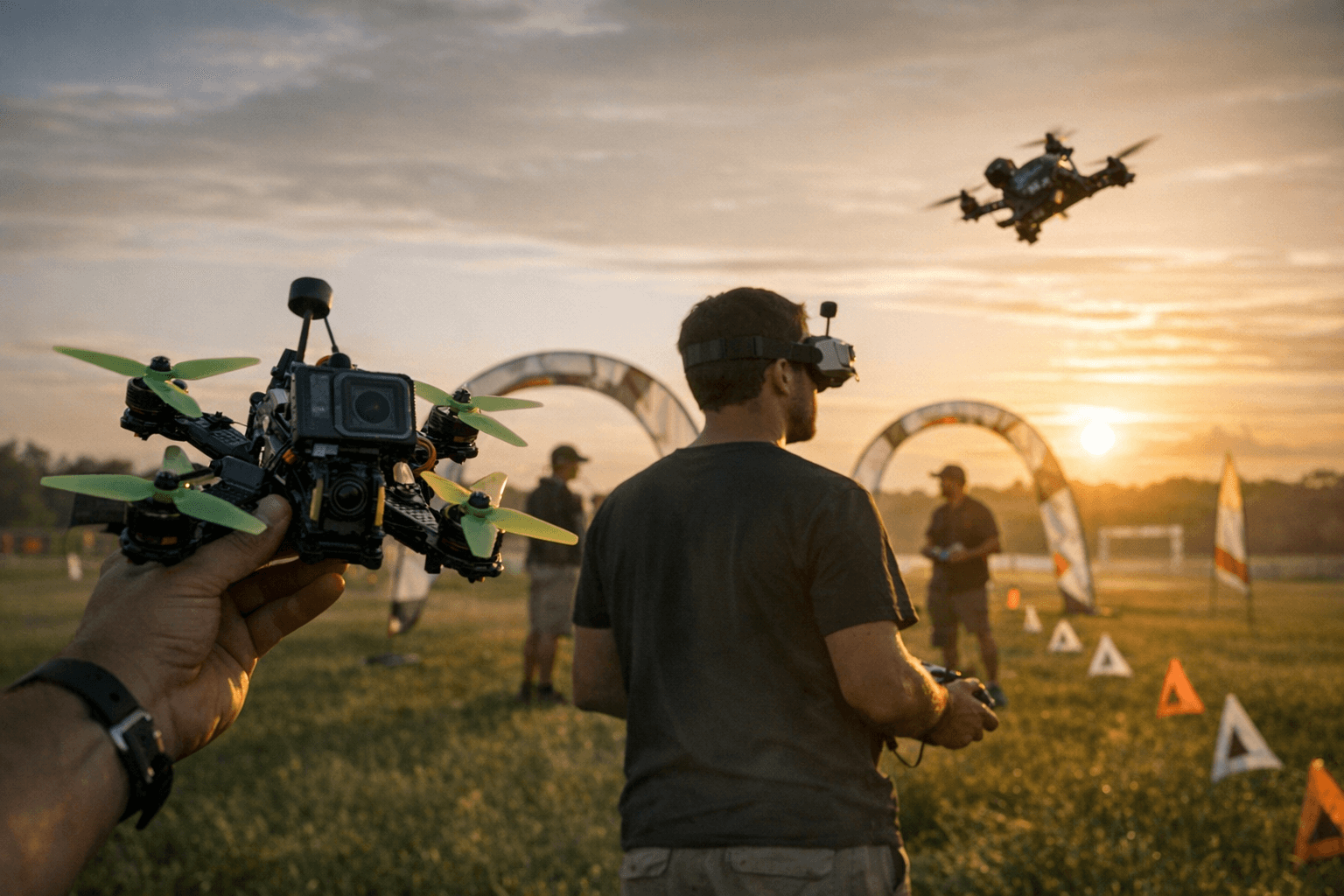
The gap between a pilot who finishes in the middle of the pack and one who regularly stands on the podium is rarely about raw talent. It's about structured repetition, strategic awareness, and preparation habits that most recreational fliers never develop. This 12-week program is built specifically for mid-level FPV pilots: those who have moved past the basics, can navigate a course without crashing on every gate, but haven't yet cracked consistent podium finishes at local or regional competitions. The plan is organized around three training pillars: flight fundamentals, race-craft (which covers strategy and starts), and pit and pre-race preparation. Each pillar receives dedicated attention across the program's arc, and all three are woven together in the final weeks to simulate real competition conditions.
Why structure matters at this stage
Most pilots plateau because they keep practicing the things they're already decent at. Unstructured flying sessions feel productive, but they reinforce existing habits rather than pushing capability forward. A 12-week commitment with defined objectives forces you to spend time in uncomfortable territory: the technical lines you've been avoiding, the start-line aggression you've been suppressing, the pre-race routine you've been winging. The program is designed so that each week builds on the last, and the three pillars reinforce one another. Better fundamentals make race-craft decisions easier; tighter pit procedures reduce cognitive load so you can focus on flying.
Pillar one: Flight fundamentals
The first pillar addresses the technical building blocks that separate competitive pilots from everyone else. At the mid-level, this means moving beyond "I can complete the course" toward "I can complete this course at race pace, on my chosen line, consistently." The fundamentals work in this program includes gate entry and exit angles, throttle management through varied course sections, and the ability to hold a target lap time within a narrow margin across multiple consecutive laps.
Early weeks in this pillar lean heavily on deliberate practice: isolating specific course sections and running them repeatedly at controlled speeds before increasing pace. The goal is not to fly fast; it's to fly precisely. Speed follows precision naturally. Pilots who skip this phase and chase lap times immediately tend to develop sloppy technical habits that become increasingly expensive as competition gets tighter.
By the midpoint of the program, fundamentals training shifts toward consistency under simulated pressure: running timed laps, logging splits, and identifying where time is being lost. This data-driven approach to skill development is borrowed from motorsport coaching methodology and is one of the more underutilized tools in amateur FPV training.
Pillar two: Race-craft
Race-craft is where mid-level pilots most commonly leave podium positions on the table. Flying fast in a time trial is a different skill set than flying fast in a pack, managing proximity to other quads, protecting a line from a faster pilot, or executing a start that puts you in clean air before the first gate. This pillar addresses all of it.
Start strategy receives particular emphasis. The opening seconds of a race have an outsized influence on final position. A pilot who gets boxed out at the start faces a much harder path to recovery than one who exits the first gate in the top two positions. Training in this pillar involves repeated simulation of start scenarios, including both physical reaction drills and mental rehearsal of gate sequences. Knowing the course well enough to run it blind is a prerequisite for making real-time strategic decisions during the race itself.
Racecraft training also covers defensive and offensive positioning: when to hold your line and absorb pressure from behind, when to yield and preserve your equipment for a longer race day, and when to make a pass that sticks rather than one that ends in a tangle. These are judgment calls that only improve through repetition in competitive or simulated-competitive environments, which is why the program builds in regular mock race sessions from week four onward.
Pillar three: Pit and pre-race preparation
The third pillar is the one most mid-level pilots underestimate, and it's frequently the one that decides whether a promising race day becomes a podium finish or a DNS. Pit and pre-race preparation covers everything that happens off the flight line: equipment checks, battery management, prop inspection, video transmitter setup, and the mental and physical routines that put a pilot in an optimal state before their heat.
Inconsistent pre-race routines create inconsistent results. A pilot who spends the twenty minutes before a race scrambling to re-solder a connector or troubleshoot video feed is not in the same cognitive state as one who completed their check sequence an hour earlier and has been visualizing the course since. The program dedicates specific sessions to building and stress-testing a personal pit routine, including timed checks designed to simulate the compressed timelines of actual competition days.
Battery management strategy is treated as a distinct skill within this pillar. Managing charge cycles across a full race day, knowing which packs to fly in qualifier heats versus finals, and understanding how temperature affects discharge performance are the kinds of marginal gains that separate pilots competing at the same equipment level. None of it requires better hardware; it requires better habits.
How the 12 weeks fit together
The program's structure follows a logical progression. Weeks one through four establish baselines across all three pillars and identify each pilot's specific weaknesses. Weeks five through eight intensify the work on those weak points while maintaining the gains from the opening phase. Weeks nine through twelve shift into integration mode: full race simulations, competition-condition prep routines, and the mental side of performing under pressure.
By the end of week twelve, the target outcome is not merely improved lap times. It's a pilot who arrives at a local or regional event with a complete competition system: sharp technical skills, a workable race strategy, and the preparation habits to execute on race day rather than just showing up and hoping. Podium consistency at that level is not a product of being the most talented pilot in the field. It's the product of being the most prepared one.
Know something we missed? Have a correction or additional information?
Submit a Tip