200-Hour FPV Racing Guide Ranks Best Beginner Drone Bundles
RosenberryRooms’ 200-hour test says the right starter bundle cuts setup friction without slowing laps, and the wrong one becomes a pricey dead end.
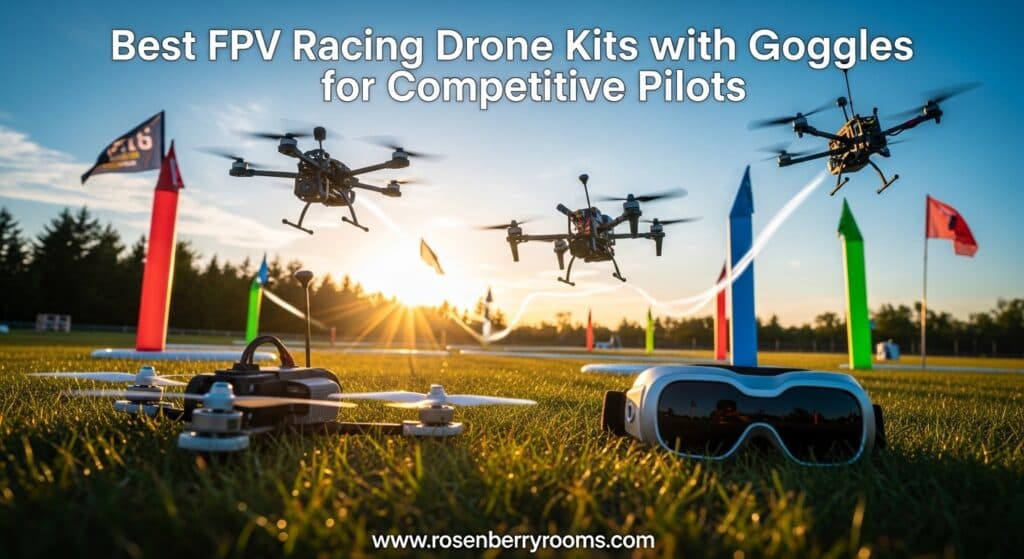
1. RosenberryRooms' 200-hour test crowns the analog bundle.
It cuts friction without blunting race pace.
2. The best image-first path is a DJI bundle.
Goggles 3 can hit 24 ms with Avata 2 in ideal conditions.
3. The most support-aware digital pick is Walksnail.
Its Avatar goggles carry a 2-year limited warranty.
4. The best control-first stack runs Betaflight.
Serious FPV racing still treats it as the precision baseline.
5. The smartest beginner bundle includes the drone, transmitter, and goggles.
That removes the biggest mismatch trap.
6. The cleanest budget entry is a micro whoop kit.
It lowers risk while keeping the first flights real.
7. The strongest spec-class starter is a Pro Spec-ready 7-inch bundle.
It is built for a standardized race format.
8. The most league-friendly analog starter uses a 40-channel VTX.
MultiGP race listings still call for 25mW capability.
9. The biggest community advantage is MultiGP scale.
It says it has 30,000 registered pilots and 500 chapters.
10. The guide spans budget micro whoops to premium digital systems over $1,000.
That spread proves one first buy does not fit every pilot.
11. The lowest-latency mainstream digital option remains DJI Goggles 3.
In the right setup, 24 ms matters on the clock.
12. The simpler digital alternative is Goggles N3.
DJI lists 31 ms minimum latency with O4 FHD transmission.
13. The most eye-catching range claim belongs to Goggles 3.
DJI lists up to 13 km with Avata 2 in ideal conditions.
14. The strongest argument for analog is still competition reality.
Many serious race classes remain built around it.
15. The clearest sign this is a real sport is infrastructure.
MultiGP publishes rule books, class specs, safety rules, and track guides.
16. The most important bundle feature is class compliance.
A wrong VTX can push a pilot out of spec fast.
17. The best first purchase includes the transmitter.
Separating controller buying from drone buying invites mismatched gear.
18. The best confidence builder includes goggles in the box.
It shortens the path from unpacking to first laps.
19. The best learning shortcut is one ecosystem, not three.
Compatibility beats piecemeal bargain hunting.
20. The best entry point is the one that gets flown immediately.
Every extra compatibility step delays skill growth.
21. The most race-critical spec is latency.
Video delay is a lap-time issue, not a nerdy footnote.
22. The most overlooked spec is repairability.
Crash-friendly gear saves seasons, not just sessions.
23. The most valuable long-term trait is upgrade room.
A starter kit should not cap out in month one.
24. The lightest useful bundle is often the easiest to race.
Weight matters every time the gate drops.
25. The most durable kit is the one with replaceable parts.
Fixed design looks sleek until the first hard landing.
26. The clearest market trend is simple.
Digital is rising, but analog still dominates serious racing.
27. The safest buying strategy is platform stability.
Support matters when a pilot needs parts quickly.
28. The smartest class-specific buy matches local rules first.
A good drone on the wrong spec is still wrong.
29. The best bundle for a first timer is complete.
The learning curve shrinks when setup friction disappears.
30. The best bundle for a tight budget is honest.
Cheap gear only works if it still races.
31. MultiGP's size matters because it validates the market.
Thirty thousand pilots means real demand, not novelty.
32. Five hundred active chapters mean the sport is decentralized.
Beginner kits need to travel well across communities.
33. MultiGP's organizer resources are part of the buying guide story.
Rules, safety, and tracks shape what gear survives.
34. Rule books make gear choices less abstract.
A bundle that fits specs is easier to justify.
35. Race class specifications turn shopping into strategy.
The right kit should map to the class ladder.
36. Safety regulations are part of the entry cost.
The best beginner bundle assumes real-world compliance.
37. Track-building guides show the sport has depth.
A good starter setup should be able to grow with that depth.
38. Pro Spec is MultiGP's official 7-inch spec class.
That makes standardized builds more important than flashy ones.
39. Pro Spec's 305 mm frame cap rewards discipline.
Bigger is not automatically better.
40. The 800 g all-up weight cap keeps builds honest.
Overbuilt bundles can lose the race before takeoff.
41. July 28, 2024 marked the Pro Spec kickoff race.
The class is not theoretical, it is active.
42. The road to a 2026 world championship gives Pro Spec direction.
Buyers should notice that trajectory.
43. Analog requirements still sit inside competition structure.
That keeps traditional bundles relevant.
44. A 40-channel, 25mW-capable VTX is a practical gatekeeper.
It is not a decorative spec.
45. Cheap video hardware can become a false bargain.
If it misses class requirements, it misses the point.
46. The best beginner bundle mirrors the class you want next.
Buying for today only is how pilots get stuck.
47. A race-ready setup should outlast rule shifts.
The wrong ecosystem ages badly.
48. The strongest first kit is one that enters competition cleanly.
Flying alone is not the same as racing.
49. A bundle that cannot meet rules is a demo, not a tool.
Serious racers feel that difference fast.
50. The best entry path has a known league home.
MultiGP gives that home to a lot of new pilots.
51. DJI still matters because its support pages remain live.
The company has not disappeared from the FPV conversation.
52. DJI FPV Goggles V2 still appears in support listings.
Legacy support can matter when planning upgrades.
53. The consumer center now sits with Goggles 3 and N3.
That shift changes buying calculus.
54. Both goggles are tied to the O4 transmission ecosystem.
Platform choice now reaches deeper than video quality.
55. Buyers should think ecosystem before price.
The wrong platform can cost more than the sticker shows.
56. Goggles 3's 24 ms figure is competitive by any racing standard.
Lower delay helps pilots react sooner.
57. That 24 ms claim depends on Avata 2 in 1080p and 100 fps.
The details matter as much as the number.
58. N3's 31 ms minimum is slower, but still useful.
Not every beginner needs the top-end number.
59. Ideal conditions do a lot of heavy lifting.
Open outdoor space and no interference are part of the promise.
60. Transmission distance is not the same as race readiness.
Long range is nice, but lap time is the real metric.
61. The 13 km claim is impressive, but not decisive.
Racing punishes delay more than it rewards range.
62. DJI's shifting lineup shows how fast the market moves.
Today's obvious buy can become tomorrow's legacy gear.
63. That speed makes support continuity a buying factor.
New pilots need confidence that the ecosystem will stay alive.
64. If a bundle ties into a stable support network, it lowers risk.
That matters for a first race season.
65. A bundle built around current DJI consumer gear is more future-facing.
But only if the pilot likes that ecosystem.
66. The best DJI choice is the one that stays usable after the first crash.
Hardware glamor does not repair itself.
67. For beginners, simplicity can beat maximum performance.
A cleaner first setup often means more flying.
68. For racers, latency beats marketing range every time.
The clock is more honest than the brochure.
69. DJI's presence also proves digital FPV is mainstream enough to matter.
It is no longer a fringe option.
70. The right digital starter bundle should feel race-capable, not showroom-only.
That is the line that matters.
71. Walksnail's Avatar HD line gives pilots another digital lane.
Competition in the market is good for buyers.
72. The Avatar HD kit line starts at $753.99.
That puts it in serious starter territory.
73. The price is high enough to demand a plan.
A beginner needs more than a flashy box.
74. The kit format still helps because it bundles the core gear.
That lowers mismatch risk.
75. Walksnail's 2-year limited warranty on goggles is meaningful.
It gives the display side more breathing room.
76. The 1-year warranty on cameras and VTX units is the other half of the story.
The fragile pieces remain the fragile pieces.
77. That warranty split changes repair economics.
Buyers should budget for the parts that crash first.
78. A strong Walksnail buy is one a pilot can keep in rotation.
Downtime is where races are lost.
79. The ecosystem works best for racers who value choice.
Digital image quality is only one part of the equation.
80. A bundle with clear support terms is easier to trust.
The fine print matters after the first impact.
81. Walksnail stands out because it makes digital FPV accessible without copying DJI exactly.
That variety helps the sport.
82. The platform is valuable when image quality matters but ecosystem flexibility still counts.
Not every buyer wants the same lock-in.
83. A racer should judge Walksnail by crash cost, not only picture quality.
Lap time is shaped by both.
84. The best Walksnail setup is the one that survives real use.
Bench demos do not win heats.
85. Warranty coverage should be part of the ranking.
It is not a footnote, it is a budget line.
86. The smarter digital buy is the one with a replacement plan.
No plan means surprise spending.
87. Walksnail's kit approach fits pilots who want a known path.
That is worth paying for.
88. Digital newcomers should expect service as part of the purchase.
Race gear is consumable.
89. If a bundle breaks the budget after the first crash, it fails the test.
Affordability has to include repairs.
90. The best digital entry point keeps momentum alive.
That is how pilots move from curiosity to competition.
91. Betaflight remains the software layer serious FPV uses.
It is a foundation, not a gimmick.
92. Its reputation is built on performance and precision.
That is exactly what racers care about.
93. A bundle that runs Betaflight is easier to tune over time.
That makes skill gains easier to feel.
94. The software also makes the learning curve more honest.
You can see what changes do to handling.
95. A beginner bundle should not hide control from the pilot.
Tuning access is part of growth.
96. Betaflight helps turn practice into measurable gains.
That matters more than one flashy spec.
97. The community's reliance on Betaflight is a compatibility advantage.
Shared language lowers friction.
98. When repairs are needed, familiar software reduces panic.
Racers can get back in the air faster.
99. The best starter stack uses software the sport already understands.
Novelty can wait.
100. A bundle that grows with tuning skill is the most economical choice. It avoids fast replacement.
101. Performance precision is the point of the FPV stack. The whole kit should reflect that.
102. The right flight control system should feel responsive, not mysterious. New pilots learn faster that way.
103. Real improvement comes from repeatable tuning changes. That is where Betaflight helps.
104. A polished starter bundle should still allow experimentation. Locked systems stunt growth.
105. Compatibility between hardware and firmware is part of race speed. Every layer contributes.
106. Good kits are editable kits. Fixed kits are where future upgrades go to die.
107. Software support matters as much as hardware support. A dead firmware path is a dead end.
108. The best controller setup is one that can be adjusted after crashes. FPV racing is a correction sport.
109. Precision is transferable only when the system is stable. The pilot's skill needs a reliable platform.
110. A beginner should learn on the same tools used by serious racers. That shortens the climb.
111. FAA guidance still shapes the first flight. Recreational FPV is not a loophole sport.
112. The agency says a visual observer is needed because onboard cameras cannot scan all airspace. That is a practical limit, not a technical quibble.
113. TRUST completion is required for recreational flyers. Compliance is part of the kit's real use case.
114. Proof of TRUST completion has to be carried too. Paperwork is part of flight day.
115. A bundle that ignores legal prep shifts the burden back to the pilot. That is a hidden cost.
116. The best beginner setup assumes outdoor flying with safety in mind. Rules are part of the sport's structure.
117. Visual observer support is not optional decoration. It is how FPV stays usable under FAA guidance.
118. Compliance should be considered when ranking bundles. Cheap gear that cannot be flown legally is not cheap.
119. A legal flying plan is part of the package. Hardware alone does not finish the job.
120. The best starter bundle should make the paperwork easier to manage, not harder. That is real user experience.
121. The sport's culture is bigger than gadgets. MultiGP's scale shows that clearly.
122. Thirty thousand pilots create a real competitive ecosystem. That changes what starter gear needs to do.
123. Five hundred chapters mean local events can look different. Flexible bundles are worth more.
124. A kit should travel across those local differences. That is why standards matter.
125. Good buying decisions now are less about discovery and more about selection. The market is crowded.
126. The challenge is no longer learning what FPV is. It is choosing the right first system.
127. That is why complete bundles win so often. They remove decision fatigue.
128. The best bundle is a bridge, not an endpoint. It should lead to racing, not shopping forever.
129. The sport's biggest barrier is choice overload. The guide's value is turning chaos into a ladder.
130. A beginner who buys well saves time, money, and frustration. The clock notices all three.
131. The market split between analog and digital creates real strategy. Different paths lead to different outcomes.
132. Analog still dominates serious racing leagues. That keeps it at the top of the list.
133. Digital is rising because image quality matters. But speed and compatibility still rule.
134. A smart buyer chooses based on local race reality. National trend lines are not enough.
135. The most transferable bundle is the one that can race in multiple formats. Flexibility is power.
136. Cross-compatibility is worth paying for. Locked ecosystems can become expensive cages.
137. The first buy should not force a forever decision. The best gear leaves room.
138. Race performance depends on more than one shiny feature. Latency, durability, repairability, and upgrade paths all count.
139. The right bundle balances those tradeoffs. That is what separates a starter from a dead end.
140. The wrong bundle looks great until the first heat. Then the weaknesses show.
141. Analog bundles score because they fit real race classes. Compatibility is the hidden winner.
142. DJI bundles score because their latency numbers are credible. That keeps them in the conversation.
143. Walksnail bundles score because they balance ecosystem and support. Warranty is a competitive detail.
144. Betaflight-centered bundles score because tuning matters. Racecraft improves when the pilot can adjust.
145. Micro whoop bundles score because they reduce the cost of learning. Less fear means more repetition.
146. Pro Spec-ready bundles score because standardization matters. The class tells the pilot what to build.
147. MultiGP-aligned bundles score because the league is huge. Big ecosystems support growth.
148. FAA-ready bundles score because legal flying matters. No one wins if the drone stays grounded.
149. The best ranking is not about one winner. It is about matching the pilot to the path.
150. The guide's real value is that it treats buying as race strategy. That is the right lens.
151. A premium bundle only helps if it is repairable. Otherwise it is a fragile trophy.
152. A cheap bundle only helps if it is competitive. Otherwise it becomes practice clutter.
153. A digital bundle only helps if its latency stays honest. Performance numbers must translate to track feel.
154. An analog bundle only helps if it stays relevant to the class. Tradition alone is not enough.
155. A spec bundle only helps if it follows the rule sheet exactly. Small misses cost race access.
156. A starter kit should be crash-tolerant. FPV rewards repetition, not caution.
157. A good frame is part of the learning budget. Broken frames slow progress more than bad weather.
158. Easy repairs keep a pilot improving between events. That is where wins accumulate.
159. Upgrade paths protect the original investment. The best bundle should not be disposable.
160. Support terms turn into confidence. Confidence turns into better laps.
161. The best beginner bundle is often the one that feels boring on paper. Boring often means dependable.
162. The worst beginner bundle is the one that needs too many caveats. Caveats become costs.
163. If a kit needs constant explanation, it may not be the right buy. Simple is faster.
164. If a kit fits the class, the pilot can focus on flying. That is the whole point.
165. If a kit matches the ecosystem, spare parts are easier to find. That reduces downtime.
166. If a kit keeps latency low, the brain and fingers sync better. That matters in gates.
167. If a kit keeps weight in check, it feels livelier. Every correction gets sharper.
168. If a kit keeps support visible, the pilot can plan ahead. Planning is underrated in racing.
169. If a kit keeps options open, it can survive skill growth. That is the smartest long play.
170. If a kit closes too many doors, it becomes a short-term fix. Short-term fixes cost more later.
171. The market's fast-moving digital side makes support crucial. Ecosystems can change quickly.
172. The analog side is less flashy, but still battle-tested. That is why it survives in racing.
173. The league structure rewards honest specifications. Racing punishes marketing fluff.
174. The best guide to bundles is the class sheet. The clock and rule book agree more than ads do.
175. Beginners should think like racers from day one. That mindset saves money.
176. The right bundle should make future race classes easier to enter. That is long-term value.
177. A build that cannot be repaired quickly slows learning. Crash, fix, fly is the real rhythm.
178. A build that cannot be upgraded forces a reset. Pilots hate resets.
179. A build that cannot be raced is a hobby purchase, not a competition entry. The difference is huge.
180. The best bundle understands that distinction. It is ready for the gate.
181. Premium image without a path forward is a dead end. It looks impressive and ages badly.
182. Poor durability can sink even the best-looking package. The ground is undefeated.
183. Slow latency can make a kit feel dull no matter how sharp the video looks. The clock is unforgiving.
184. Weak support turns a good deal into a repair headache. The fine print becomes the price.
185. A mismatched bundle forces the pilot to learn around gear flaws. That slows real progress.
186. The right kit removes those flaws early. It lets skill take over.
187. For most beginners, that means a race-friendly analog starter. It is still the safest road into competition.
188. For image-driven pilots, DJI and Walksnail are the serious digital paths. Both have real tradeoffs.
189. For standardized racing, Pro Spec is the clearest ladder. The class has a future.
190. For tuning depth, Betaflight remains the common language. That matters every weekend.
191. For legal flying, the FAA rules still frame the session. Compliance is part of racing life.
192. For community access, MultiGP is the big gateway. Scale matters when learning the sport.
193. For long-term value, repairability and upgrade paths beat novelty. The stopwatch agrees.
194. For first-time buyers, clarity beats hype. The easiest kit to understand is often the best.
195. For competitive pilots, the best bundle is the one that disappears in use. No drama, just laps.
196. For aspiring racers, the wrong bundle can become an expensive lesson. That lesson is avoidable.
197. The true entry point is the kit that gets you to your first heat. Everything else is noise.
198. The true competition bundle is the one that survives the season. Longevity is a competitive edge.
199. The true dead end is gear that cannot be repaired, upgraded, or raced well. It wastes both time and money.
200. The clearest conclusion is simple: buy the bundle that keeps you fast, legal, and in the air.
This article was produced by Prism’s automated news system from verified source data, official records, and press releases, then run through automated quality and moderation checks before publishing. The system is built and supervised by the people who set the standards it runs under. Read our full AI policy.
Did this article answer your question?