Erode college hosts ₹1 lakh drone race with robotics challenge
Fastest-time laps over hoops, turns and altitude gates decided the ₹1 lakh Core Fusion drone race, where campus robotics met FPV pressure.
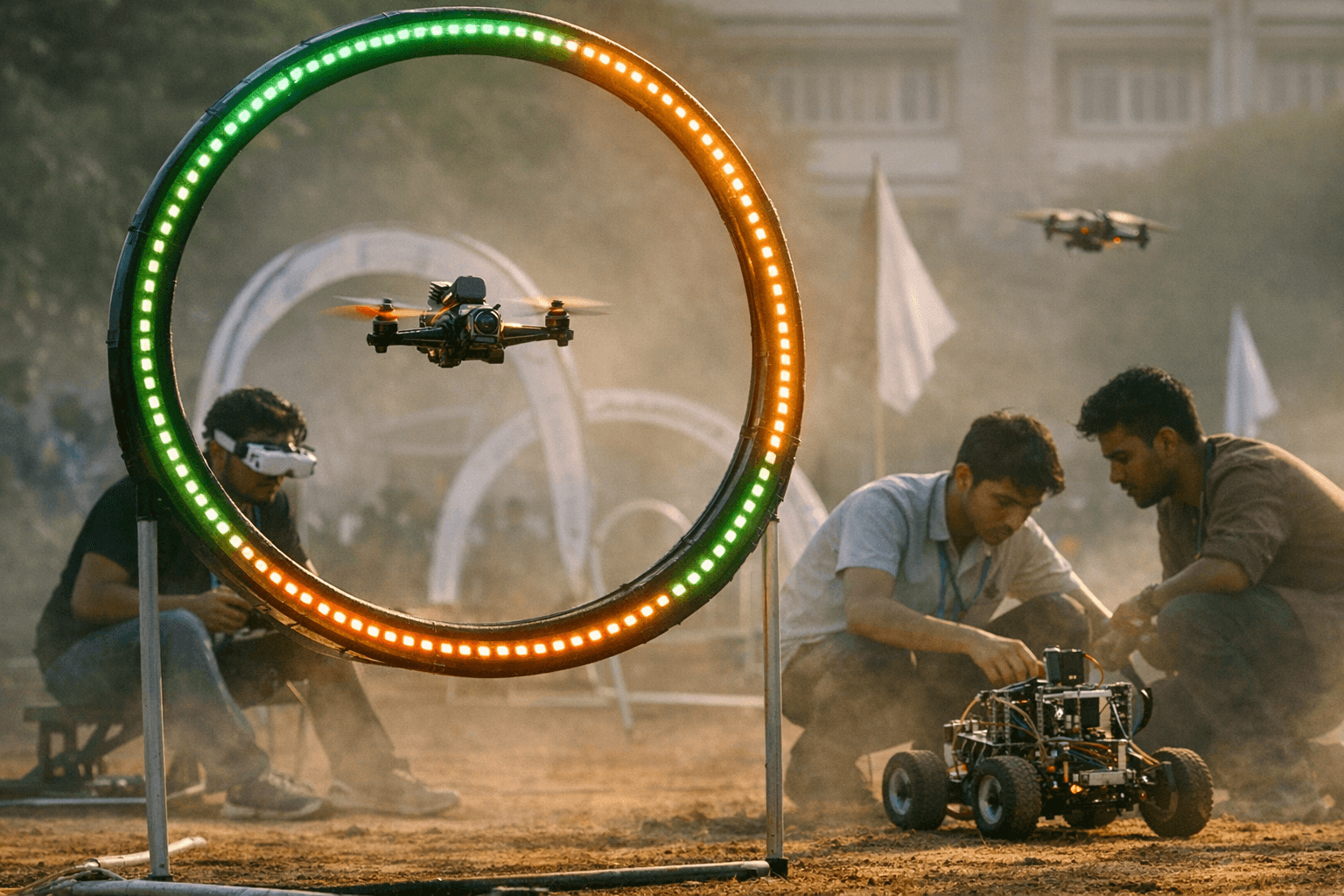
Fastest time, not style points, decided the drone race at Core Fusion 2026, where pilots had to thread a custom course of hoops, tight turns and altitude gates while avoiding the penalties that came with missed gates and collisions. At Erode Sengunthar Engineering College in Perundurai, the event carried a ₹1,00,000 prize pool and treated precision as the separator between raw speed and race-day execution.
The competition sat inside a two-day technical fest on April 9 and 10, with Drone Race placed on Day 1 alongside Hackathon and Idea Pitch. Registration for technical events was set at ₹250 per participant, teams were allowed to field two to four members, and the listing described the effort level as high, a signal that this was meant for prepared engineering students rather than casual visitors. Depending on category, competitors could fly manually through remote control or lean on autonomous flight logic, adding controls and systems engineering to the pressure of FPV racing.
That format is what makes Core Fusion more than a campus showcase. The course design rewarded pilots who could read a line through changing geometry, keep speed without clipping a gate and make split-second decisions under the clock. For students coming out of robotics clubs, that matters because the sport no longer hinges only on stick skills. It asks whether they can translate classroom work in sensors, automation and flight stability into competition-ready performance when a clock and obstacles are both working against them.
Erode Sengunthar Engineering College is already building the infrastructure around that pipeline. Its website lists a Drone Development Center on campus, and the college had already hosted drone-racing activity through ESEC Drone. On September 3, 2025, the same campus staged DroneXtreme, a manual RC outdoor drone race with a ₹30,000 cash-prize pool. Core Fusion 2026 suggests that earlier effort was not a one-off, but part of a growing internal ladder from campus experimentation to organized competition.
The wider drone-racing scene gives that campus push a bigger frame. MultiGP says it is the world’s largest drone racing league and FPV community, with more than 30,000 registered pilots and 500 active chapters worldwide. The World Air Sports Federation sanctions a Drone Racing World Cup in the F9U class, and the Drone Champions League is pushing a mixed-reality format in 2026 that blends virtual and real-world racing. Against that backdrop, Core Fusion’s drone race looked like a test of whether campus STEM branding can produce pilots ready for real competition, not just a polished demo under festival lights.
This article was produced by Prism’s automated news system from verified source data, official records, and press releases, then run through automated quality and moderation checks before publishing. The system is built and supervised by the people who set the standards it runs under. Read our full AI policy.
Did this article answer your question?