3D-Printed Peregreen V4 Sets Guinness DIY Quadcopter Speed Record at 408mph
A 3D-printed Peregreen V4 quadcopter piloted and built by Luke Maximo Bell and his father Mike set a Guinness DIY battery-powered speed record with a two-run average of 408.60 mph.

The Peregreen V4 shattered expectations for DIY drone speed by posting a verified two-run average of 657.59 km/h (408.60 mph), with a downwind pass near 659 km/h (410 mph) and an upwind pass about 599 km/h (372 mph). The flight met Guinness World Records protocols by completing two passes in opposite directions to cancel wind, and the certified runs took place on January 17, 2026.
Luke Maximo Bell and his father Mike designed, printed, and flew the craft after more than two years of iterative work. The quadcopter is notable for being printed as a single continuous part using multiple materials - PETG for structure, PA6-CF for stiffness and weight savings, and TPU for controlled surface finish - a combination chosen to refine the airframe’s aerodynamics. The team leaned heavily on computational fluid dynamics simulations to shape the fuselage and prop integration before committing to final prints.
Performance choices were crucial to the Peregreen V4’s speed. The team tested several motor designs before settling on the T-Motor 3120, modifying it from 800KV to 900KV to balance higher RPM and thermal reliability. Propeller strategy also evolved; the group trimmed propellers from roughly 7x5 inches down to about 6 inches to optimize lift-to-drag at extreme RPM. Those hardware decisions, paired with CFD-driven surface work and the single-piece airframe, produced the tight performance envelope that allowed sustained flight beyond 400 mph in a battery-powered radio-controlled platform.
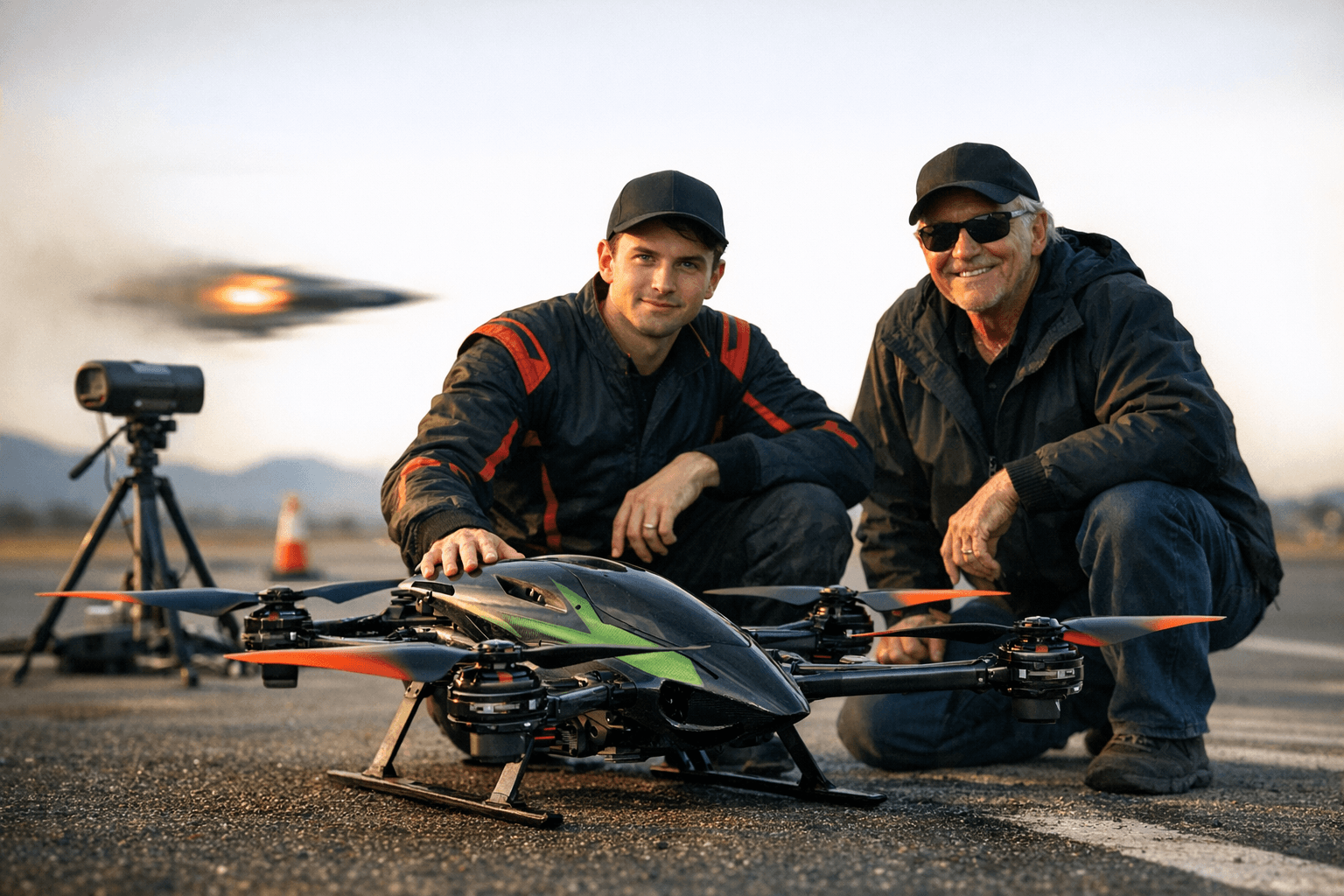
From a sports and competition standpoint, the record is a clear scoreboard outcome: a certified fastest DIY quadcopter. The father-son dynamic of Luke and Mike adds an old-school club-level narrative to a highly technical effort, mixing maker culture with high-performance piloting. For pilots and builders, the runs highlight the importance of thermal management, precise motor KV tuning, and prop trimming when pushing voltage, current, and RPM into realms traditionally reserved for full-scale aircraft.
Industry trends are visible in this milestone. 3D printing as a production method is moving from prototypes into competitive hardware, enabling rapid iteration on complex geometries that improve aerodynamic efficiency. Motor makers and prop manufacturers will watch closely; component suppliers may accelerate offerings tailored to high-speed, battery-powered applications. At the same time, event organizers and regulators face questions about safety, timing systems, and class definitions as DIY machines approach speeds once thought unreachable for hobby-grade platforms.

The Peregreen V4 record signals an escalation in the DIY drone arms race and a growing crossover between maker ingenuity and competitive performance. Expect challengers to push KV tuning, composite-infused printing materials, and more radical prop geometries in the months ahead as builders attempt to knock 408.60 mph off the leaderboard.
This article was produced by Prism’s automated news system from verified source data, official records, and press releases, then run through automated quality and moderation checks before publishing. The system is built and supervised by the people who set the standards it runs under. Read our full AI policy.
Did this article answer your question?