A2RL Launches at UMEX Abu Dhabi with Human vs AI Drone Championship
A2RL debuted at UMEX Abu Dhabi, staging a human vs AI drone championship that pits elite FPV pilots against fully onboard autonomous systems, marking a turning point for competitive autonomy.
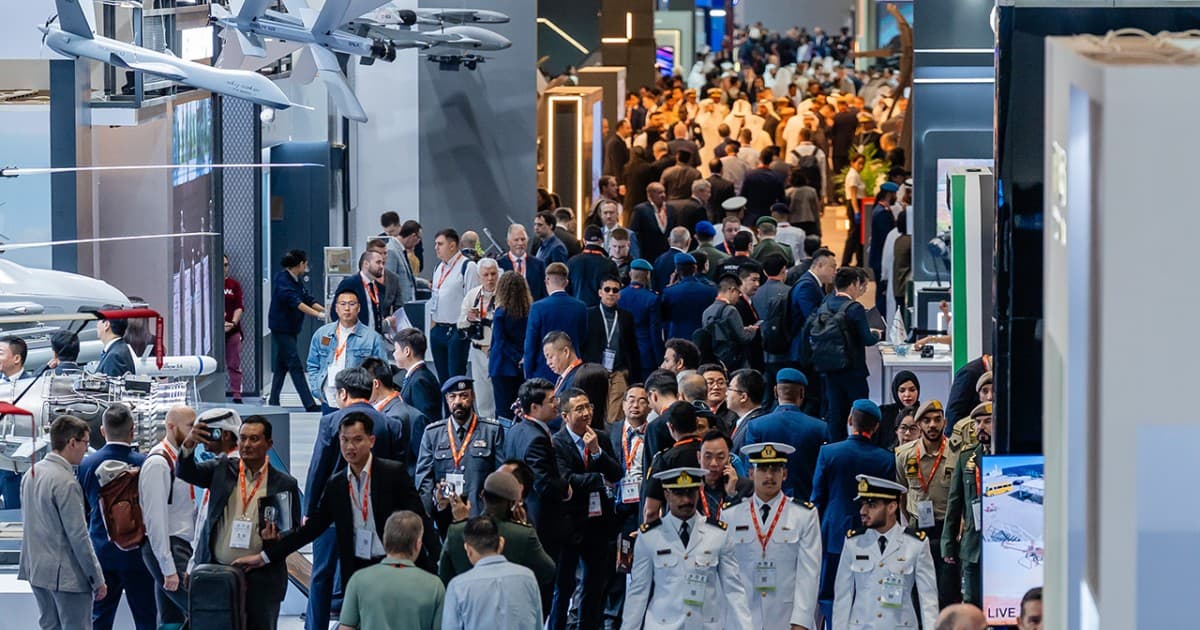
A2RL opened at UMEX Abu Dhabi as a live proving ground where elite FPV pilots faced autonomous systems under identical conditions, spotlighting sport, tech and investment in a single arena. The Abu Dhabi Autonomous Racing League staged three race formats - the AI Speed Challenge time trial, an AI vs AI three-drone sprint, and the headline Human vs AI Challenge - with every competition drone operating only on a monocular RGB camera and an inertial measurement unit and with all processing performed onboard.
The format forced a pure test of perception, control and planning. Running without stereo vision or offboard servers amplified the importance of onboard state estimation and low-latency control loops, while the Human vs AI matchups underscored contrasting strengths: human FPV pilots bring adaptive line choice and split-second improvisation, while autonomous stacks deliver repeatability and deterministic gating through complex courses. Organizers framed A2RL as a public testbed that compresses years of R&D into days of measurable performance, with direct implications for logistics, inspection, emergency response and air mobility.
Day two of UMEX and SimTEX also delivered major industrial headlines. The Tawazun Council announced four defence contracts worth AED 1,479,826,000, bringing the two-day total to AED 2,359,611,000. ADNEC Centre Abu Dhabi was positioned as a global hub for autonomy and unmanned systems as Tilal Swaihan hosted live demonstrations featuring 16 UAVs, while the UMEX Top 100 Report was unveiled alongside the launch of UMEX ELEVATE - The Autonomous Investment Summit - which convened investors, sovereign funds and founders to discuss capital flows and commercialisation pathways.
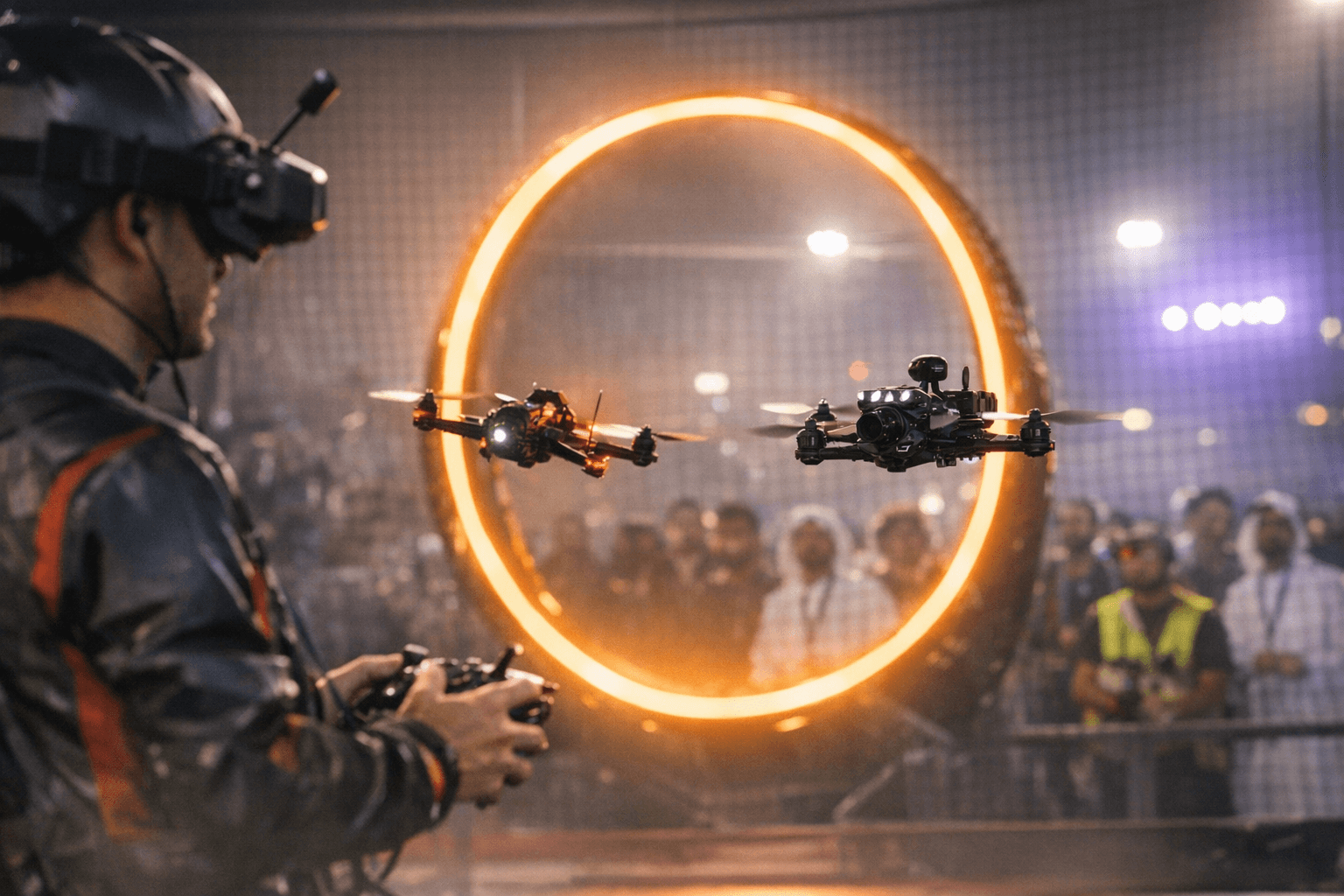
From a sports perspective, A2RL reframed what drone racing can be. The league traded spectacle for scientifically comparable runs: single-drone time trials produced objective baselines, multi-drone AI races stressed collision avoidance and swarm deconfliction, and the Human vs AI Challenge created head-to-head narrative tension that the spectator side of the sport can monetise. For pilots, the event highlighted the athlete-like skill set of FPV racers and the value of translating that expertise into coaching, analytics and collaboration with autonomy teams.
Culturally, A2RL blurred lines between esports, motorsport and defence R&D, raising questions about liability, airspace governance and workforce transitions as autonomous systems scale. Commercially, the presence of UMEX ELEVATE signalled that sovereign capital and venture funds are ready to move beyond prototypes toward operational deployments.
The A2RL final day was scheduled for January 22 to decide the championship; event materials focused on measurable performance rather than headline winners. For fans and investors, the takeaway is clear: drone racing is no longer just a show of piloting bravado - it is a quantifiable testbed shaping the next wave of autonomous systems and the careers and businesses that will rise around them.
Know something we missed? Have a correction or additional information?
Submit a Tip