Antigravity A1 Infinity Bundle Drops to $1,599 in Amazon Spring Sale
The Antigravity A1 Infinity Bundle fell to $1,599 on Amazon, a $400 cut that makes 8K spherical FPV capture accessible to content-first pilots.
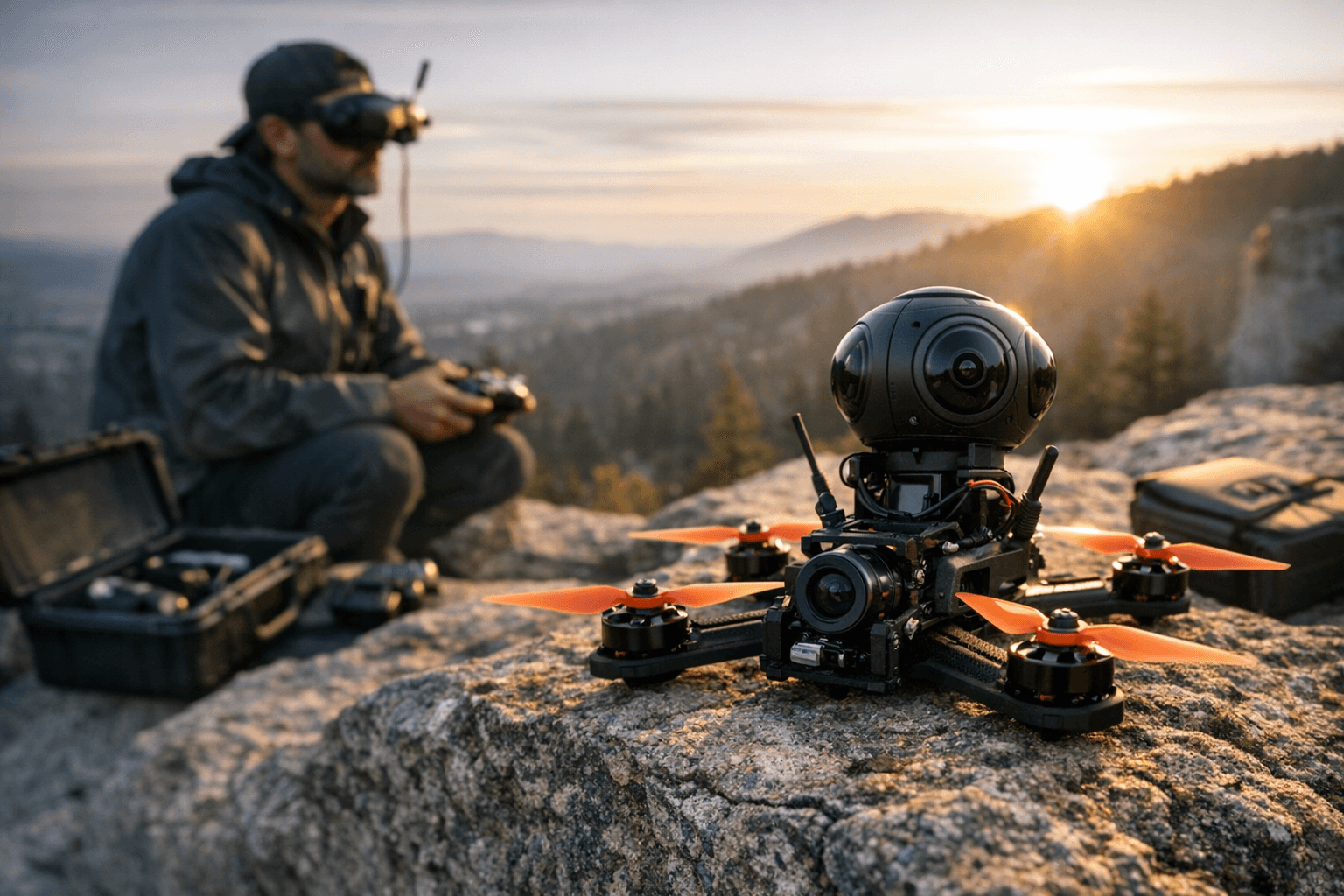
What a pilot notices first through Antigravity's Vision Goggles isn't just a drone feed - it's a wraparound 1,440p window onto everything around the aircraft, a live spherical preview that no GoPro-on-a-stick setup has ever matched. That experience just got $400 cheaper.
The Antigravity A1 Infinity Bundle, the complete 8K spherical drone ecosystem pairing the A1 aircraft with Vision Goggles and the motion Grip controller, hit $1,599 during Amazon's Spring Sale cycle in late March 2026. That price represents a notable drop from the $1,999 tag posted at some retailers earlier in the season and, according to Mashable's deal coverage, marks the first broad retailer-level price cut large enough to push the A1 back into mainstream conversation during a spring shopping window.
The timing matters for anyone in the FPV community who has been watching the A1 from a distance. Antigravity developed the system in collaboration with Insta360 technology, and the dual-lens architecture at its core captures two fisheye perspectives - top and bottom - that stitch into a full spherical image at eight thousand pixels. For race coverage, the reframing capability is the real argument: unlike a fixed forward-facing camera that loses a gate clip or a dive-bomb pass the instant it exits the frame, spherical footage shot at 8K retains every degree of the scene. A spectator cut of a race that was poorly framed in real time can be entirely rebuilt in post, extracting angles the original operator never consciously lined up. One flight, one source file, and the editor can isolate a sponsor logo on a gate, reconstruct a cockpit POV, and deliver a crowd-facing replay without a second aircraft in the air - three broadcast deliverables from a single capture pass.
The aircraft itself weighs 249 grams, a number that will register immediately with international pilots. That total vehicle weight falls below the regulatory registration threshold in many countries, meaning the A1 can operate across a wider range of venues without the administrative overhead that heavier platforms require. Add integrated obstacle detection on both the forward and downward axes and the operational profile becomes notably friendlier for pilots who are not running dedicated safety-conscious pre-flight routines on every outing.
PCMag's late-2025 review called the A1 "a creative powerhouse in the right hands," but it did not soften the operational caveats. Battery life, limited wind resistance, and the learning curve associated with editing spherical video were all flagged as practical barriers rather than theoretical concerns. Spherical footage demands dedicated software and a reframing workflow that adds real time to post-production - time that race teams operating lean content pipelines may not have available on event day. Wind performance is the harder problem: a 249-gram aircraft delivers compelling footage in calm conditions and becomes a liability when race-day weather turns.
For competitive racers weighing whether the A1 fits into a team's media stack, the buy-or-skip verdict is largely about role definition. As a primary race-day platform, the A1 is the wrong tool - it is not a 5-inch race quad, it does not fly the gate-to-gate line that competitive FPV demands, and its weight class puts it in a fundamentally different performance envelope. But as a supplementary capture platform for producing immersive event content, the use case is genuine. Positioned as a camera drone rather than a race aircraft, the Infinity Bundle at $1,599 competes directly against action-cam rigs and dedicated cinematography drones that cost considerably more to configure for spherical output. A standard GoPro Hero 13 Black paired with an FPV DVR harness runs roughly $500 to $700 for hardware alone, delivers a locked single-axis image, and produces zero reframeable footage. The A1's premium buys omnidirectional capture and a live headset feed that the fixed-lens setup structurally cannot replicate.
The broader influence the A1 is having on product roadmap thinking across the drone industry may ultimately matter more than its own adoption curve. The attention Antigravity drew to spherical FPV and headset-driven interfaces has pushed conversation in consumer and prosumer circles toward integrated ecosystems rather than componentized builds, and toward ergonomic goggles with genuine head-tracking capability rather than FPV monitors bolted to a controller. Whether the Spring Sale price is enough to move the A1 from aspirational shortlist to active field deployment depends on how pilots weight creative output against operational friction. At $400 below recent retail peaks, the cost of finding out firsthand dropped significantly.
Know something we missed? Have a correction or additional information?
Submit a Tip